I have deleted the rant, because I have recovered from my emotional outage of the past few days.
However, please don’t copy these and then post them elsewhere pretending they are your work, because they are not. Anyone who wishes to help fund my webhosting bill can donate a small amount below, but this is entirely voluntary.
Webhosting contribution
£1.00
This is a collection of images from my collection, in geographical order from Euston northwards.
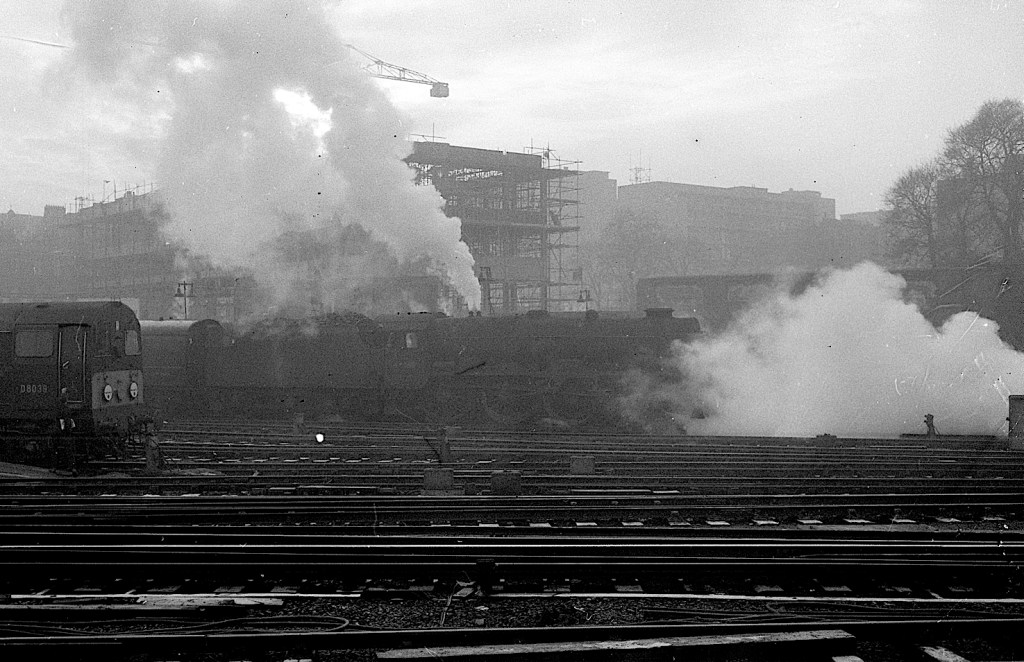
We will start at the southern end of the WCML in 1962, with 45618 ‘New Hebrides’ making a steamy start from Euston, and passing D8038 on pilot duties.
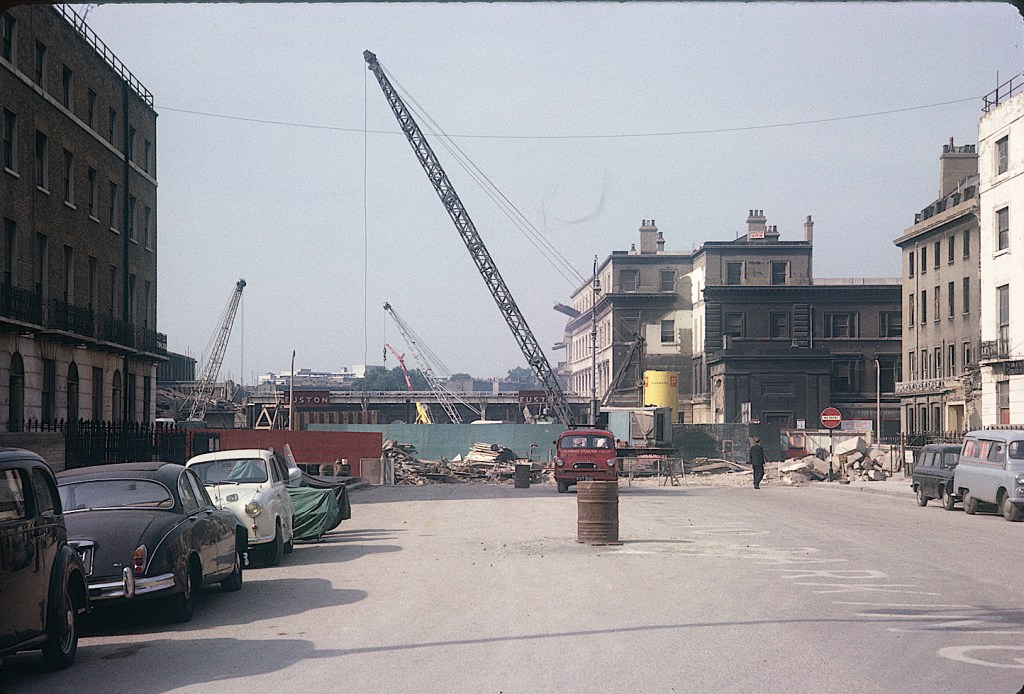
The scene outside the station on the previous image, as the contractors have taken down the Euston Arch. A vandalous activity, as seen by everyone – other than the government, and those only interested in making instant profits.
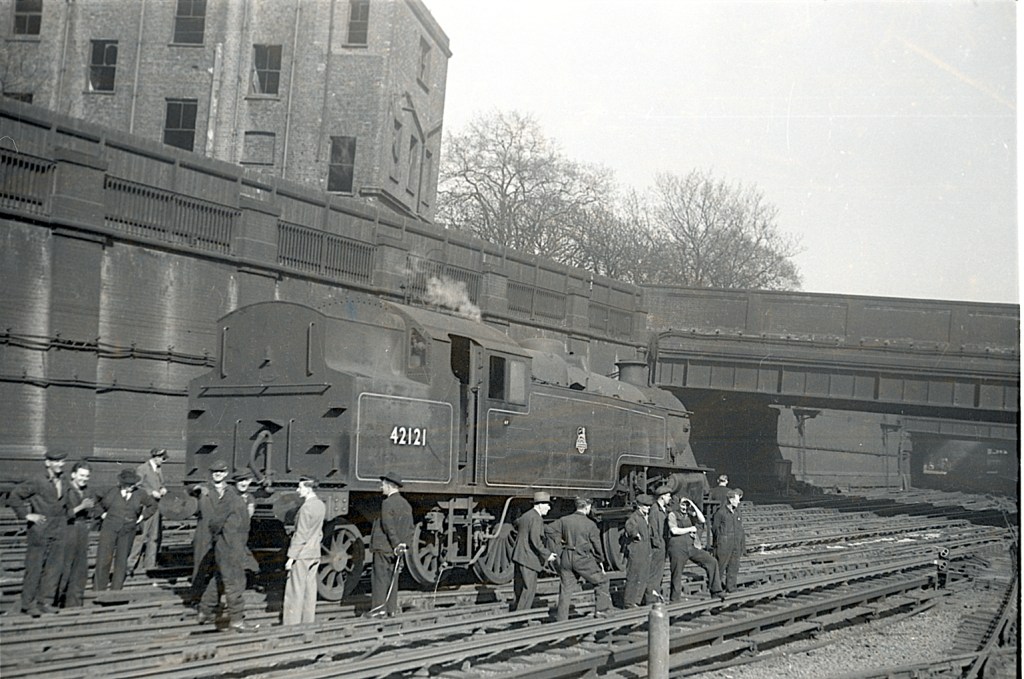
On May 4th 1950 Fowler 2-6-4t 42121 became derailed just outside the station. Here we see the numerous staff needed to scratch their heads and decide what to do next.
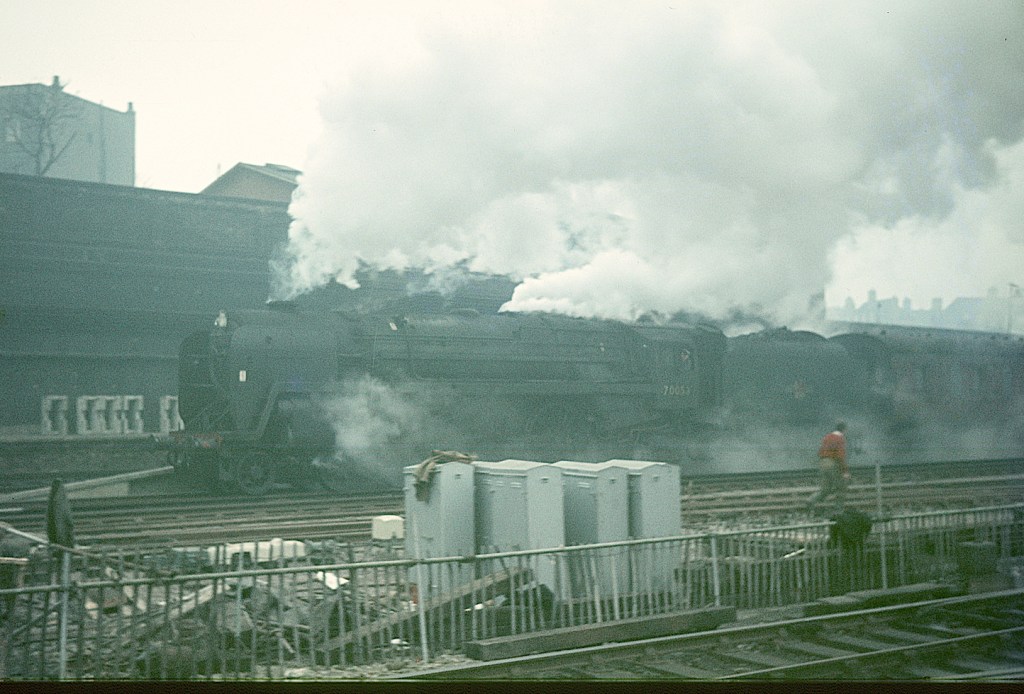
With construction work still ongoing, 70053 ‘Firth Of Tay’ leaves Euston in 1965.
(Looking for colour? This is how it was in the 1950s/60s, especially in winter.)
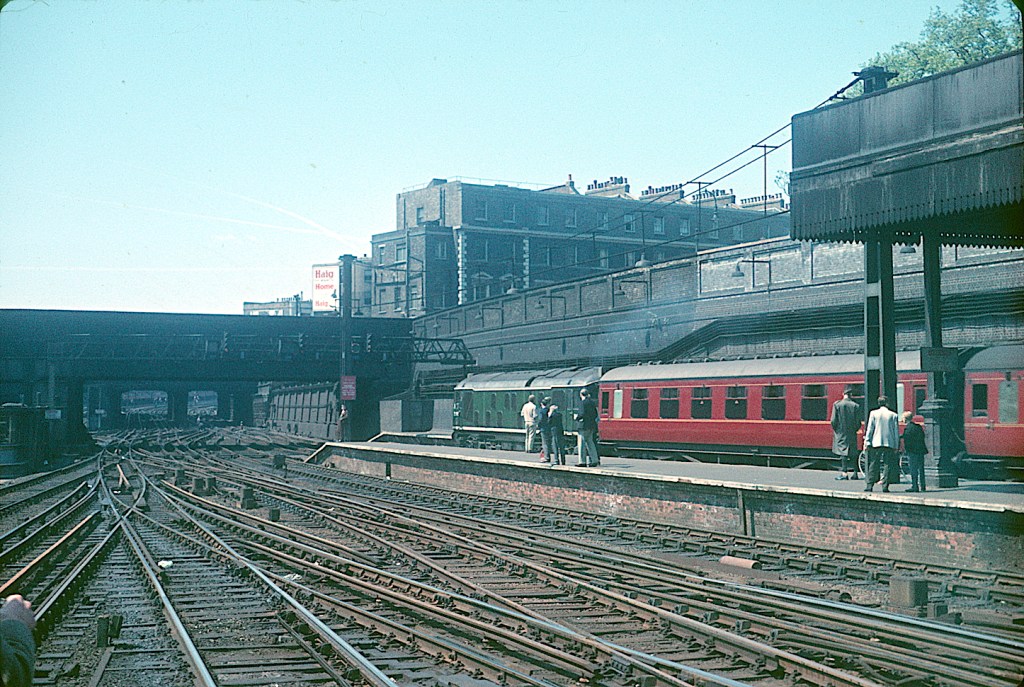
D5143 leaves Euston in 1963, probably with a service to Rugby or Northampton.
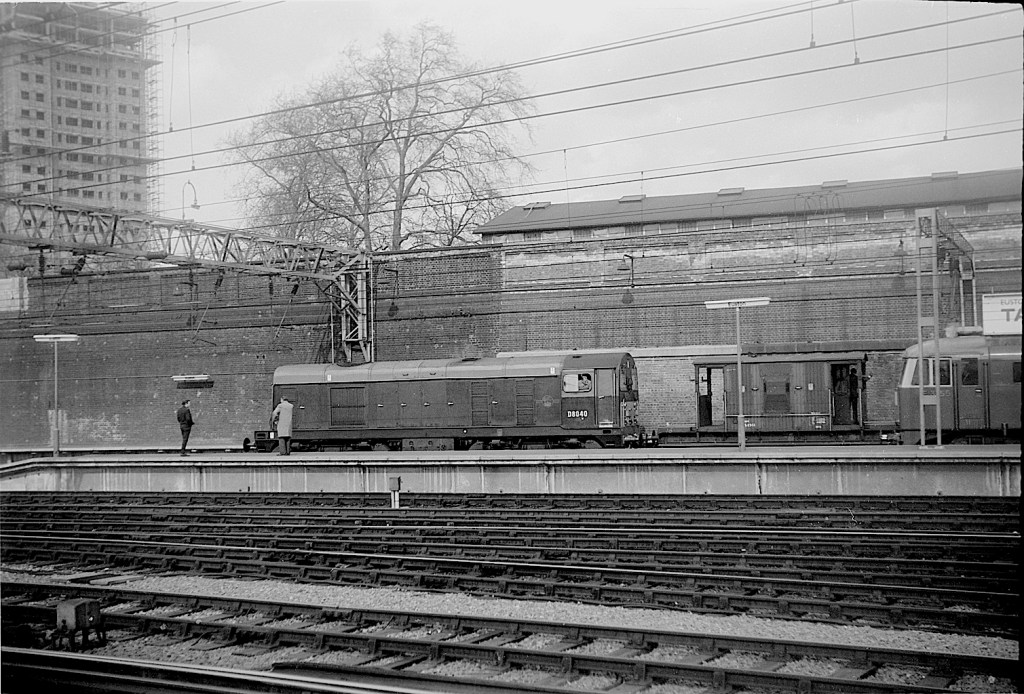
With electrification completed, D8040 acts as pilot loco; while E3165 waits to depart on March 29th 1967. (other locos seen at Euston on that day can be found by clicking the box below, then scrolling down to the date.)
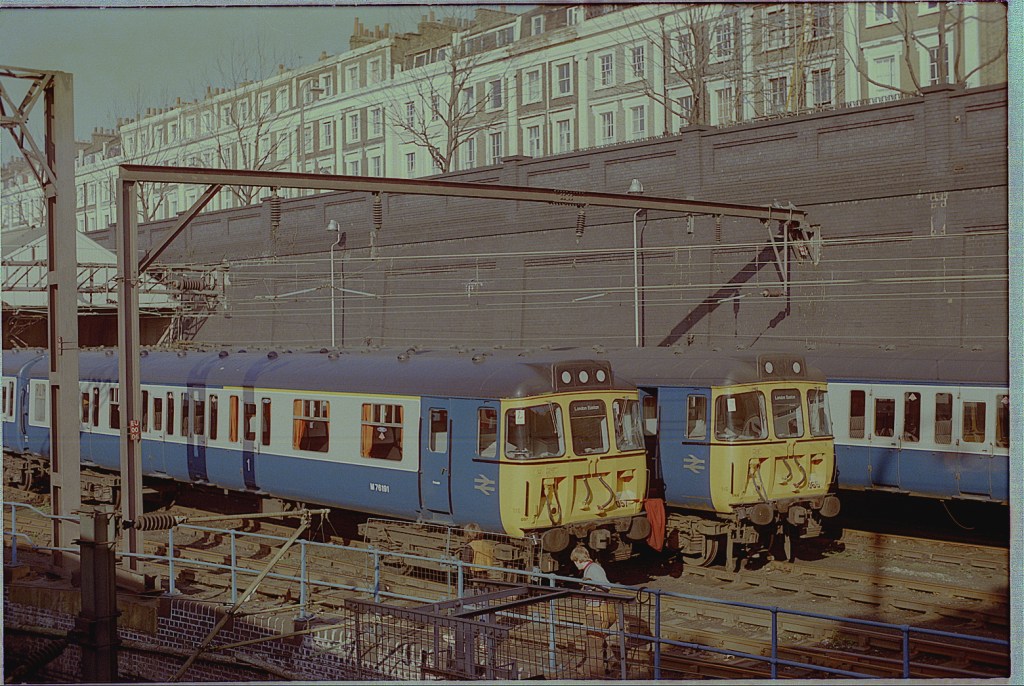
Parked up near the station in 1980 are 310057 and 310066.
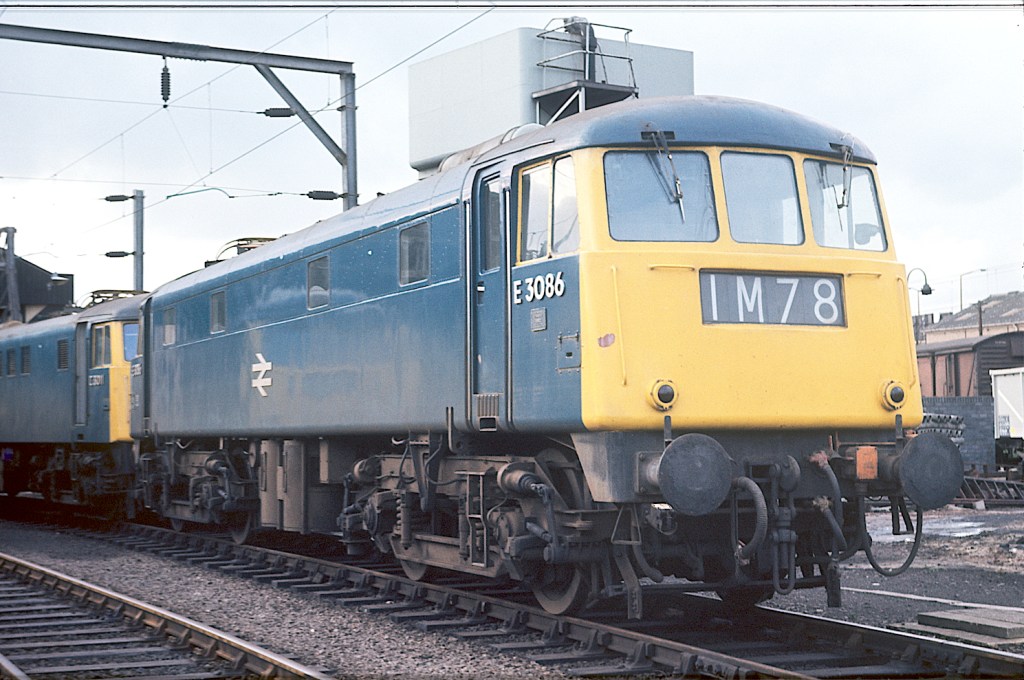
Seen at Willesden in 1972 are E3086 and E3011.
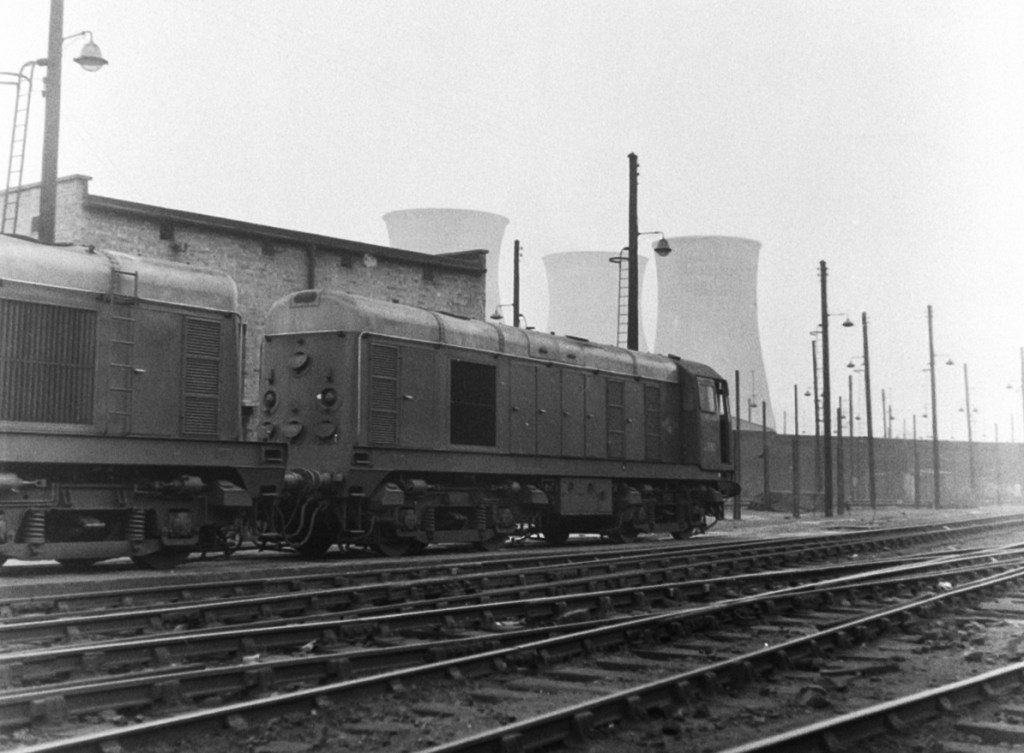
Much earlier visitors to the depot in the new diesel era, were D8003 and another unidentified member on June 7th 1958.
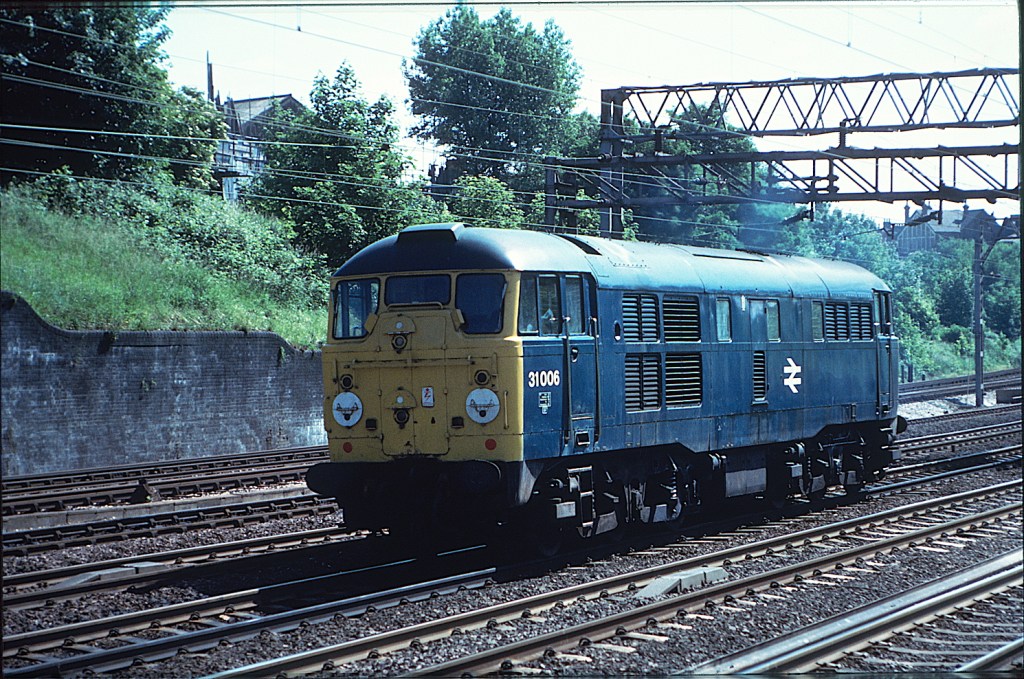
Stratford’s Brush 2’s ventured onto the WCML at times. Here is 31006 near Harrow on June 22nd 1979.
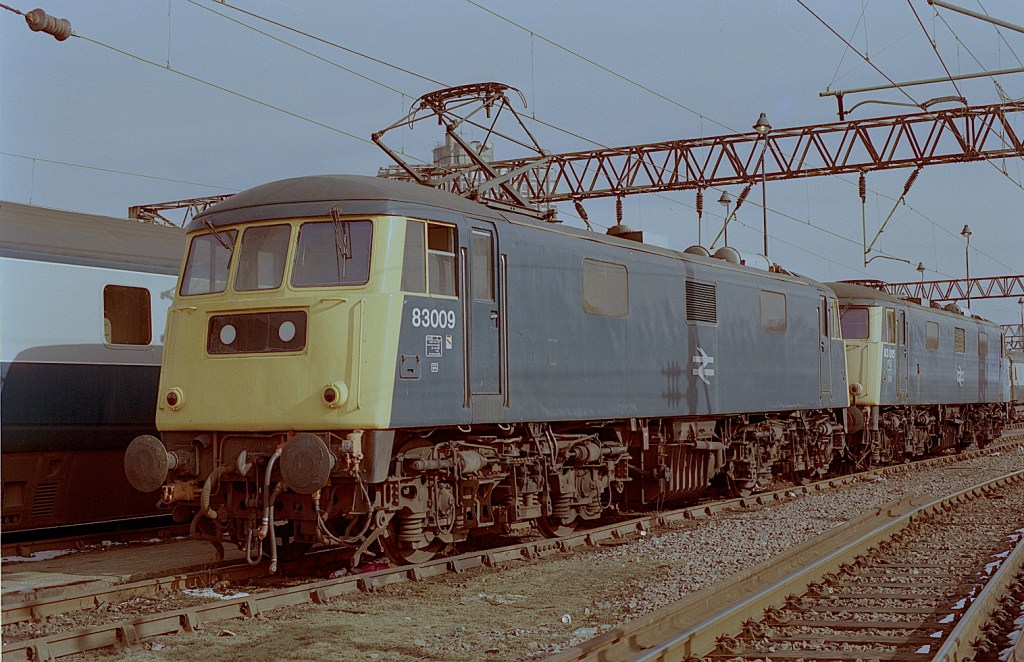
83009 and 83015 are seen in Wembley Carriage Sidings in 1980. I had not realised how complex the class 83 bogies were.
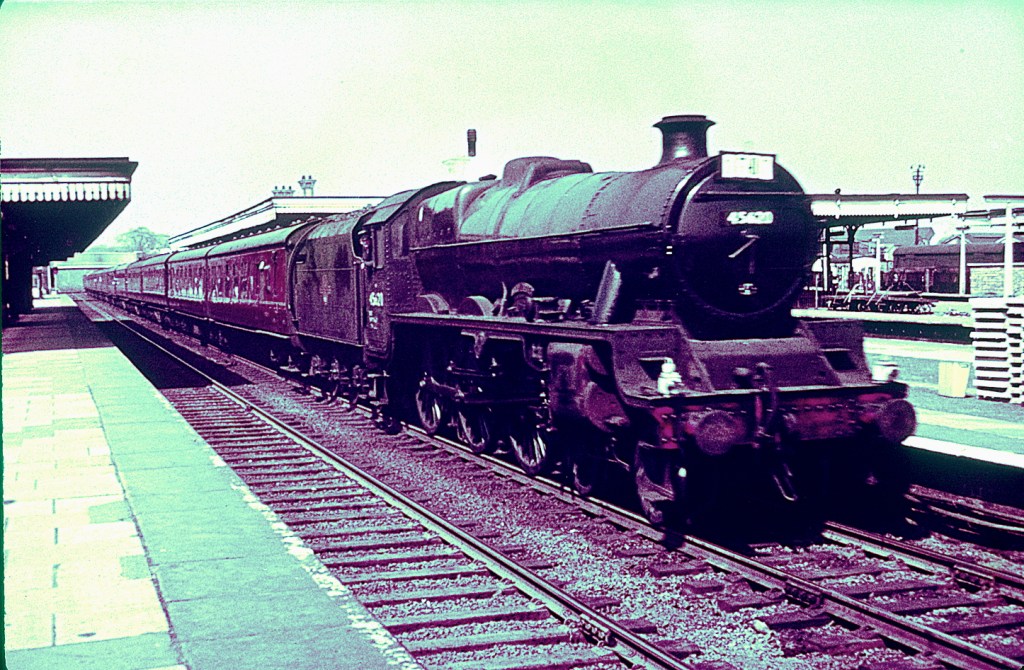
This is Watford Junction in the early 1960s, with 45620 ‘North Borneo’ passing with a southbound express on April 27th 1963. Unfortunately the colour balance of the film used was not particularly good – resulting in this red/green hue. I have corrected it a little, but my skills are limited.
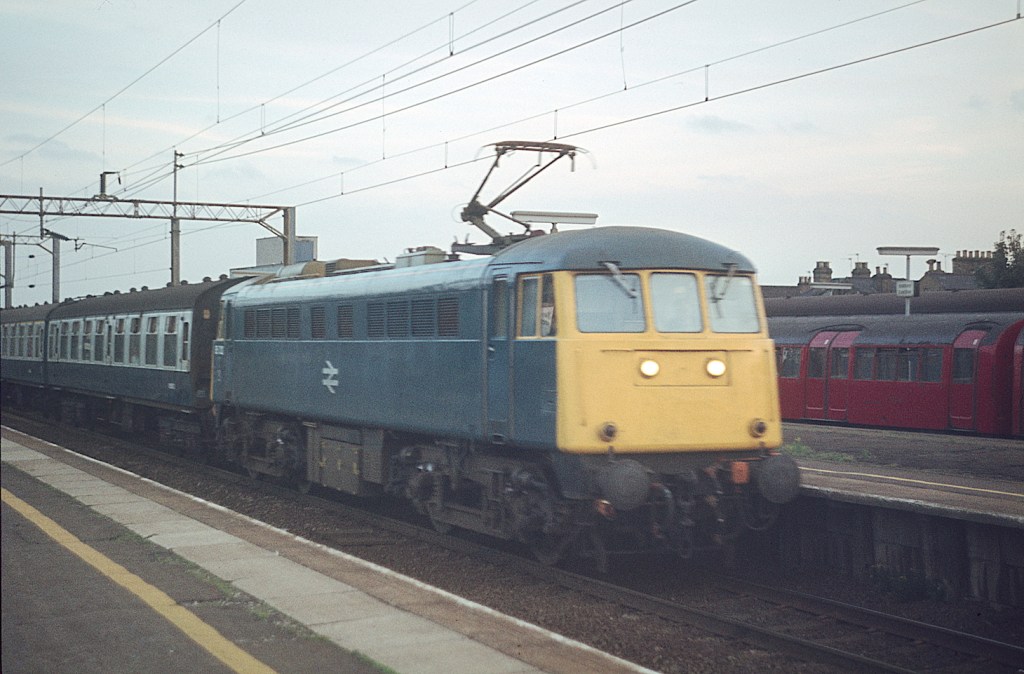
Fifteen years later than the Jubilee in the previous photo, 85033 is seen at Watford with an extra service formed of Mk1s on a grey evening. September 15th 1978.
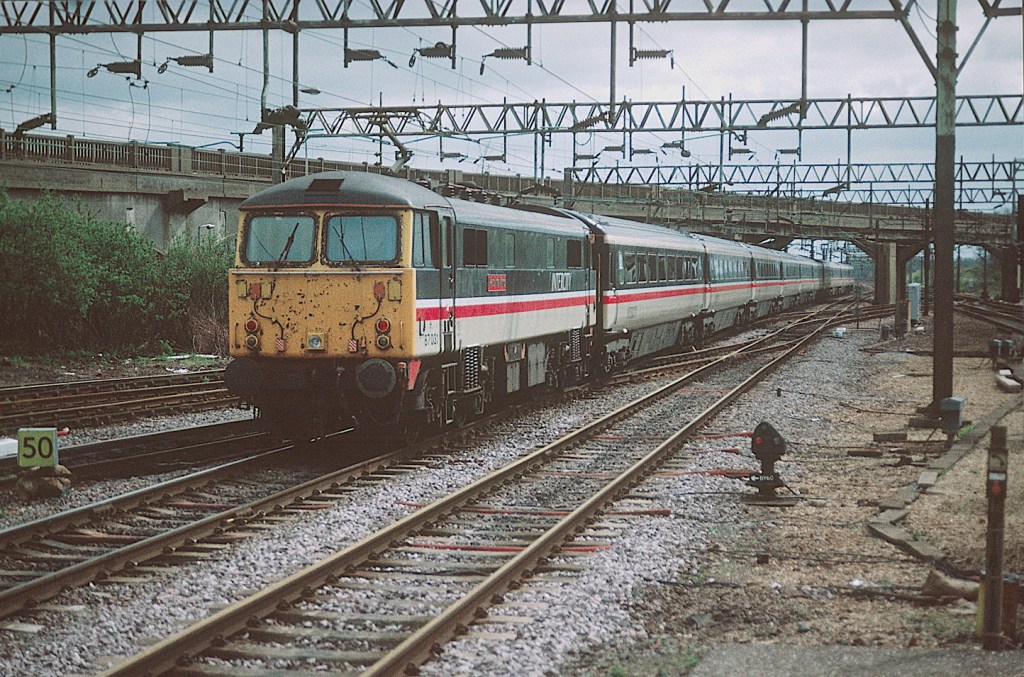
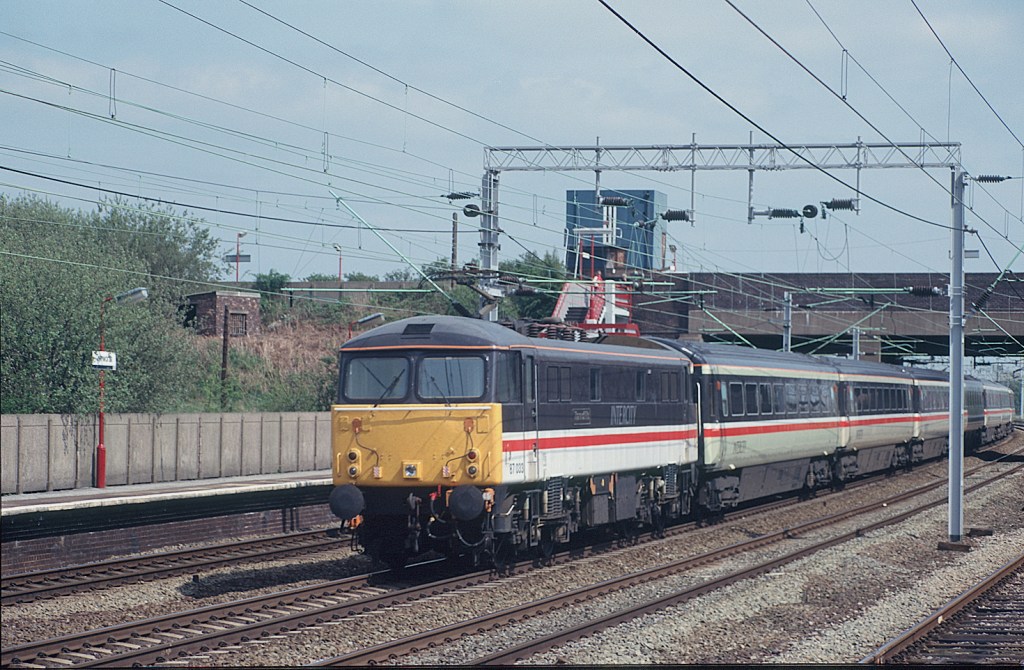
87031 passes Bletchley in the early 1990s. A search of my scans shows very few shots taken here and this is probably the best of them.
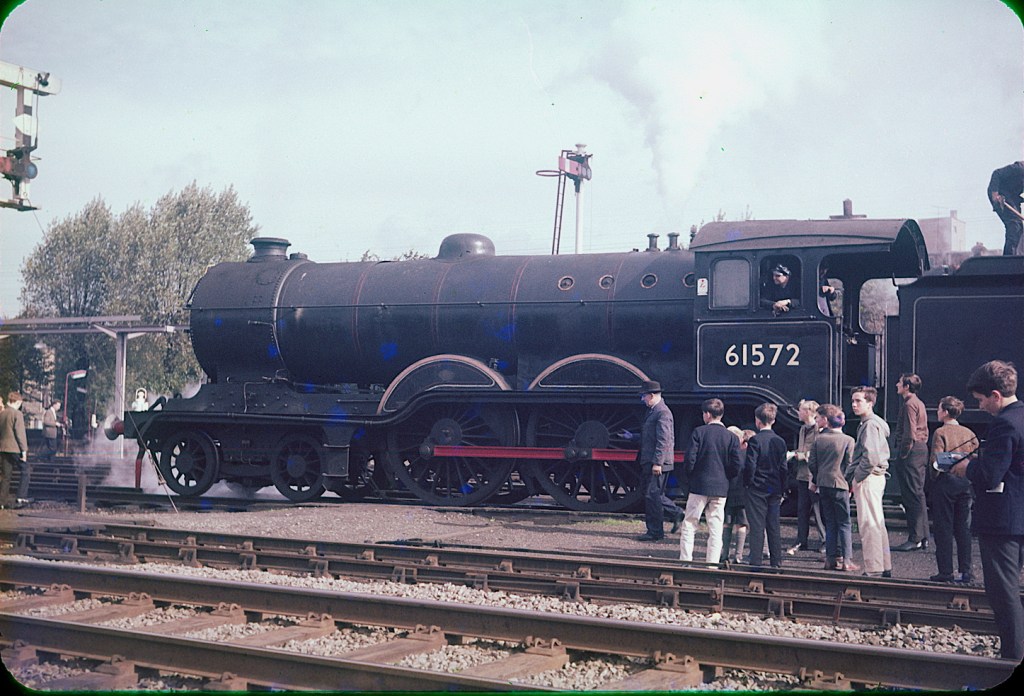
A little O/T possibly, but the location is Northampton. This is the ‘Wandering 1500’ railtour of October 5th 1963, in the days when enthusiasts could travel all around the country by train. B12 61572 was the last of the class and the tour locomotive throughout. The trip commenced at Broad Street and then took a circuitous route via Finsbury Park, Hitchin, Bedford, Northampton, Towcester, Stratford On Avon, Leamington Spa, Rugby, Watford and Camden Junction before returning to Broad Street.
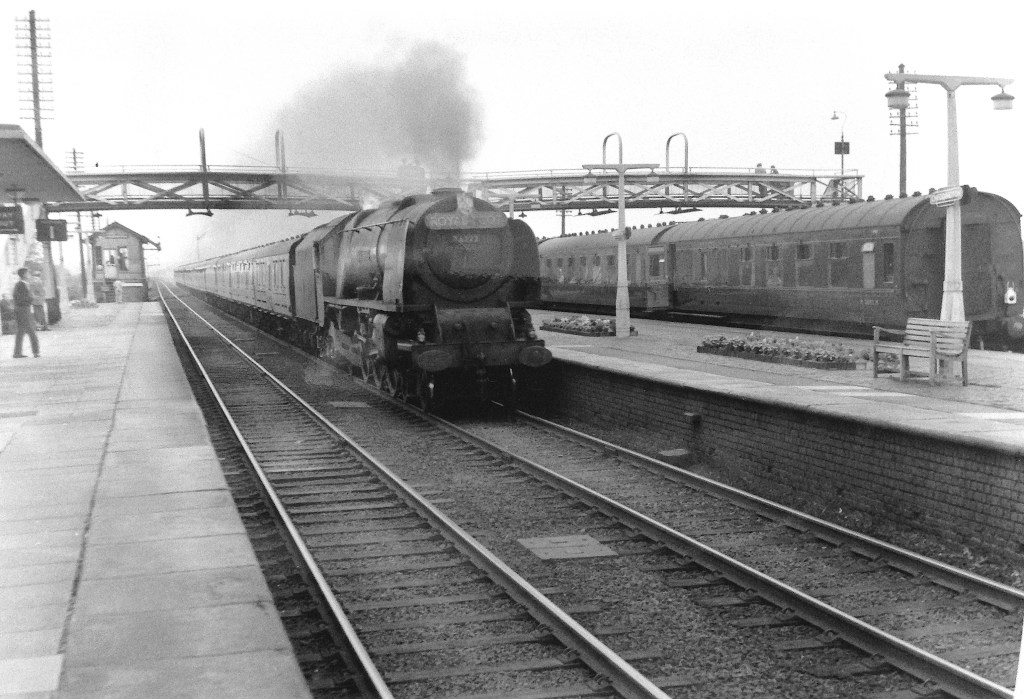
The Royal Scot races through Cheddington station circa 1960, headed by Stainer pacific 46222 ‘Queen Mary’.
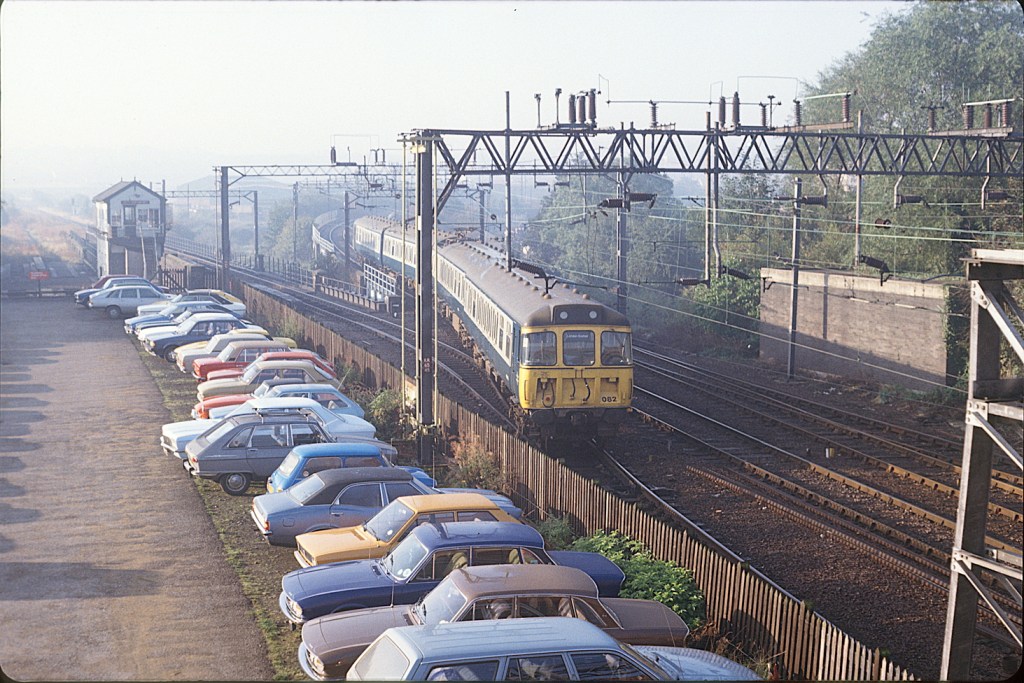
A more identifiable view of Northampton. 310082 is seen with a stopping train from Euston on September 30th 1982. The early 80s line-up in the car park is of interest.
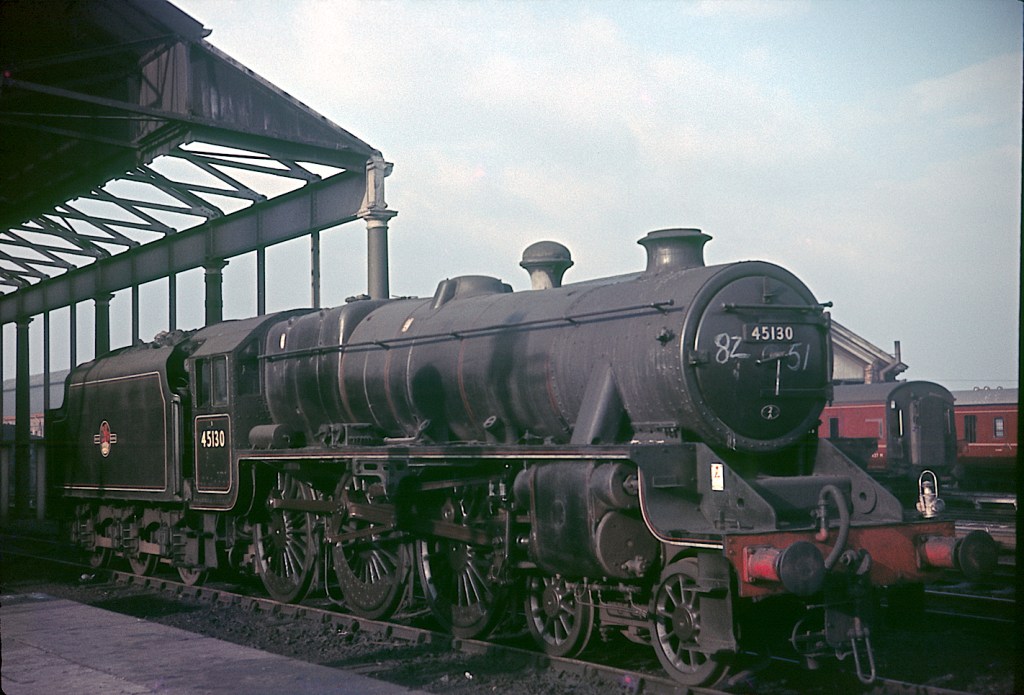
Black Five 45130 is seen at Rugby in November 1962. In fact, this and the next image were both taken during the same month, showing the variety of motive power a year or two before the electrification wires arrived.
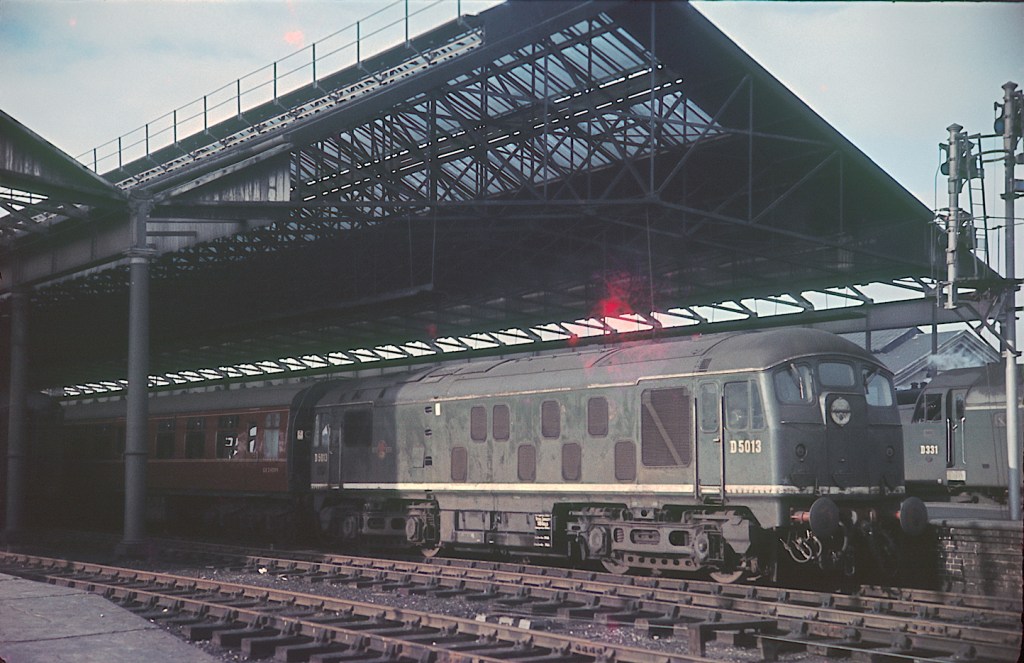
D5013 is pictured at the front of a stopping service, most likely to Euston; while D331 is seen behind. The EE type 4s were the staple express motive power on this route, in the years between the withdrawal of the Stanier pacifics and the arrival of the electrics.
Just over ten years later and E3178 is passing Rugby on a regular fast service to/from Euston. Mk1s were still in evidence on some services, but many had already gone over to Mk2s of various kinds.
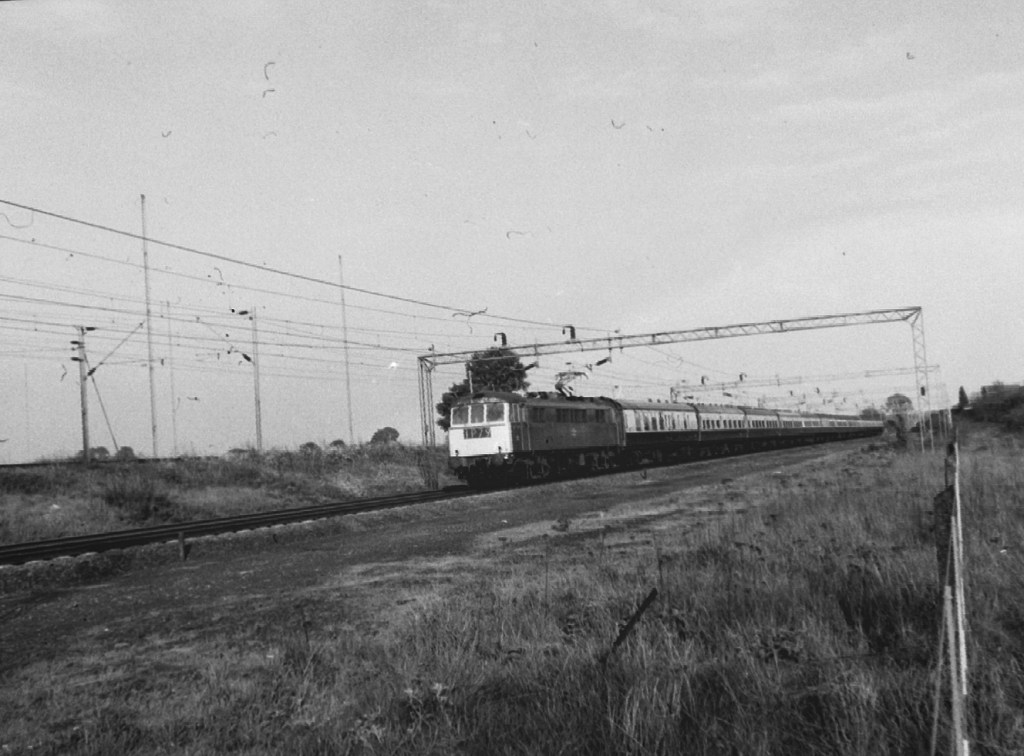
A not particularly well timed photo from Rugby in the late 1970s (the sort that I seemed able to produce with alarming regularity). Once again, Mk1s seem to make up at least the front half of the train, but there do appear to be some air conditioned vehicles towards the rear.
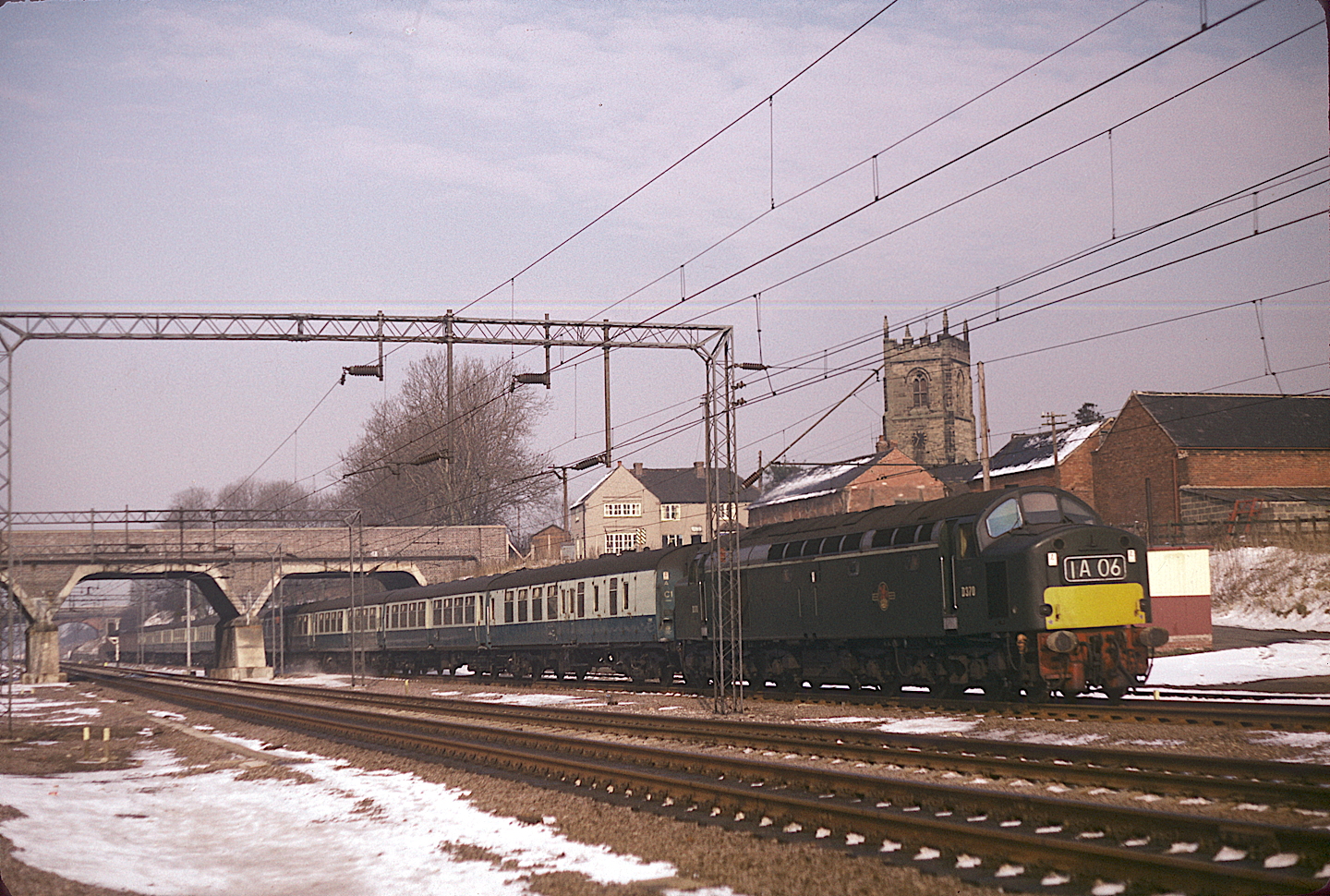
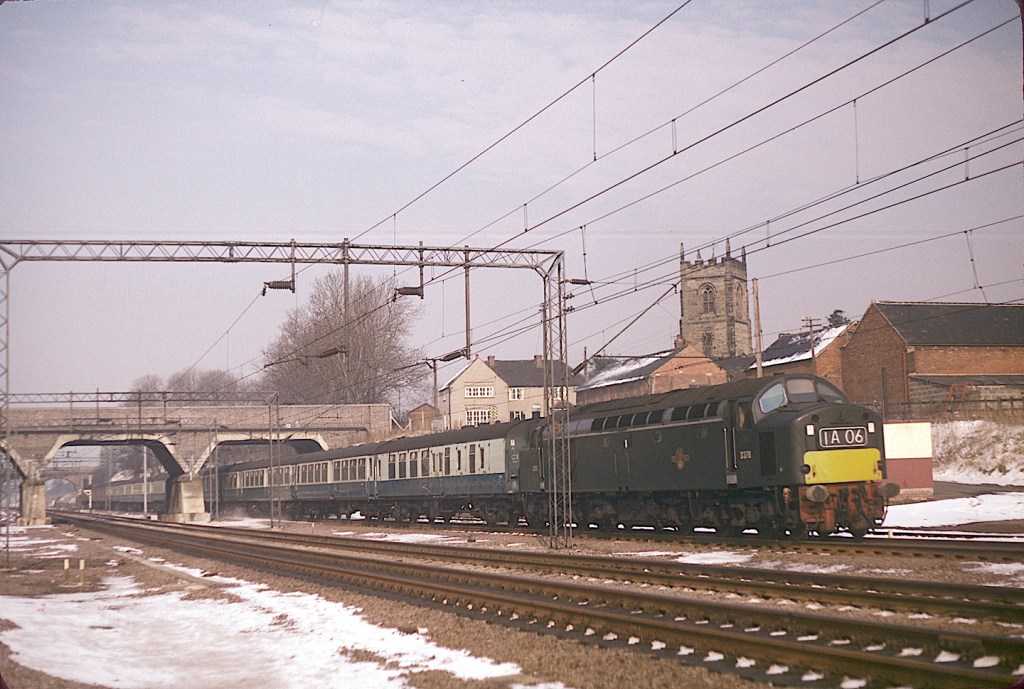
Between Rugby and Nuneaton, the WCML passes through the village of Shilton, which used to have a station. Passing the site of the station on March 5th 1965 is D370 with 1A06 which I assume is an Anglo-Scottish express (although I don’t have any working timetables). Of interest is the XP64 coaching stock in the train. These coaches can be identified by the recessed doors and more of a Mk2 body profile.
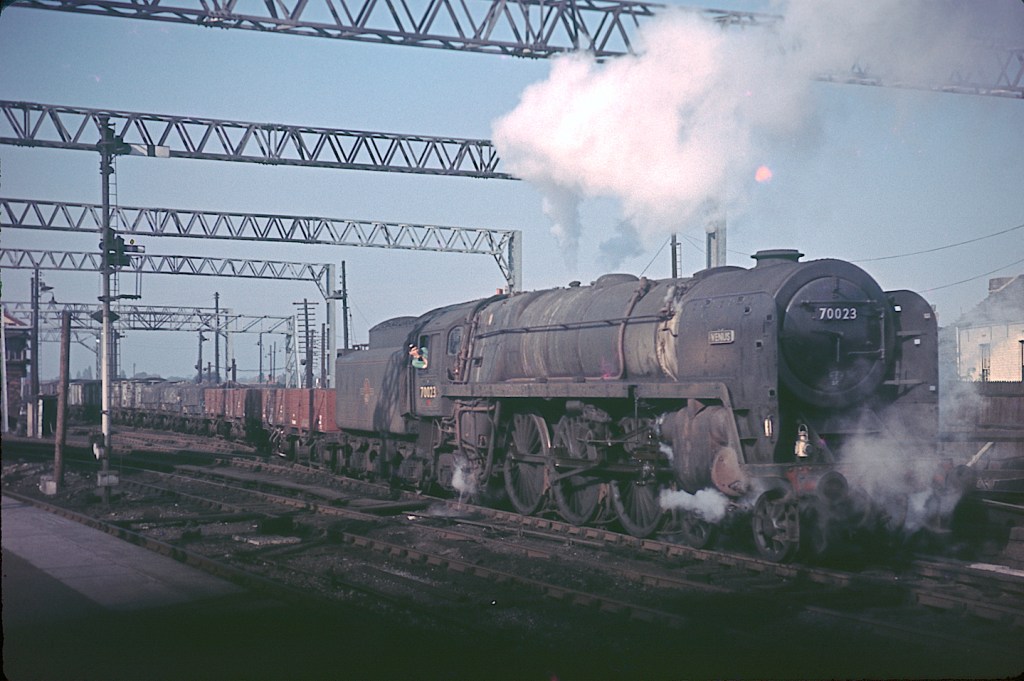
Electrification is coming, but not just yet at Nuneaton on October 18th 1962. Britannia 70023 ‘Venus’ is starting a mixed freight out of the sidings. The locomotive is in lined green livery, although very little cleaning was done to steam engines in those days. A challenge for those who weather models?
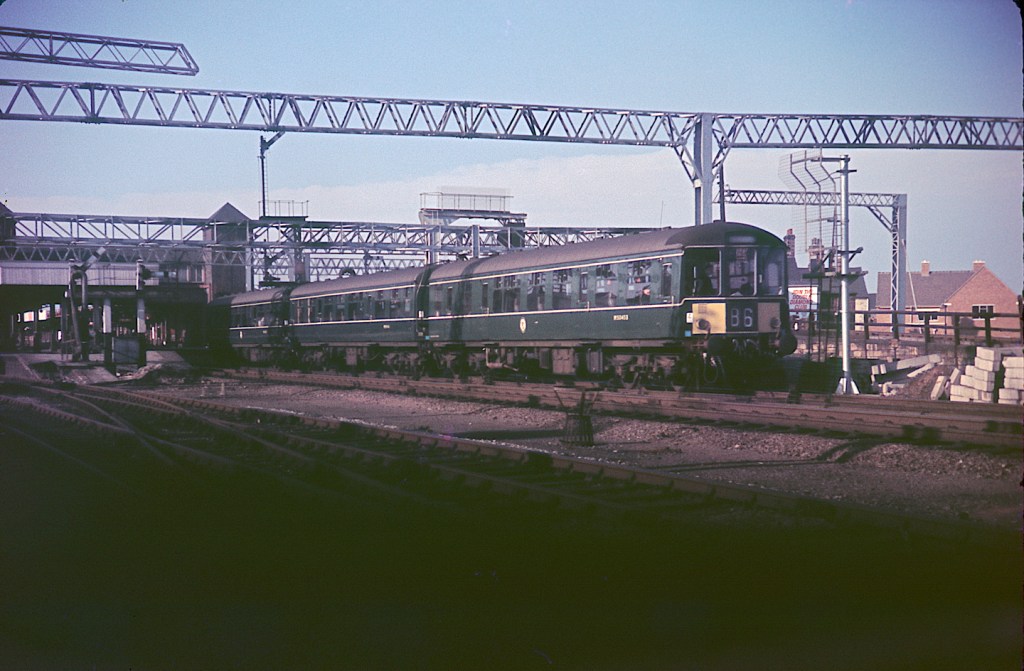
On the same day as the photo of 70023, a Birmingham RC&W three car DMU leaves Nuneaton on a local service. The leading vehicle is M50453, and a limited amount of research leads me to believe that the other two are M59161 and M50505. This unit was allocated to 5D Stoke On Trent at that time.
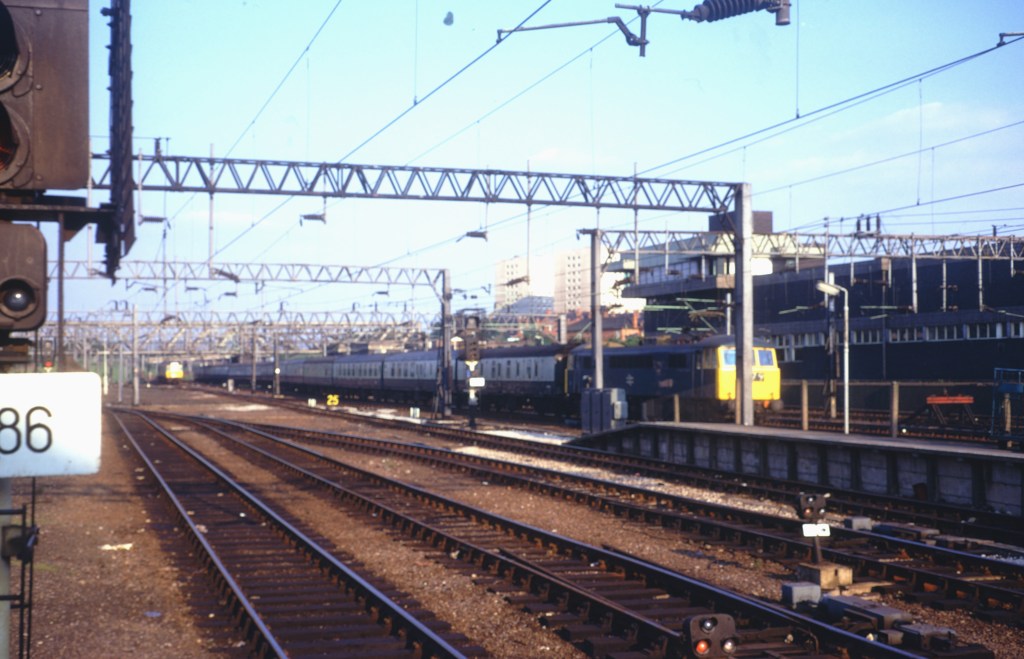
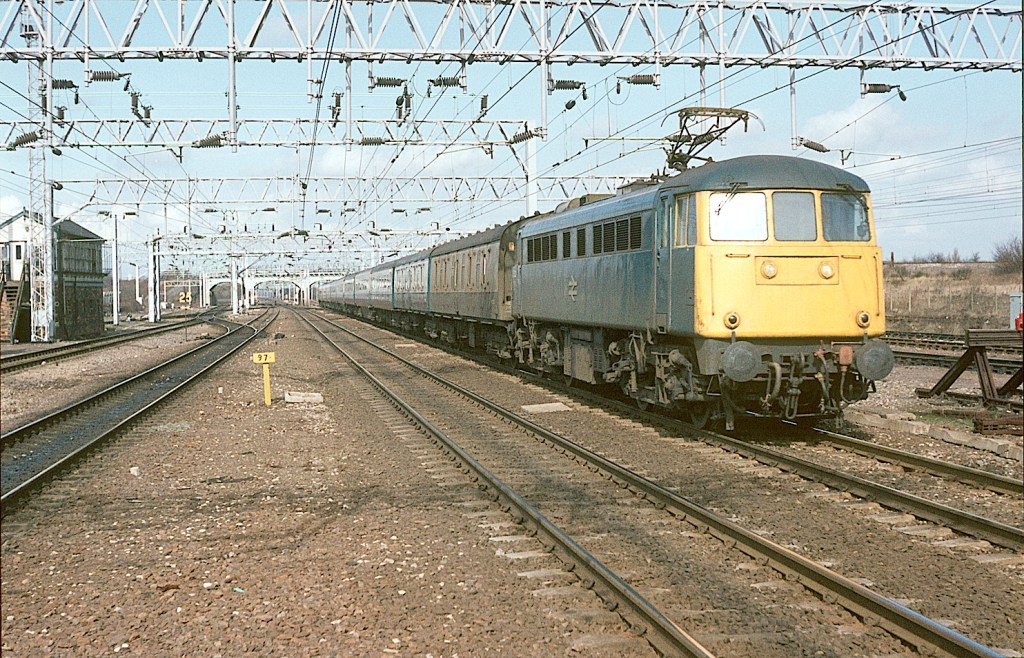
March 24th 1989, and 86236 has failed at Nuneaton. 47341 is backing down in order to take the whole train forward.
Sadly, I have no notes on this and can’t quite read the number of the 85 passing Nuneaton on March 25th 1985. The train is a mixture of Mk2s and Mk3s with two Mk1 BGs behind the loco, but may be empty stock.
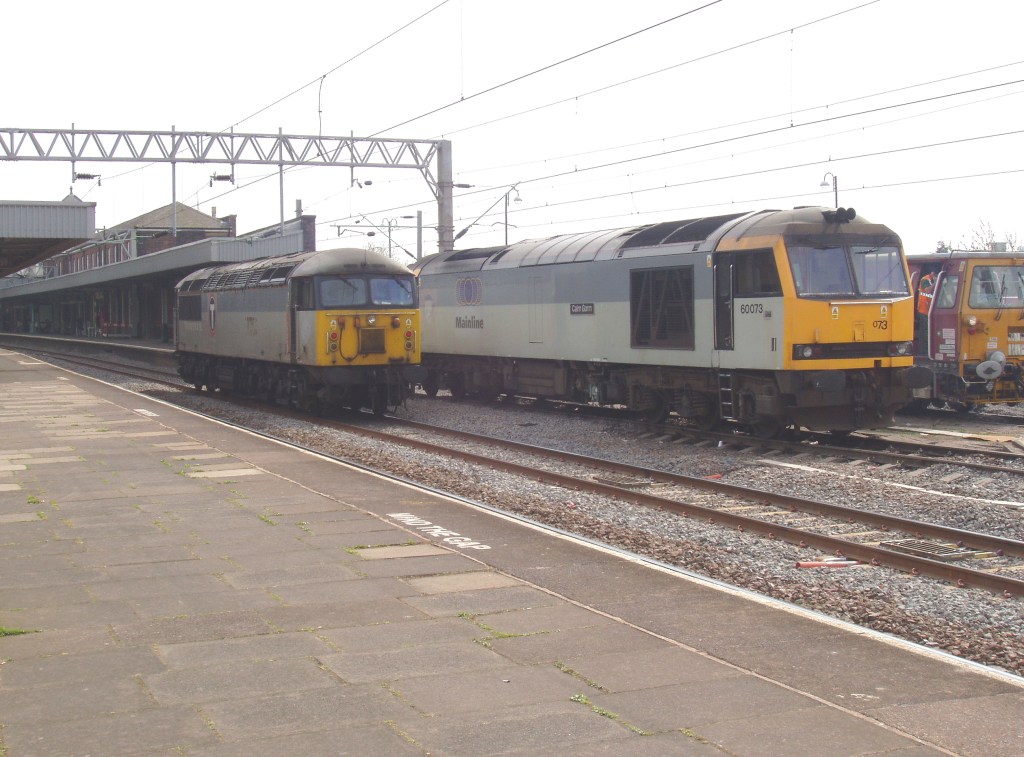
A slightly more recent photo from Nuneaton. However, although this may seem like a mid-1990s image, it was actually taken on April 15th 2003. 56099 on the mainline runs past 60073 in the siding.
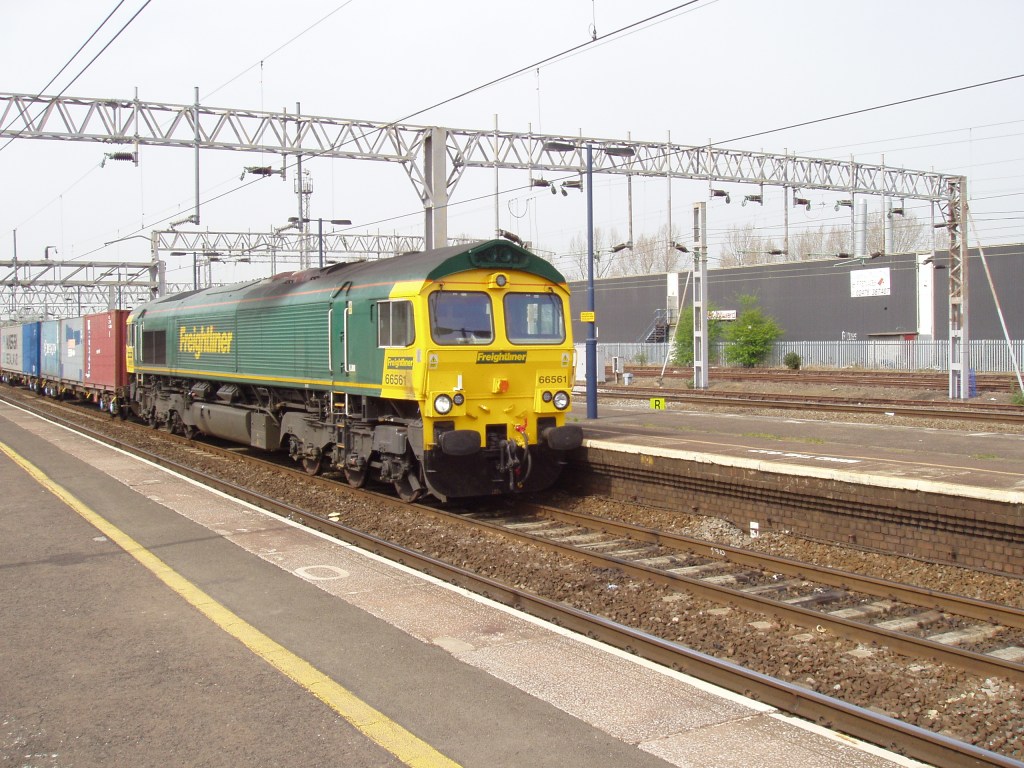
On the same day as the photo above it April 15th 2003, 66561 passes Nuneaton with a southbound freightliner service.
I have very few photos taken at Tamworth, but here is 87033 racing past the low level station on April 28th 1995. The high level route from Birmingham to Derby crosses on the bridge in the background.
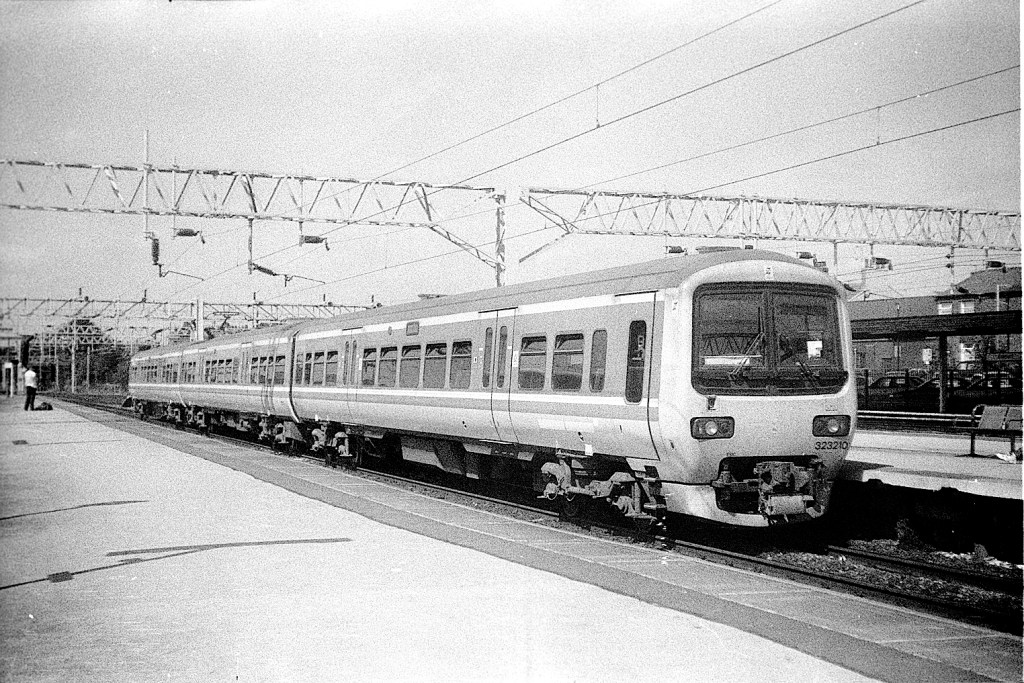
In the mid 1990s 323210 arrives at Stafford with a stopping train from Birmingham. Having looked at the number of images I have from Stafford, I will create an extra page just for that station, and also one for Crewe (for the same reasons).
There was already a page dedicated to Carlisle (but only 1990s), which I have decided to incorporate into this group, but expand the date/time scenario as with the others.
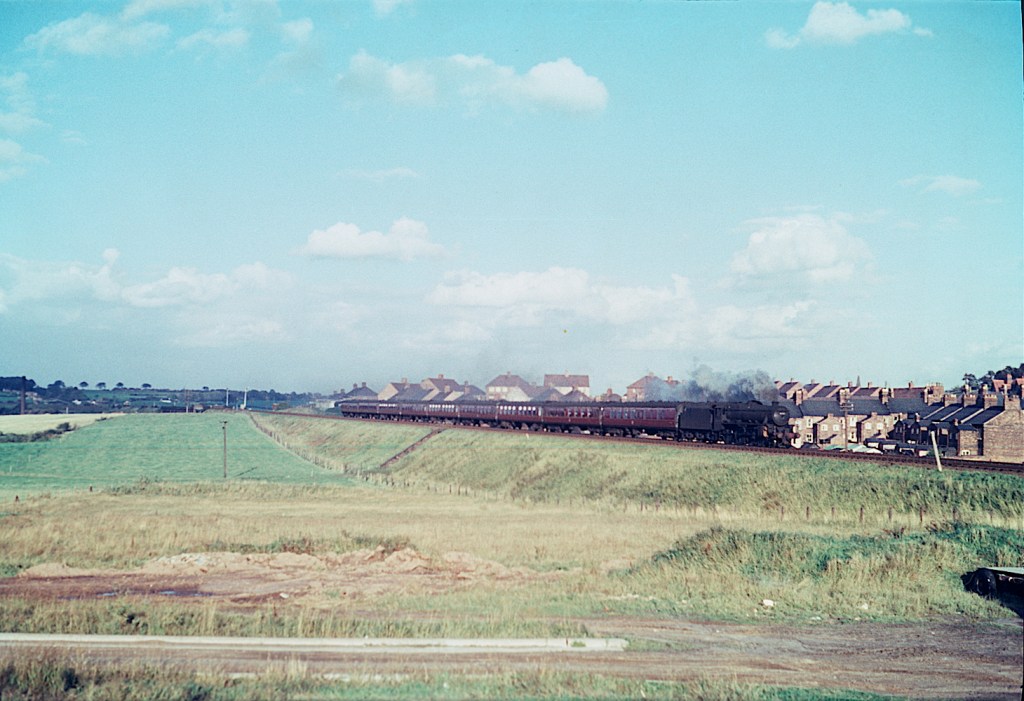
A Black 5 is seen near Warrington with what I believe is a semi-fast service in the early 1960s. I make this judgement because of the lack of catering in the train formation.
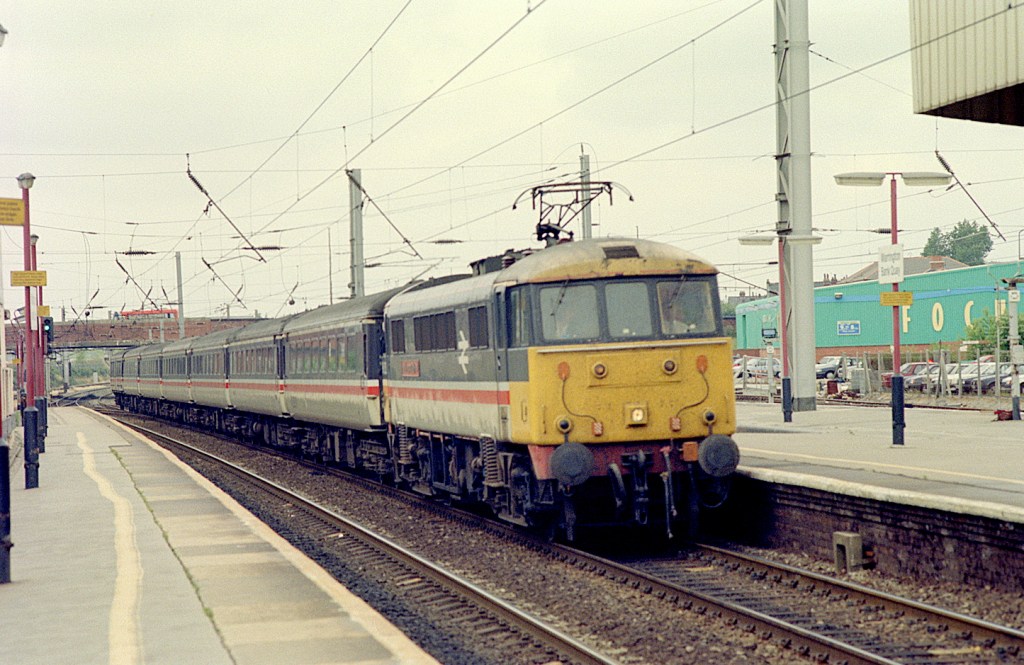
An unidentified 86 slows for the Warrington stop with what appears to be a cross-country service in the early 1990s.
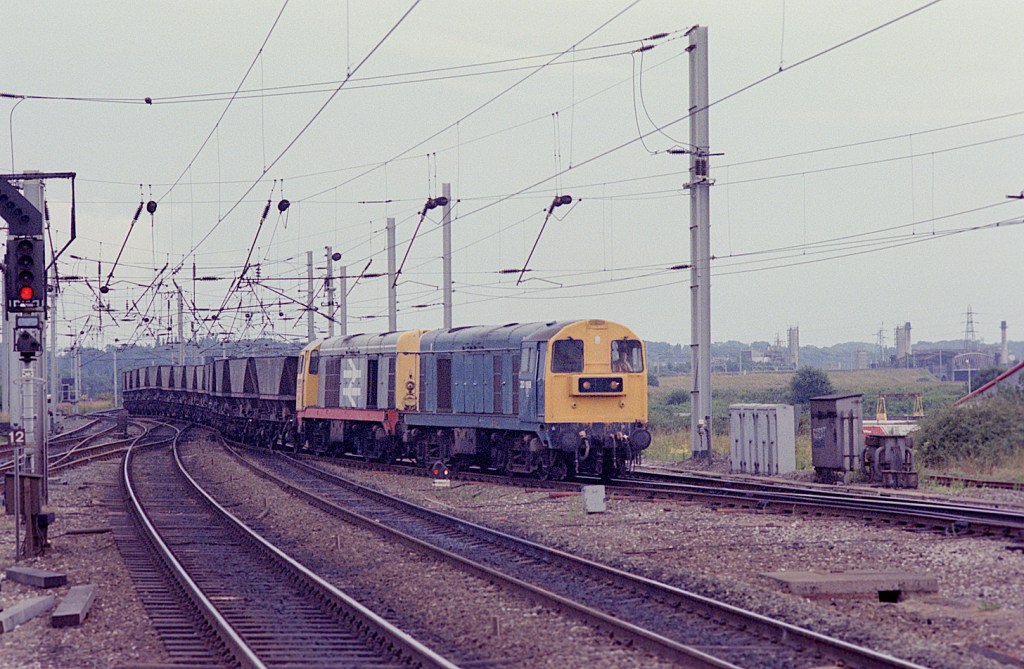
An MGR train is seen at Warrington behind a pair of class 20s in early 1991. The leading locomotive is 20169 but the identity of the second one is unknown.
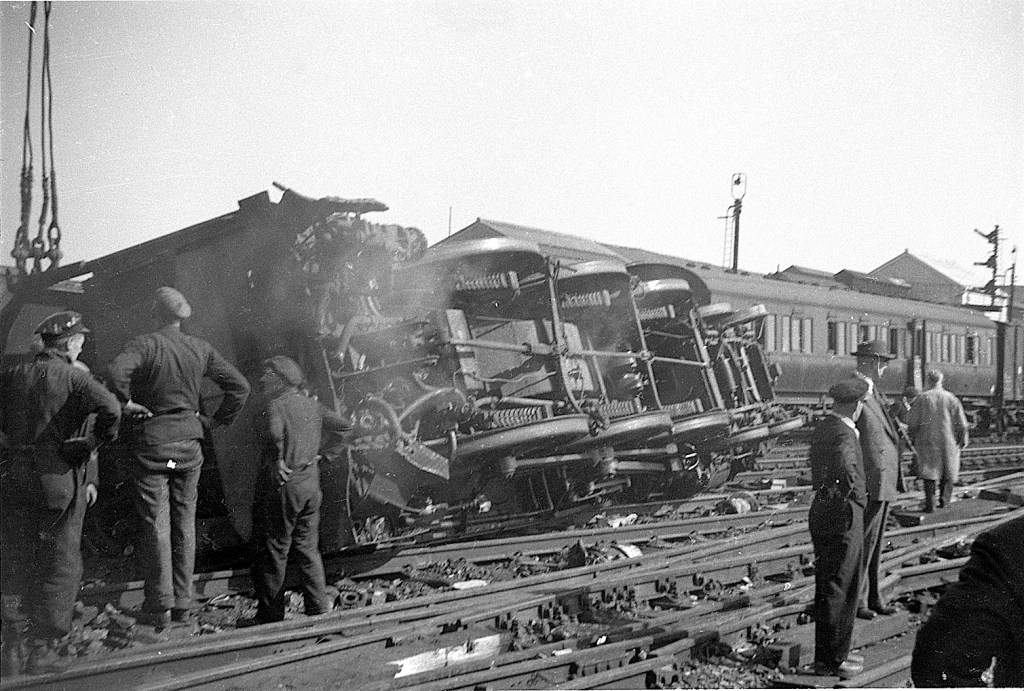
On August 28th 1961 there was an accident on the railway near Warrington Dallam shed in which one person died and six were injured. This is the scene some time after the crash. However, the mystery is that there seems not to have been a formal accident inquiry. There is a dedicated page on the Railway Archive site, but little or no further information – and Wikipedia doesn’t mention it at all. Further internet rummaging leads me to believe the locomotive involved was Black 5, 45401.
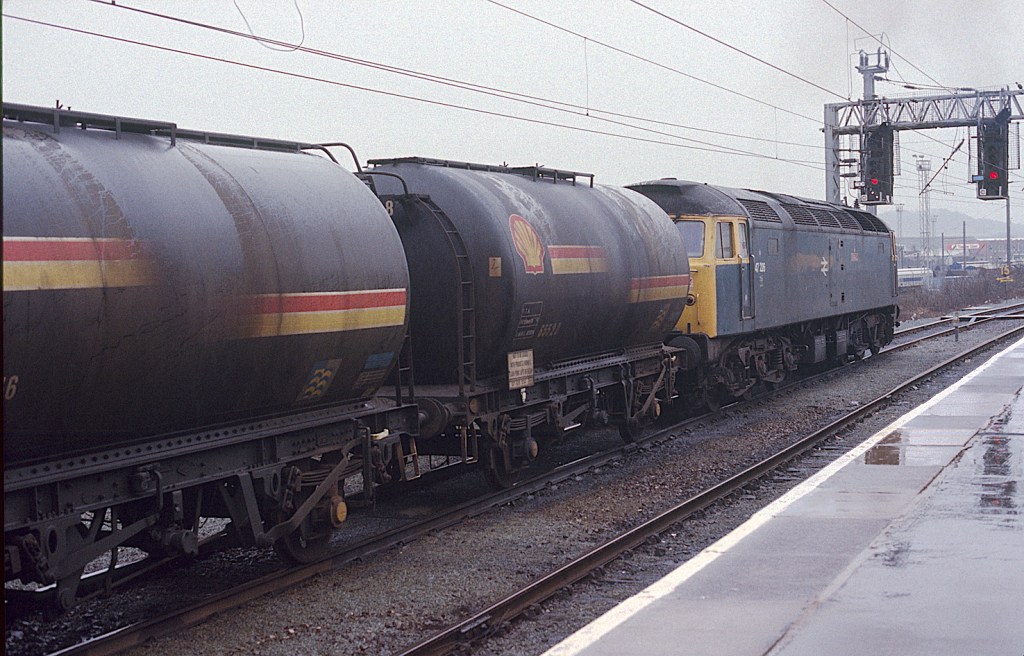
At Bank Quay station 47226 has two white lights on the left hand signal indicating a move of the oil tanks into the yard to the south of the station, on a wet March 4th 1991.
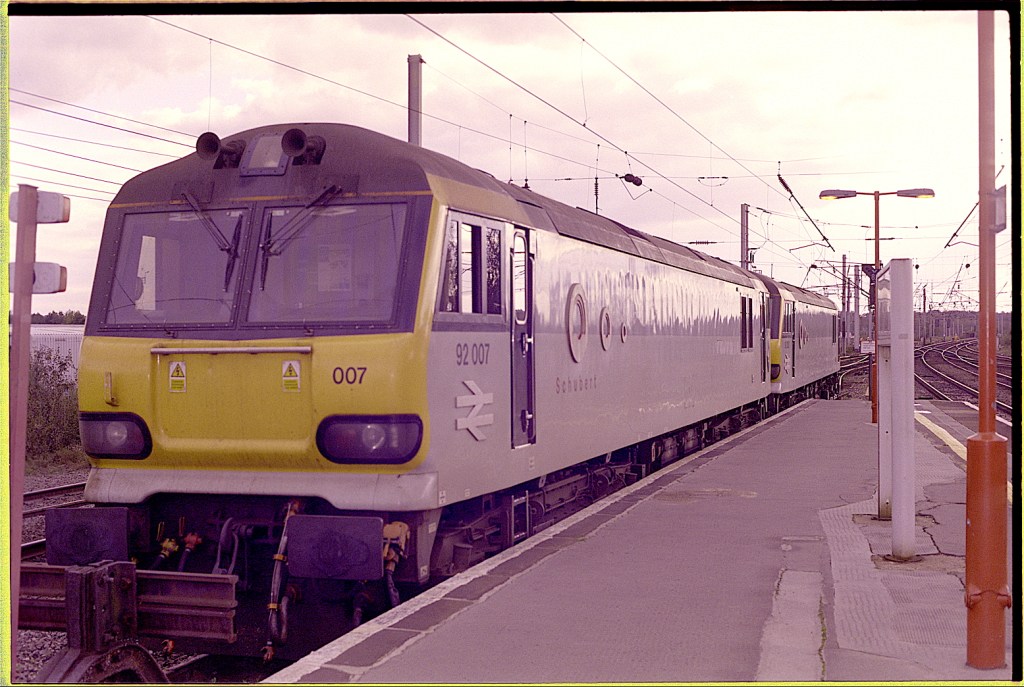
Another dodgy film colour balance. I have taken red out, but any more makes the yellow front turn green. Anyhow, the stabling siding at Bank Quay contains 92007 ‘Schubert’ and another member of the class in this 1994 view.
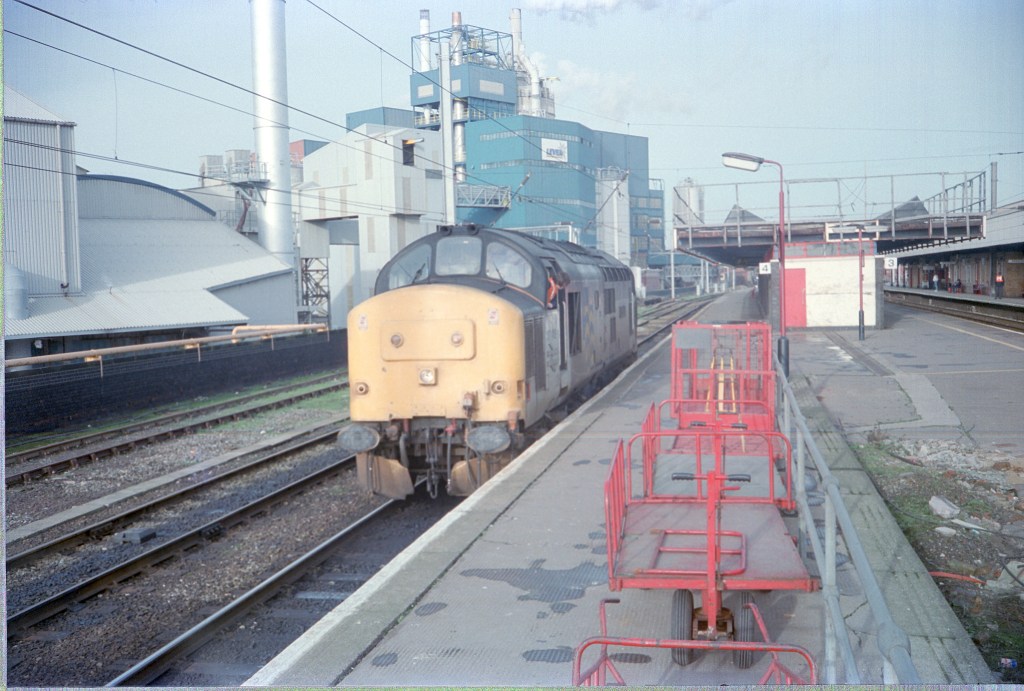
An unidentified class 37 runs light through Bank Quay station in 1994.
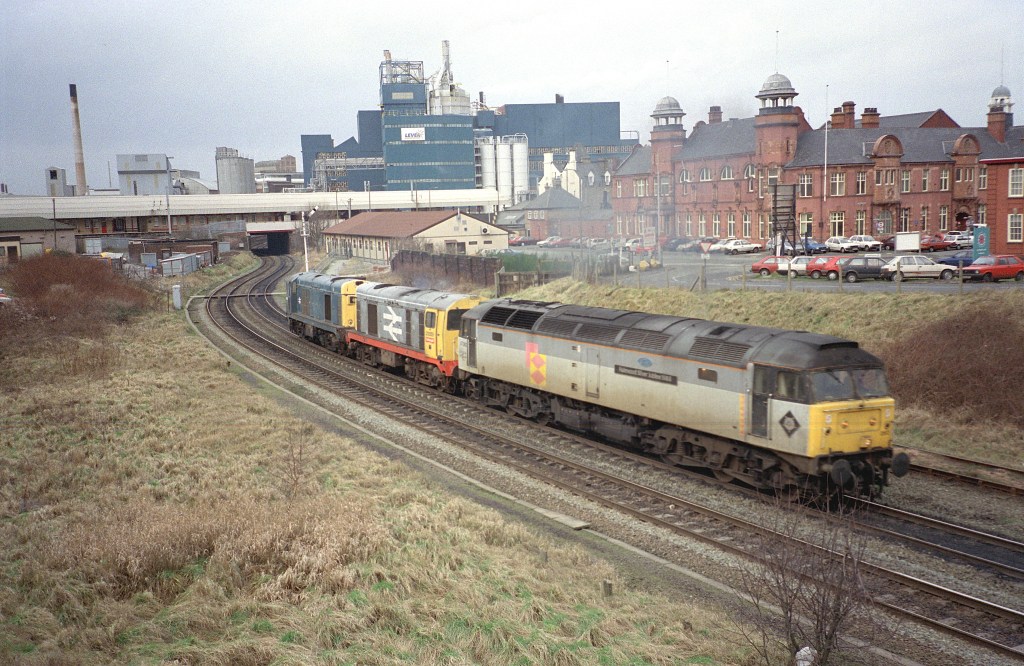
47060 ‘Halewood Silver Jubilee 1988’ tows 20059 and another class 20 having passed under the WCML and heading towards Arpley sidings, Warrington in 1994.
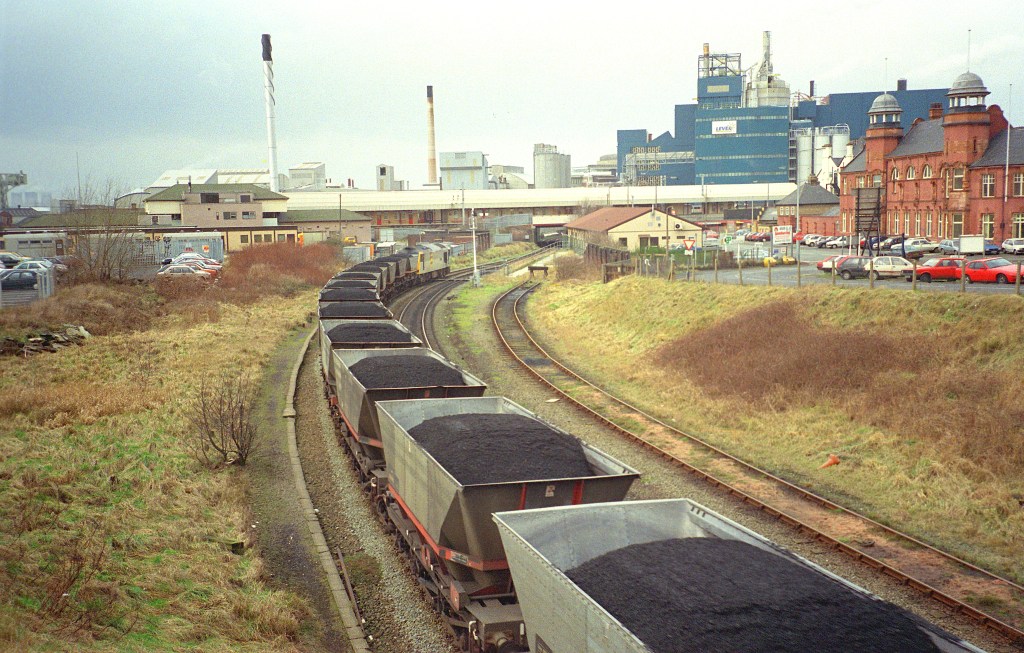
Also in 1994, 60032 heads for the bridge under the WCML with an MGR train of coal for Fiddlers Ferry power station on the line towards Widnes and Speke Junction. The power station cooling towers can just be seen on the distant horizon to the extreme left of this photo. The lines behind the photographer used to continue to Manchester, but are now truncated a mile or so to the east of Arpley sidings, and the rest of the route has become a long distance footpath.
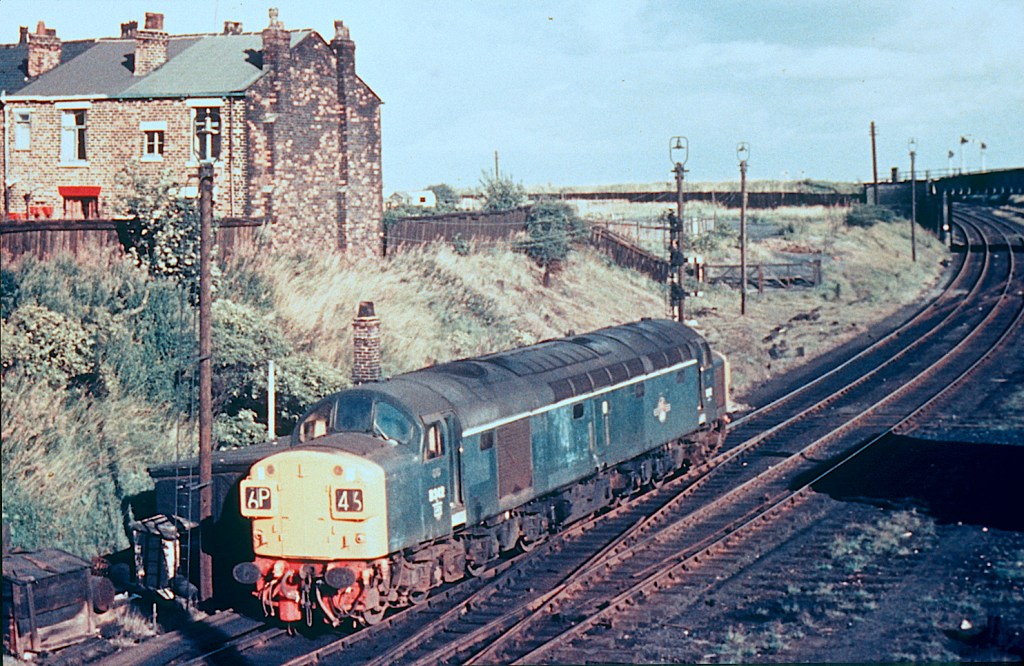
D342 is seen in the Wigan area during May 1969, although I am not sure of the precise location.
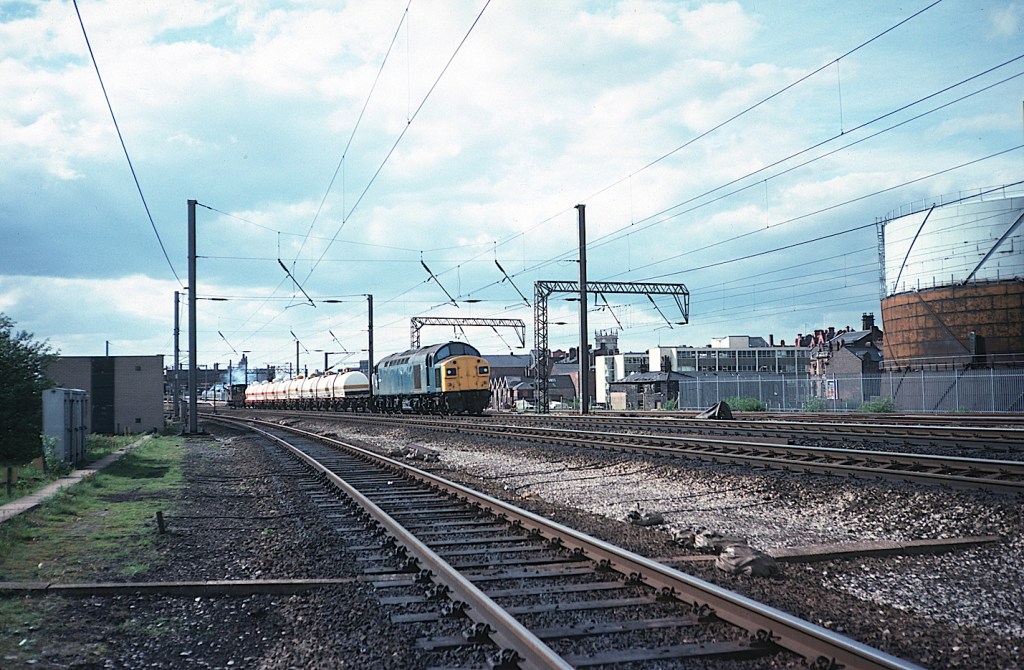
Ten years later and another split head code class 40 (or possibly the same one – the number is not recorded) has charge of a train of chemical tanks and is seen passing Wigan on May 29th 1979. Due to the hazardous nature of the chemicals, these trains ran with a guards van, and barrier wagons at both ends.
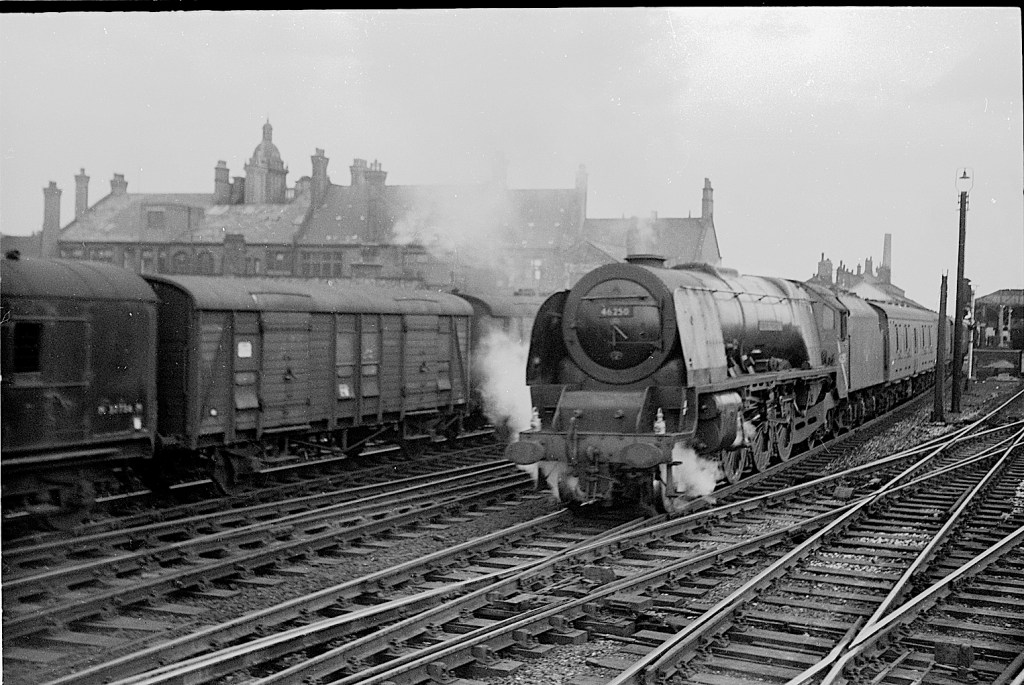
Back in early 1964, expresses were still in the very capable hands of Stanier pacifics, although their time was nearly up – only to be replaced by less than capable EE Type 4s (at least when climbing Shap and Beattock, but much easier for the fireman/secondman). Here 46250 ‘City of Lichfield’ leaves Wigan with a passenger train.
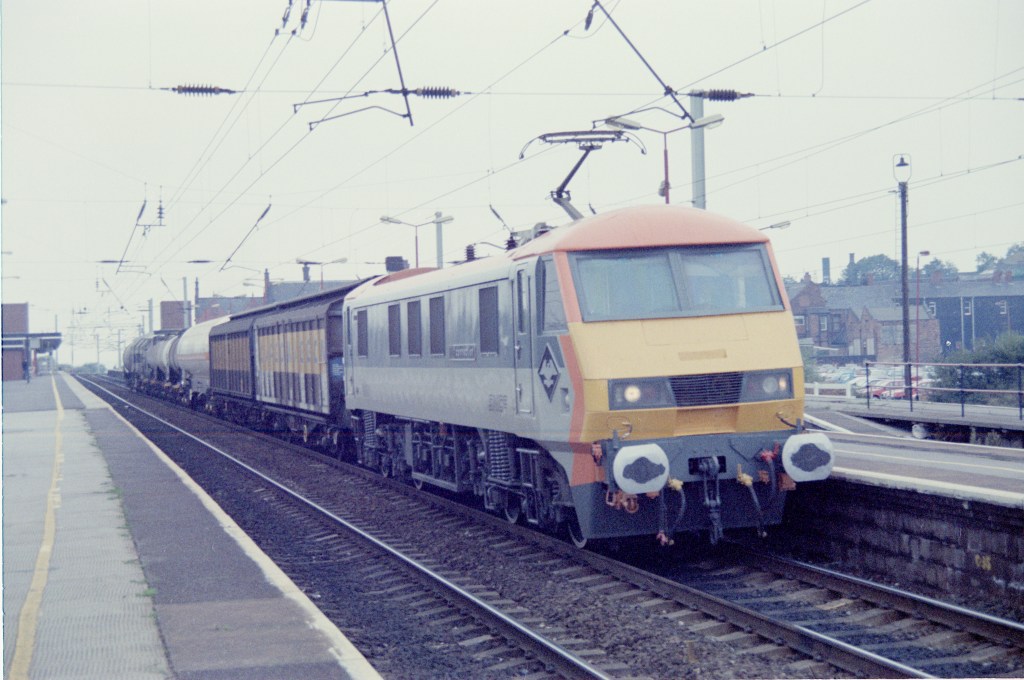
90130 is in charge of a mixed freight passing Wigan on a misty day in 1993. This locomotive was repainted in SNCF livery for the ‘Freightconnection’ show a few months earlier.
Preston is another of those stations with its own page.
48085 may be on PW duties, judging by the crew relaxing in the sunshine at Lancaster during the summer of 1961.
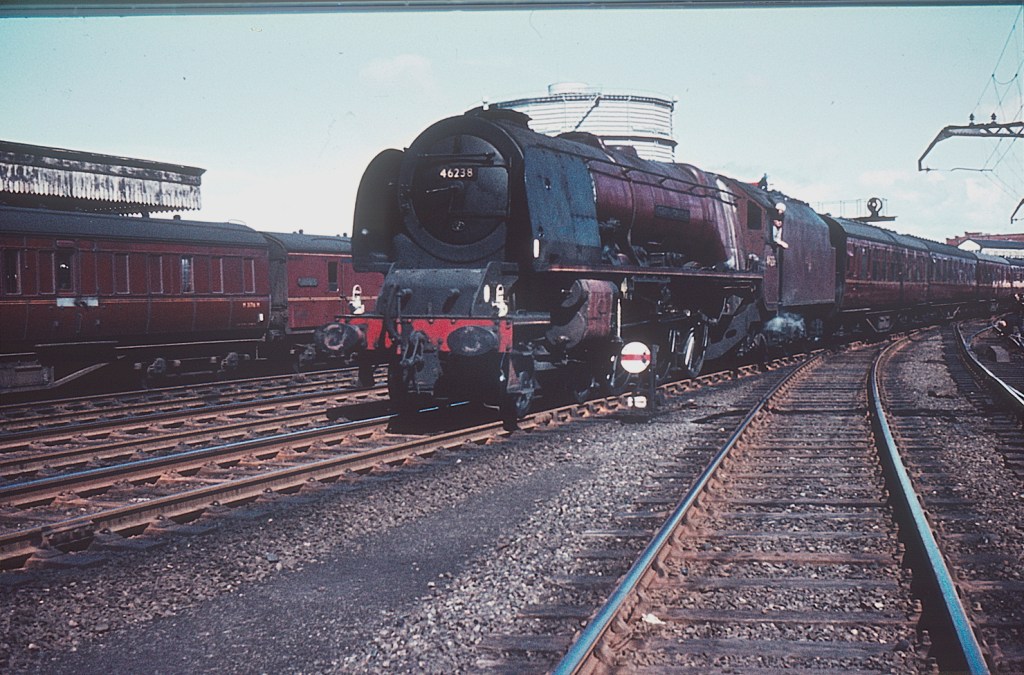
It is all maroon here as 46238 ‘City Of Carlisle’ approaches Lancaster station in 1962. The electrification supports for the Lancaster – Morecambe – Heysham route can be seen on the extreme right.
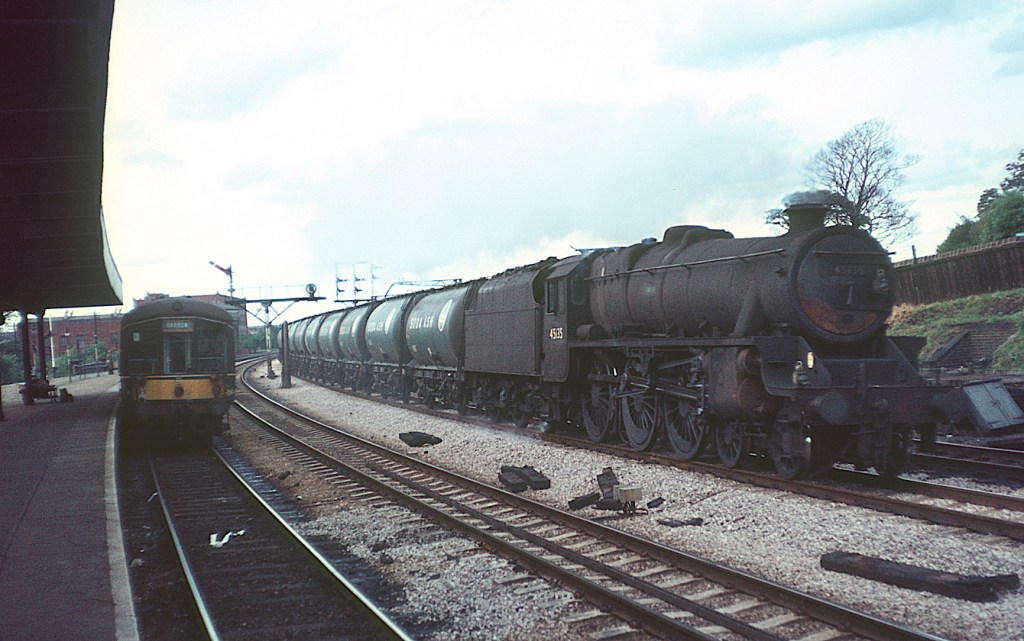
In 1967, Black 5 45135 is in charge of a soda ash train, passing a Derby lightweight DMU, with a destination reading ‘Barrow’, in the platform.
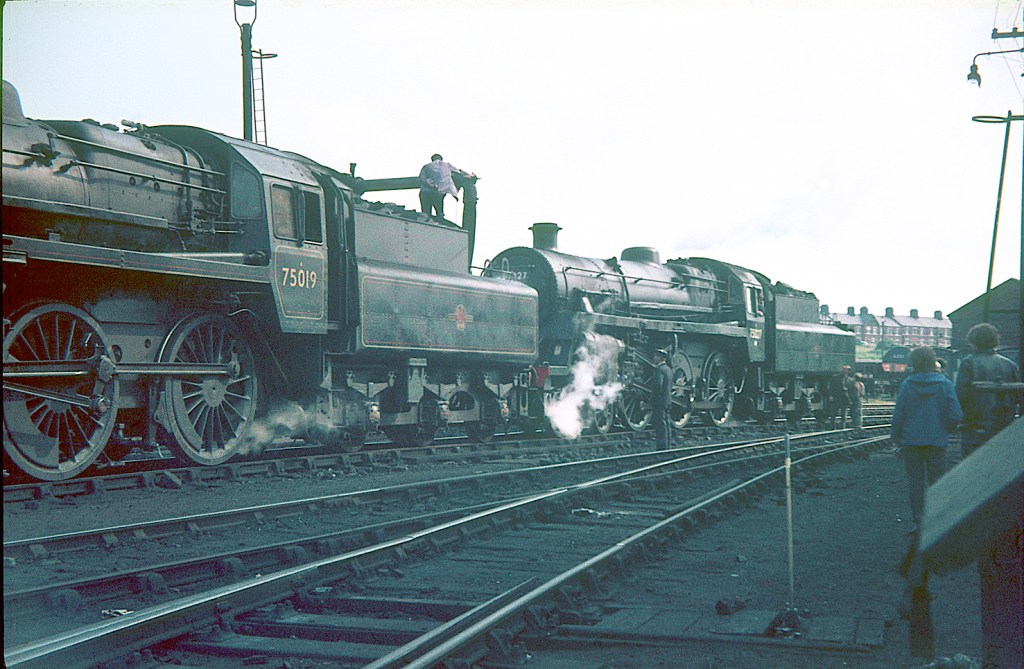
75019 and 75027 are prepared at Carnforth, to take over the “Farewell To BR Steam Railtour” of July 28th 1968. These two locomotives took over from 70013 for the journey to Skipton, where they were in turn replaced by 45073 and 45176. For more details, see http://www.sixbellsjunction.co.uk/
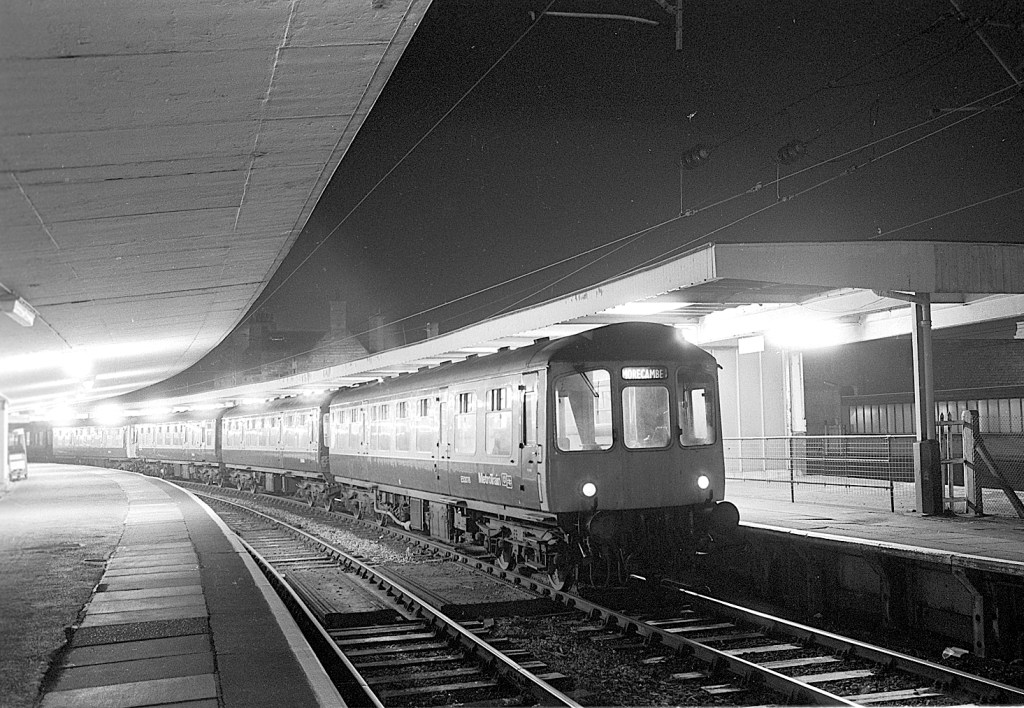
A Leeds to Morecambe service pauses at Carnforth in January 1986. The leading car is E52076 from Hammerton Street (Bradford).
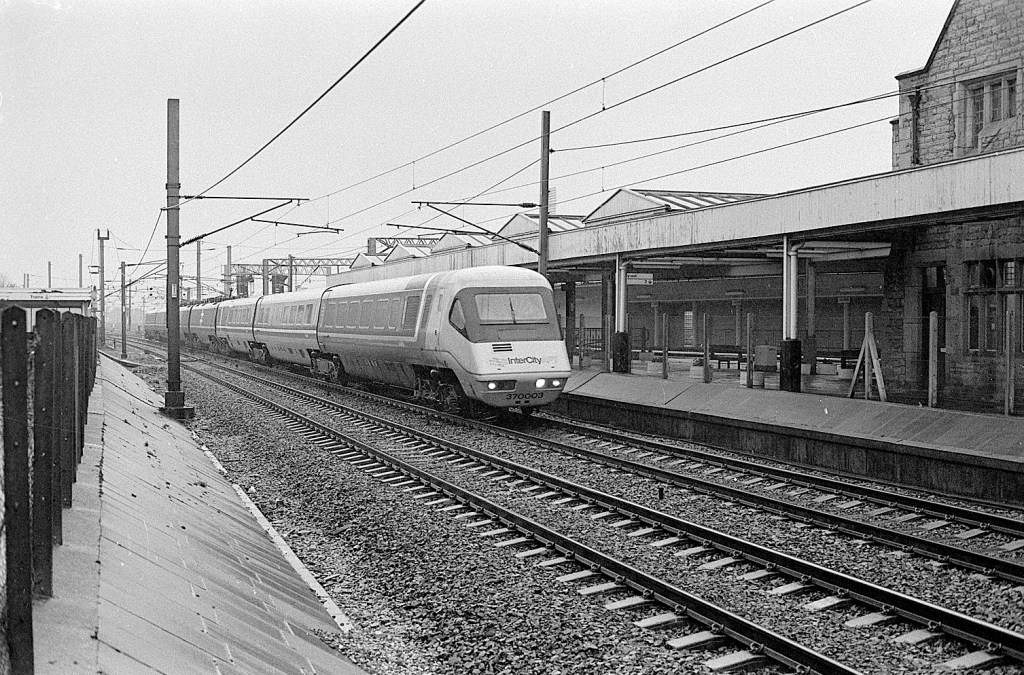
Also in January 1986, 370003 passes Carnforth on the WCML tracks. I understand that the idea of having a power car in the centre of the train was to avoid two pantographs (one at either end) or 25kv cables on the roof of the train from a single pantograph to more than one powered driving vehicle.
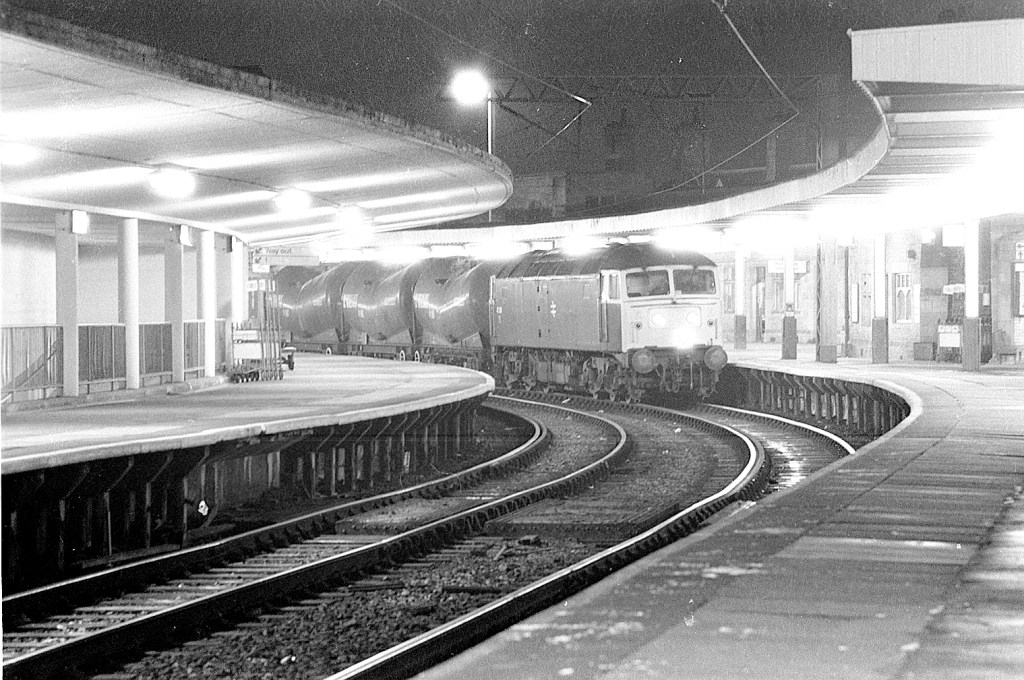
In 1985 47366 rumbles slowly around the sharp curves on the Furness platform lines with a train of polybulk style wagons. The horizontal line across the centre of this (any many other) image, is an intermittent fault on my slide scanner, but does act as a kind of random watermark.
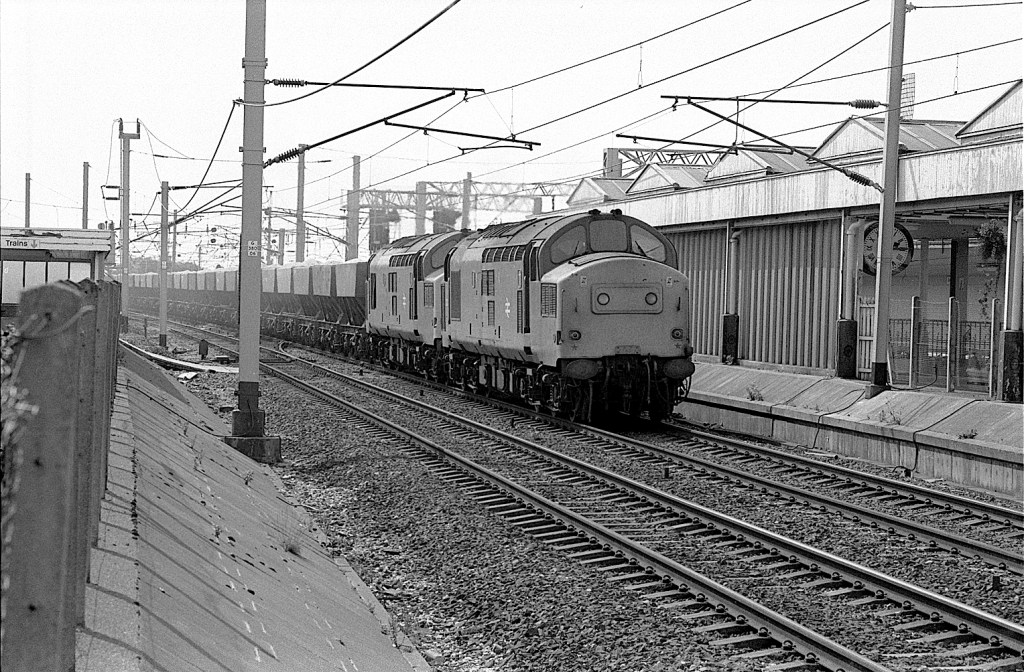
A pair of 37s pass Carnforth in 1988 with a train of what appears to be limestone.
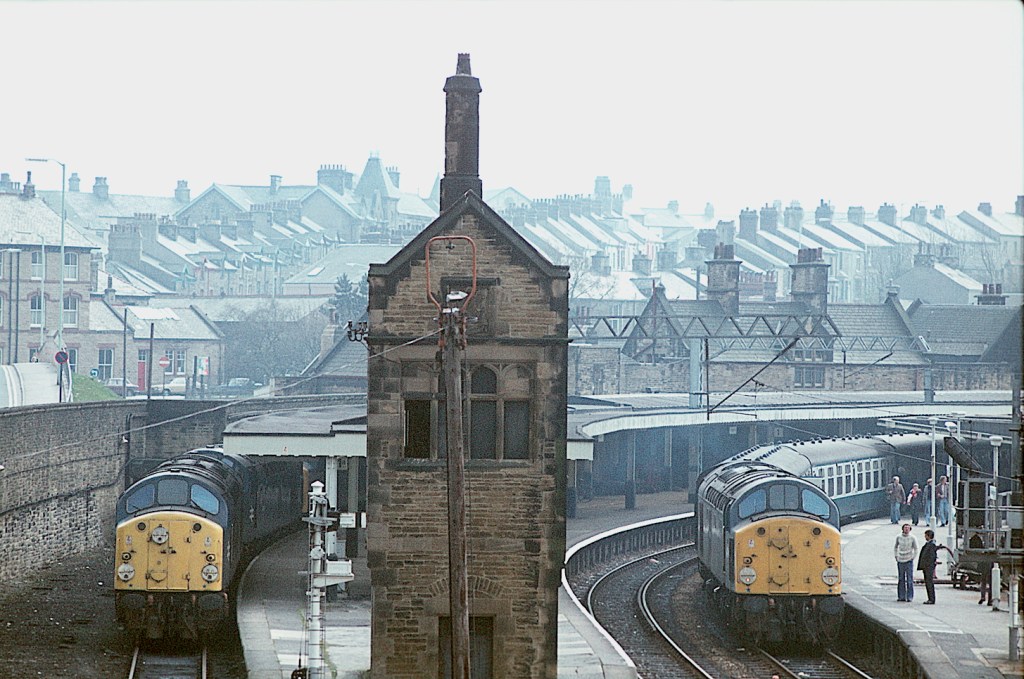
Plenty of 40s in this 1977 photo. One on the right is in charge of a passenger train, but on the left are three in the platform road.
Britannia 70010 ‘Owen Glendower’ slows for the Oxenholme stop with a southbound express inearly summer 1966. The line from Windermere curves in from the left.
On a very wet day in winter 1967 a Britannia rushes through Tebay station with a parcels/newspaper train. Sadly, I cannot quite make out the smokebox number.
I just had to include this photo, even though it is not mine and I have no idea who the photographer was. However, it proves that Claytons were used as occasional bankers, despite the opinions of many that they were not, and also because by this time there was (allegedly) no need for bankers at Tebay any longer. I have never seen another photo of this happening. A Class 50 (possibly D436) climbs Shap. It is banked by one of Tebay’s Claytons No. D8501 in 1968.
An instamatic shot of Tebay shed on a drizzly day in the mid-1960s. A Standard class 4 4-6-0 stands easy for work, but I can’t read the number.
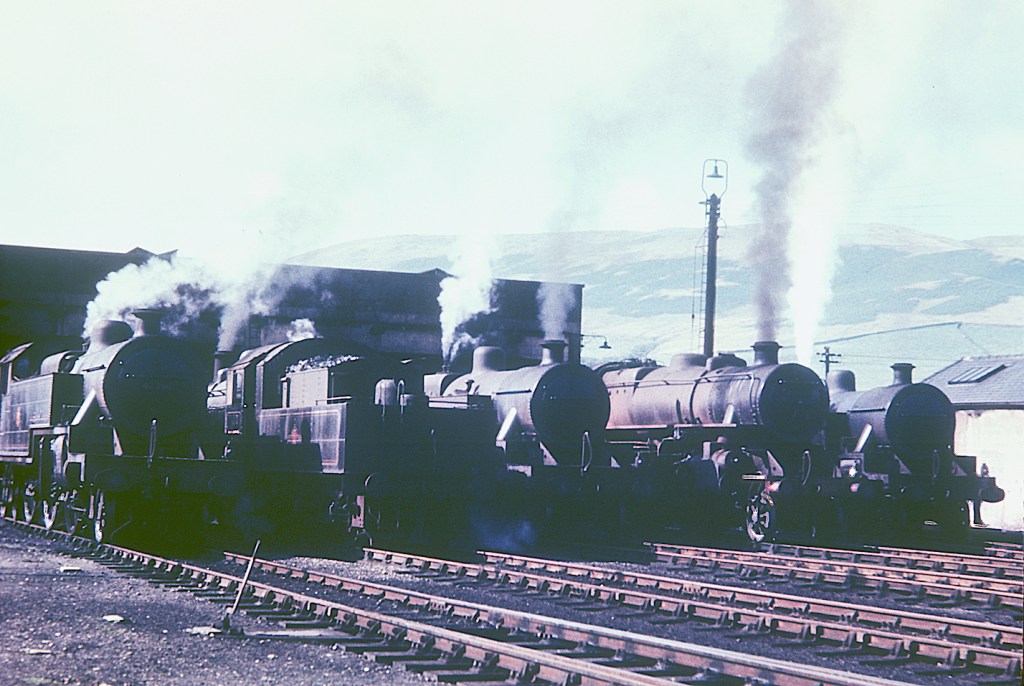
A much busier scene at Tebay in August 1960, with Fowler 2-6-4T locos with other classes all seemingly with good heads of steam.
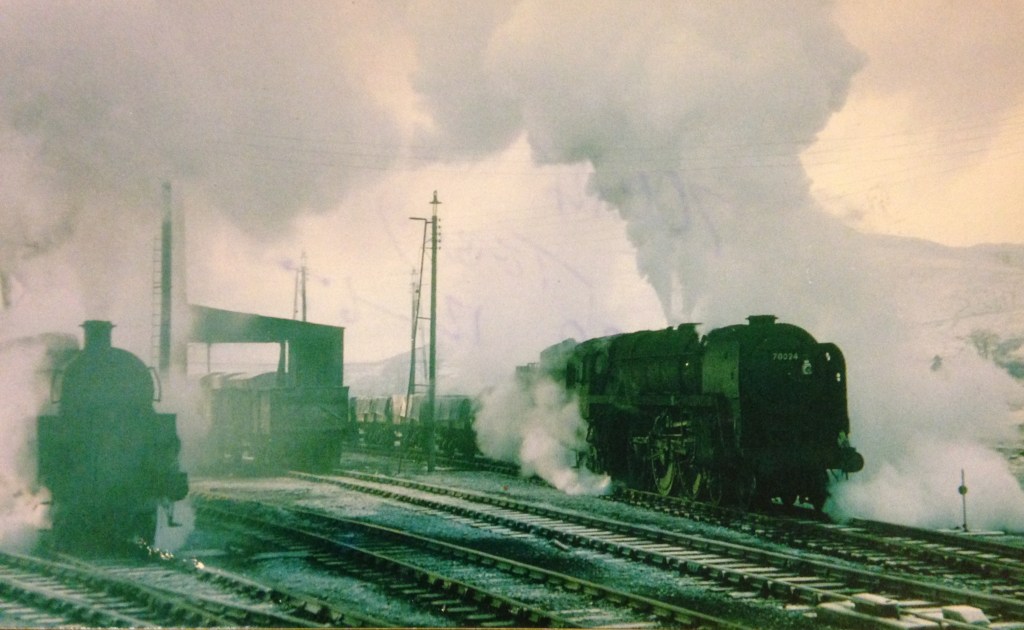
A very steamy spell at Tebay on a cold December 20th 1967, as 70024 ‘Vulcan’ starts a freight train out of the sidings and a standard class 4 is moving in the same direction, possibly to bank the train up to the summit.
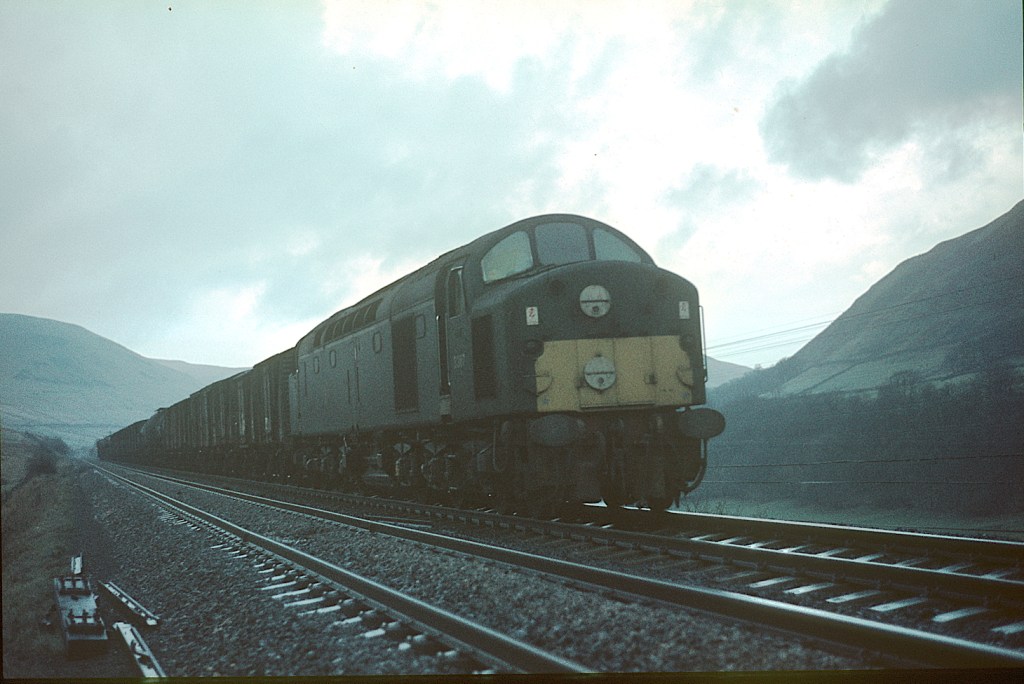
D307 is climbing Shap with a freight train during the winter of 1968.
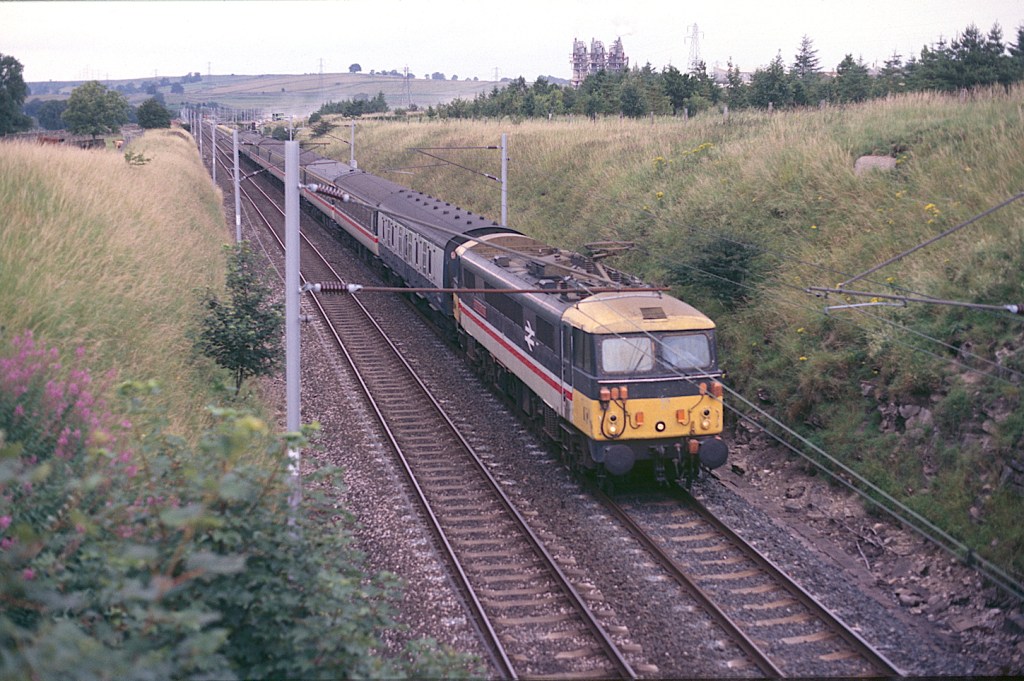
Since electrification, locomotives have climbed Shap with ease. Here 87014 ‘Knight Of The Thistle’ nears Shap Summit on August 4th 1988.
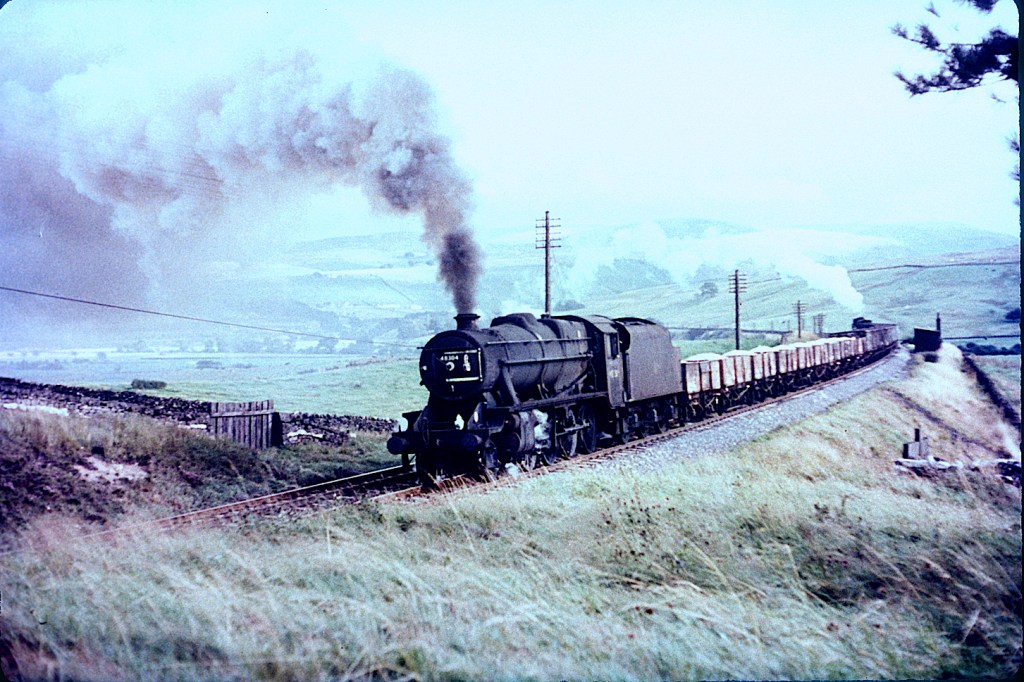
48304 is making slow but steady progress uphill with a lengthy freight train, and assisted in the rear by a banker from Tebay in 1967.
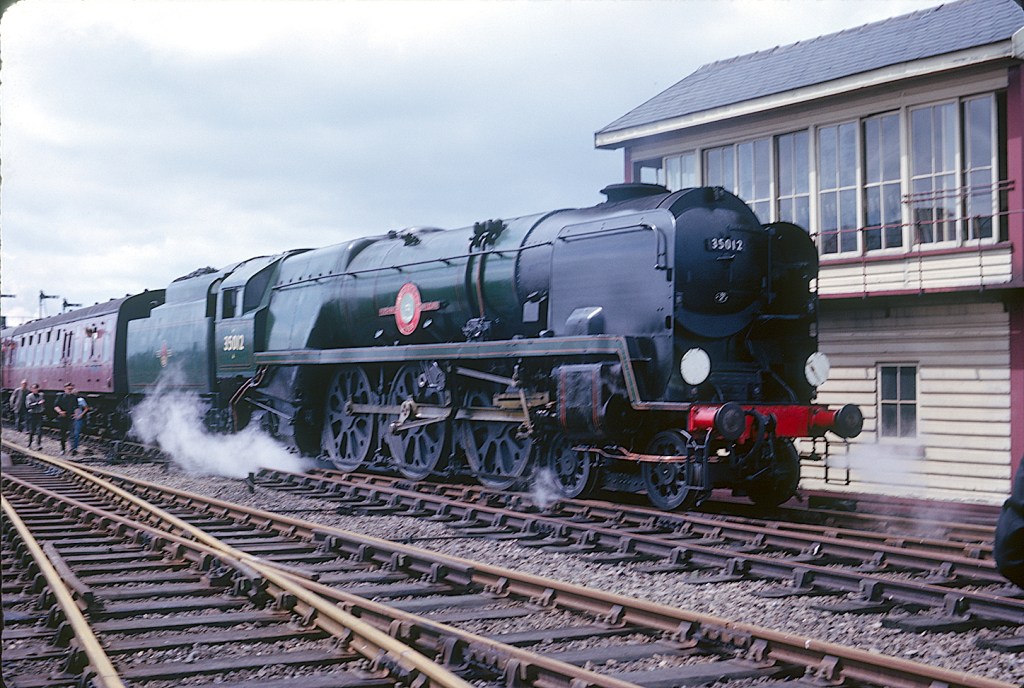
On June 13th 1964 the RCTS ran ‘The Solway Ranger’ railtour from Leeds to Carlisle with rail visits to Workington, Sellafield and Silloth. The main tour locomotive was 35012 ‘United States Lines’ which is seen here at Penrith, where 46426 and 46458 took over for the trip to Workington.

 Trainspotting data from 1947 until 1980