I spent a lot of time at Reading station between 1973 and 1995, and have numerous photos of the passing trains. Occasionally the station staff had a trainspotter purge, and platform tickets were questioned when held by long-haired scruffs such as myself, with camera bags. I countered that policy by buying a day return to Tilehurst, Earley or Twyford (I considered Reading West might be viewed as taking the mickey).
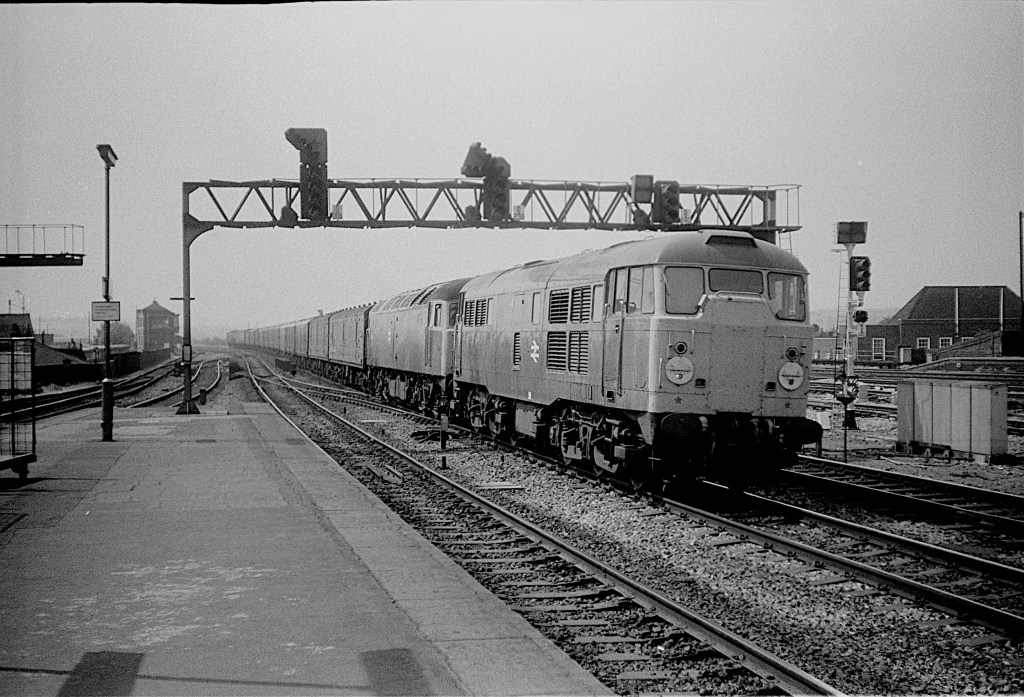
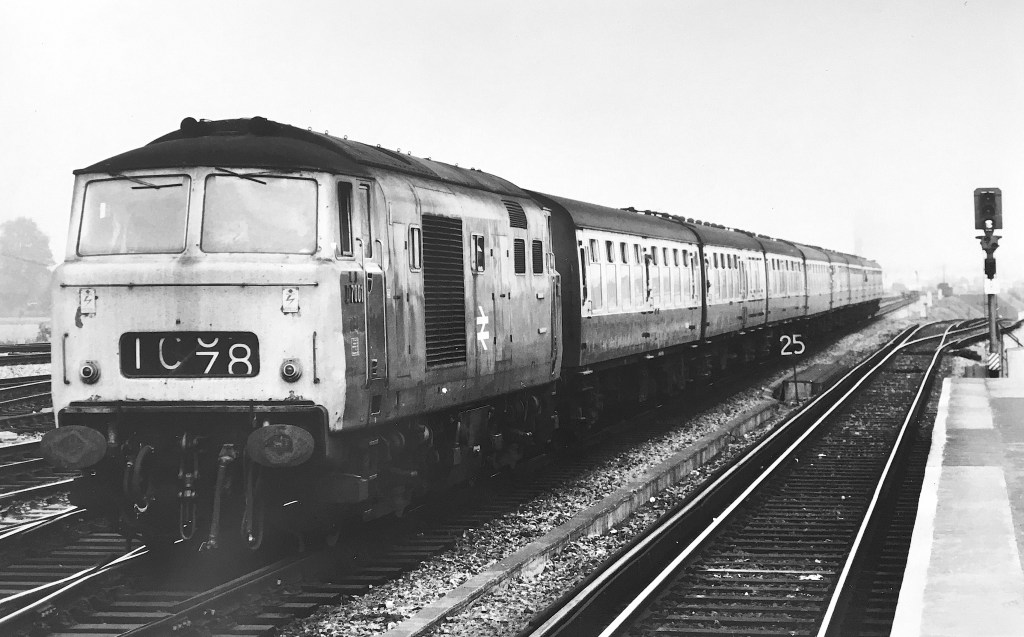
By 1974 ER class 31s had replaced the hydraulic class 22s. Here a 31 pilots a 47 on a long parcels train.
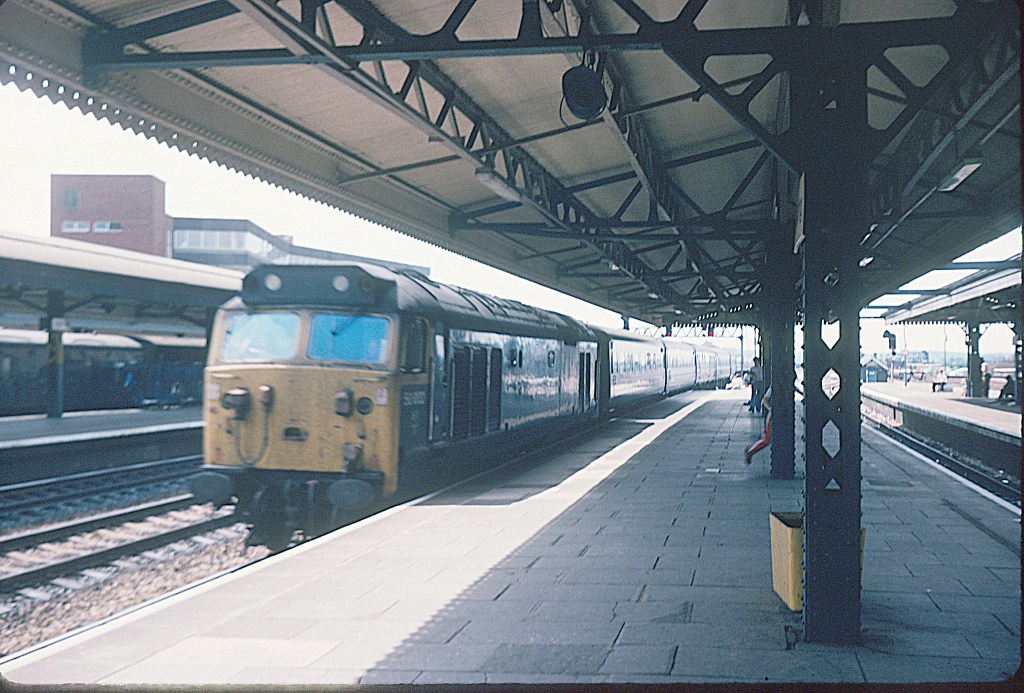
50020 arrives with a service from the west on August 1st 1977.
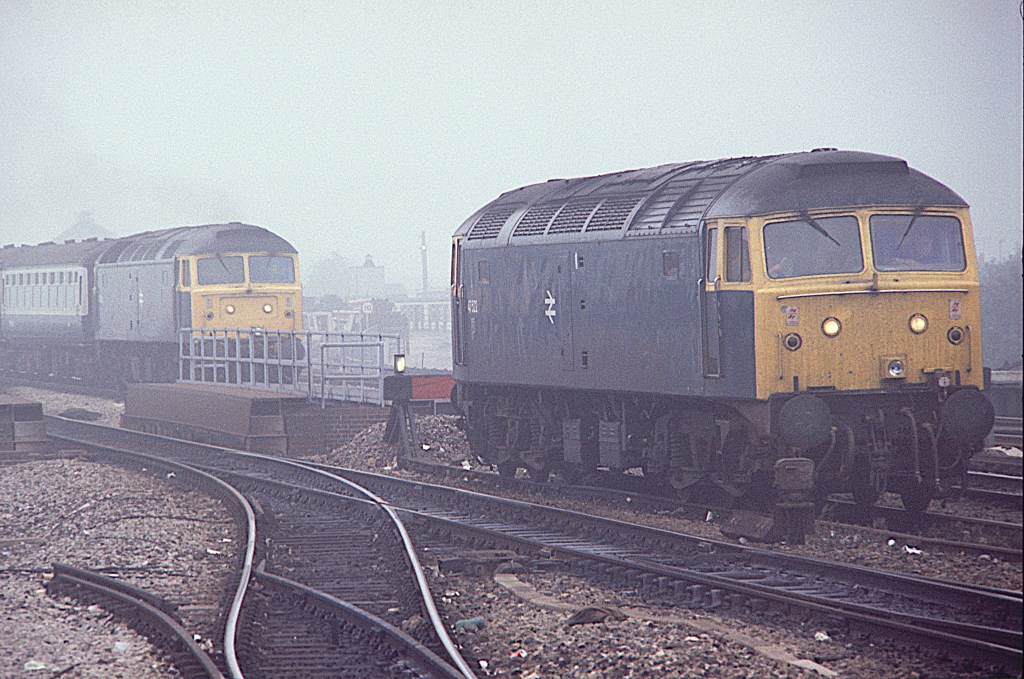
Misty day at Reading in 1988. 47552 waits in the headshunt while an unidentified classmate arrives with a cross country train to/from the South coast. The train will reverse here.
D1013 on milk empties heading west on 7th June 1976.
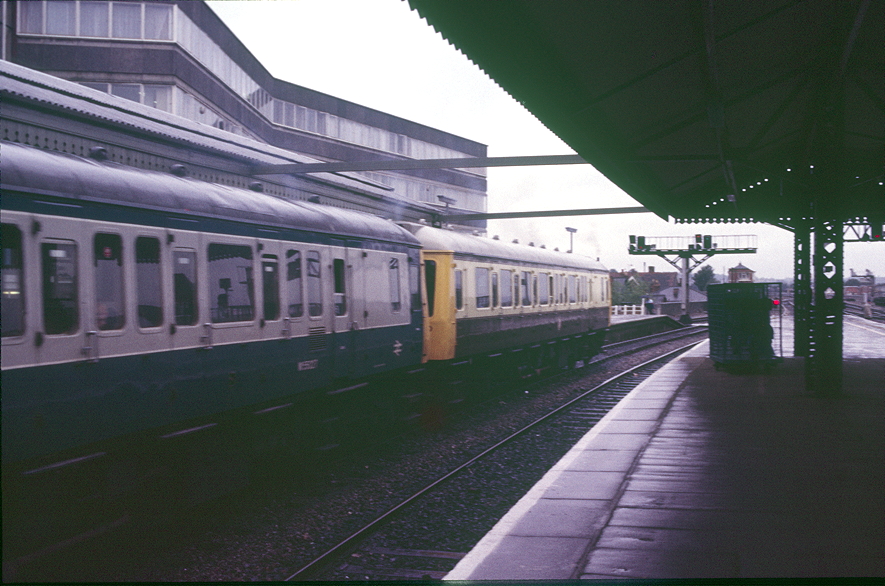
W55027 and W55020 possibly substituting for a failed 3-car dmu in June 1985.
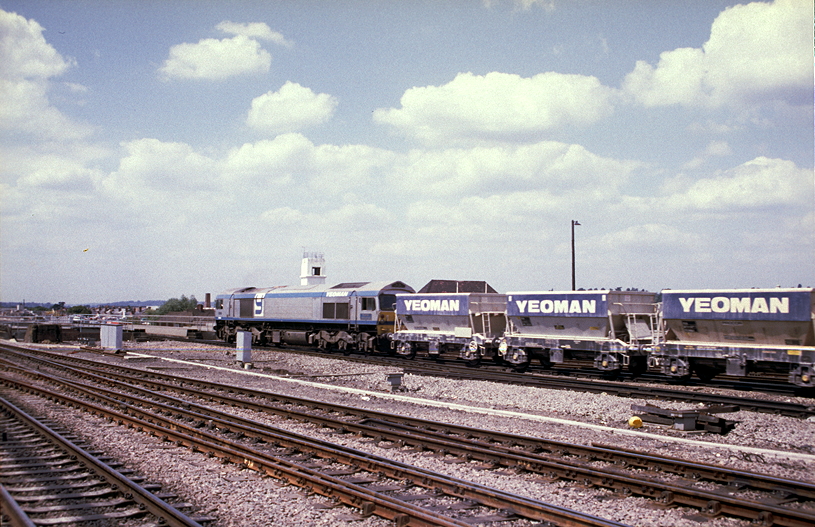
59003 with original Yeoman 4-wheel aggregates wagons in July 1987.
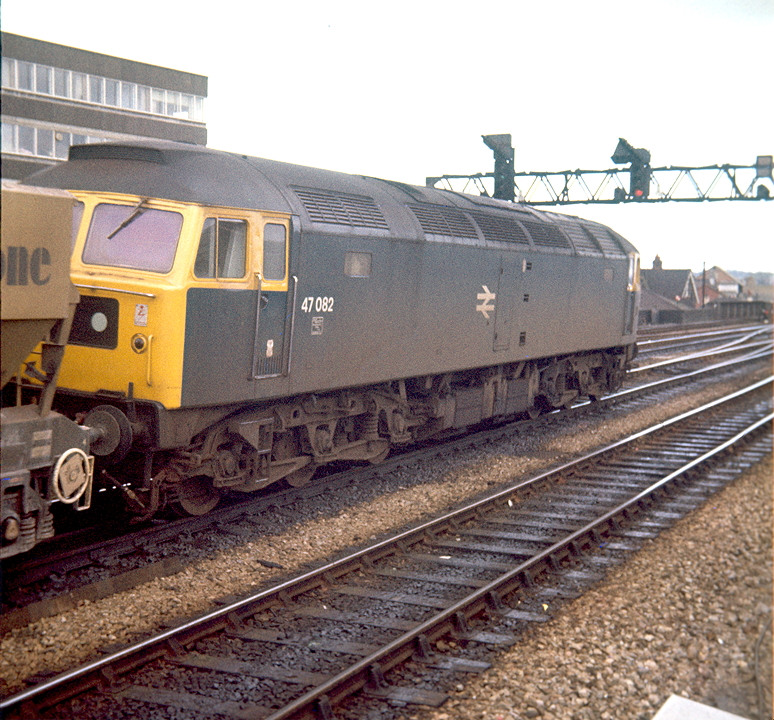
47082 waiting to proceed down the Berks and Hants with stone hoppers in April 1976.
47014 also westbound with an empty aggregates train in March 1976.
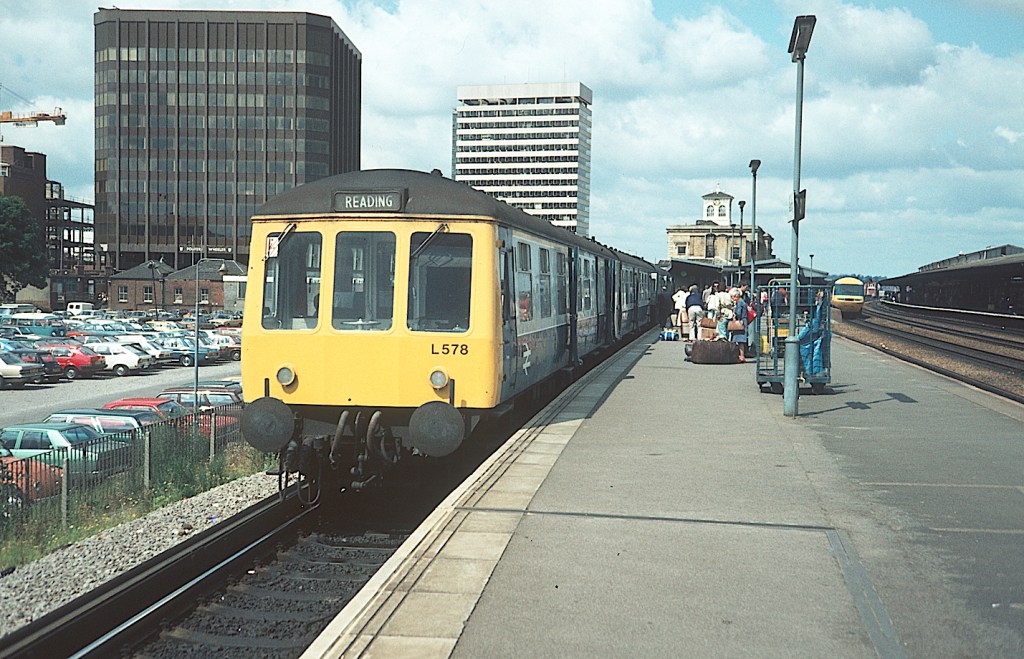
L578 was W51064 W59423 W51092, which has just arrived at Reading from Gatwick Airport on June 27th 1981, and the sunburnt holidaymakers move off to find their connecting trains home. Part of the old Southern Railway station buildings can be seen to the left of the cab, but the main SR station site has been turned into a car park.
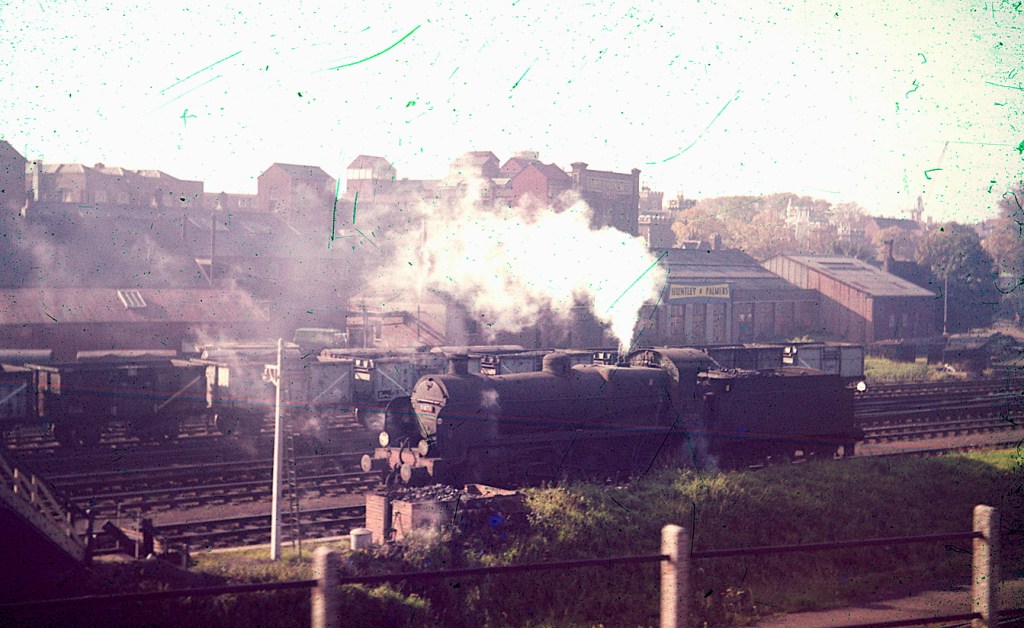
I don’t have many photos of the Southern station and it approaches, but here is one taken from a train on the ex-GWR tracks. Class N 2-6-0 31871 is seen waiting for its next move in 1963. The Huntley & Palmer’s biscuit factory forms the backdrop, and had its own sidings from this railway.
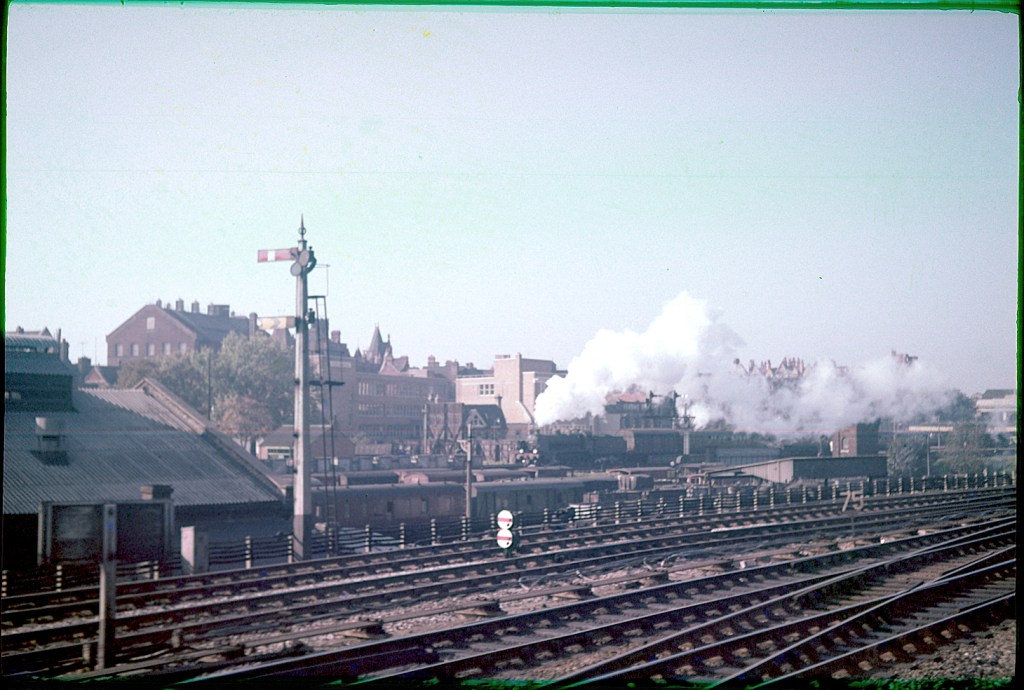
Another view of the SR station approaches, taken from the GWR metals. An N class loco is seen leaving for the south, and part of the Southern loco shed (by then a sub-shed of 70C Guildford) can be seen on the left.
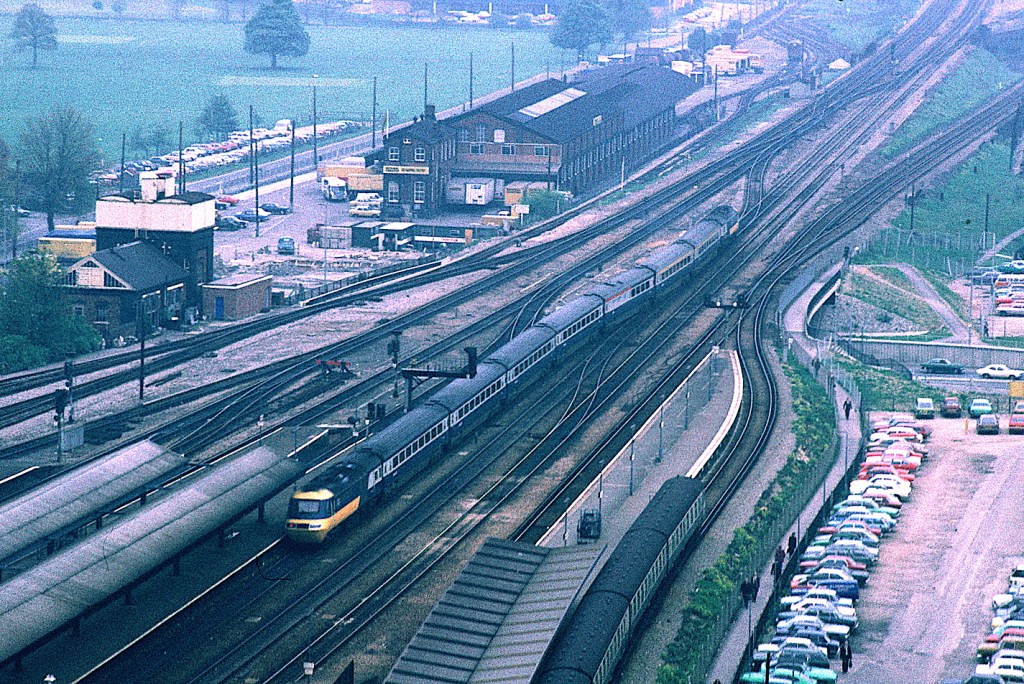
Taken from the office block near to the station, an HST leaves Reading for Paddington in 1977. This is one of the original 2+7 formations, before an extra TS was added, and the TGS were yet to be introduced, so the guard was expected to ride in the power car.
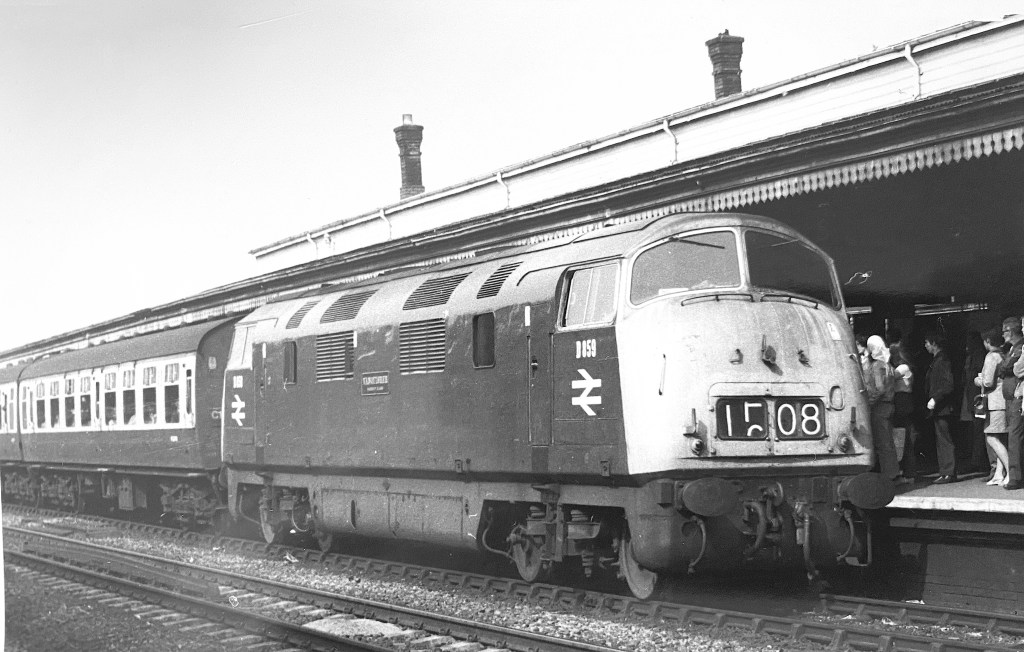
During the hydraulic era, D859 ‘Vanquisher’ arrives at Reading circa 1969.
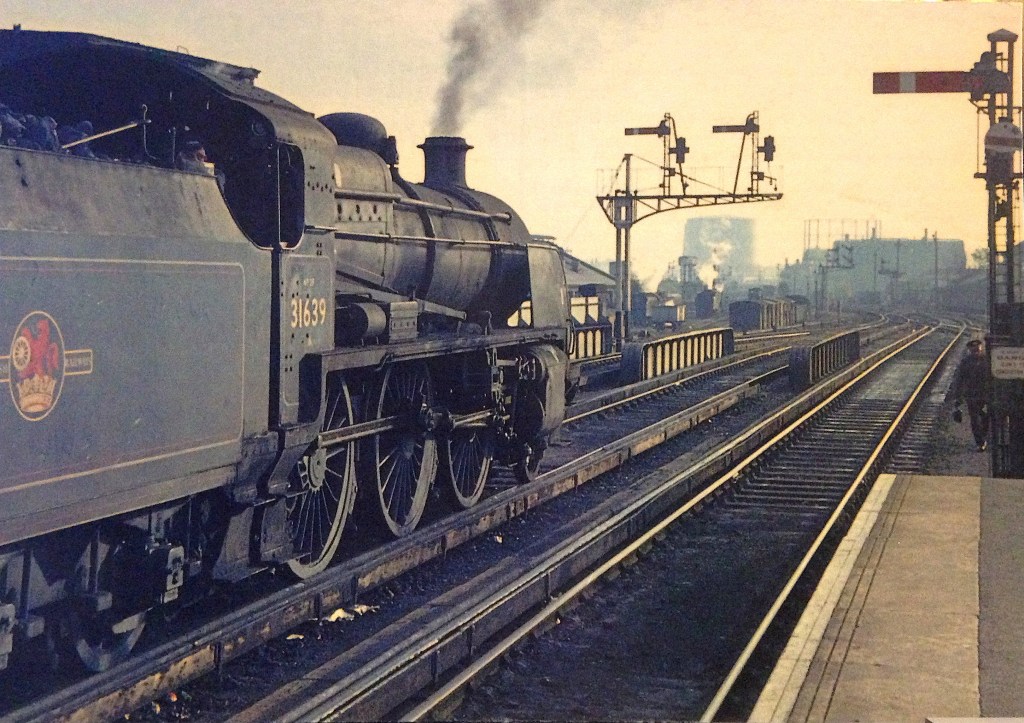
This is one of the very few photos I have in the collection, which was taken from the Southern station looking east. U class 2-6-0 31639 has a train for Surrey ready to depart in October 1965.
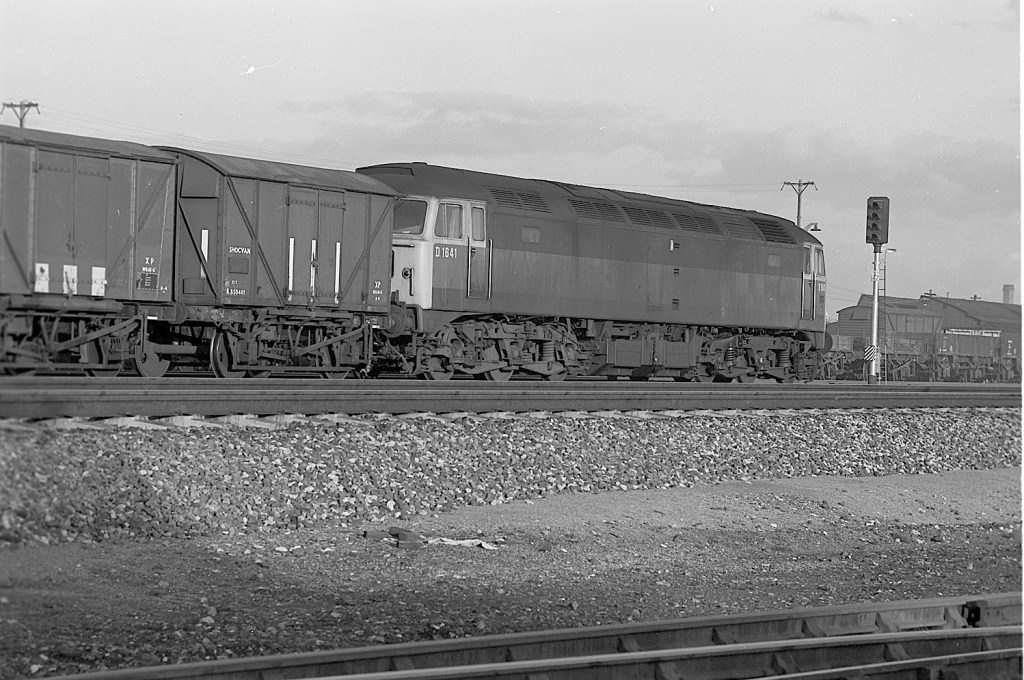
The low November sun catches D1641 as it passes Reading with a van train in 1967.
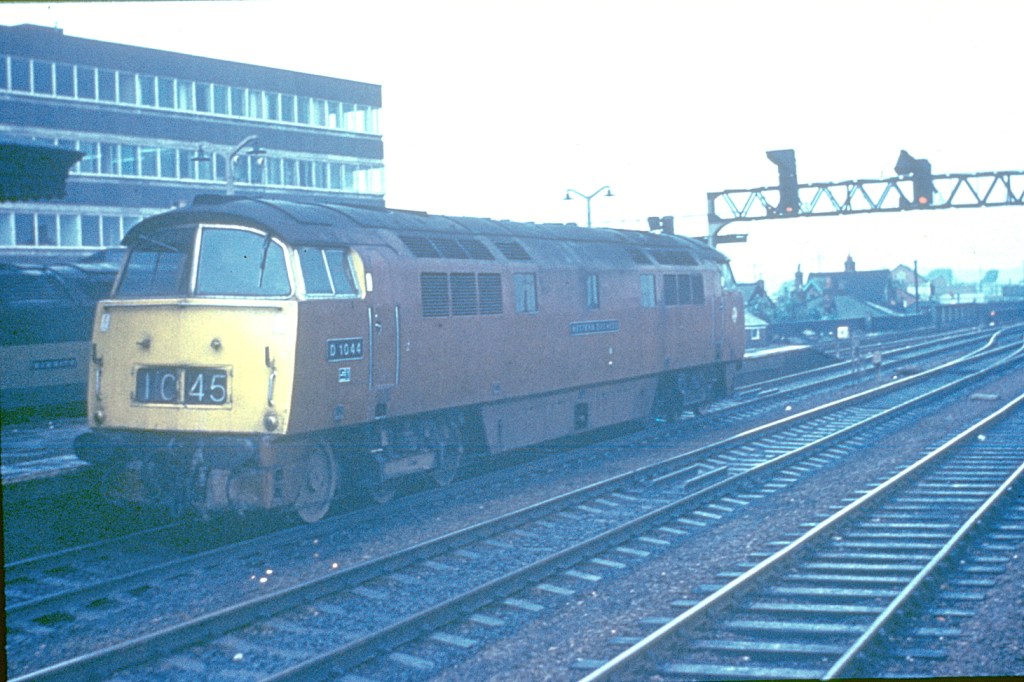
D1044 ‘Western Duchess’ is at Reading in June 1969. Interestingly, in the bay platform normally used by stopping trains to places such as Basingstoke, is class 47 D1670 ‘Mammoth’.
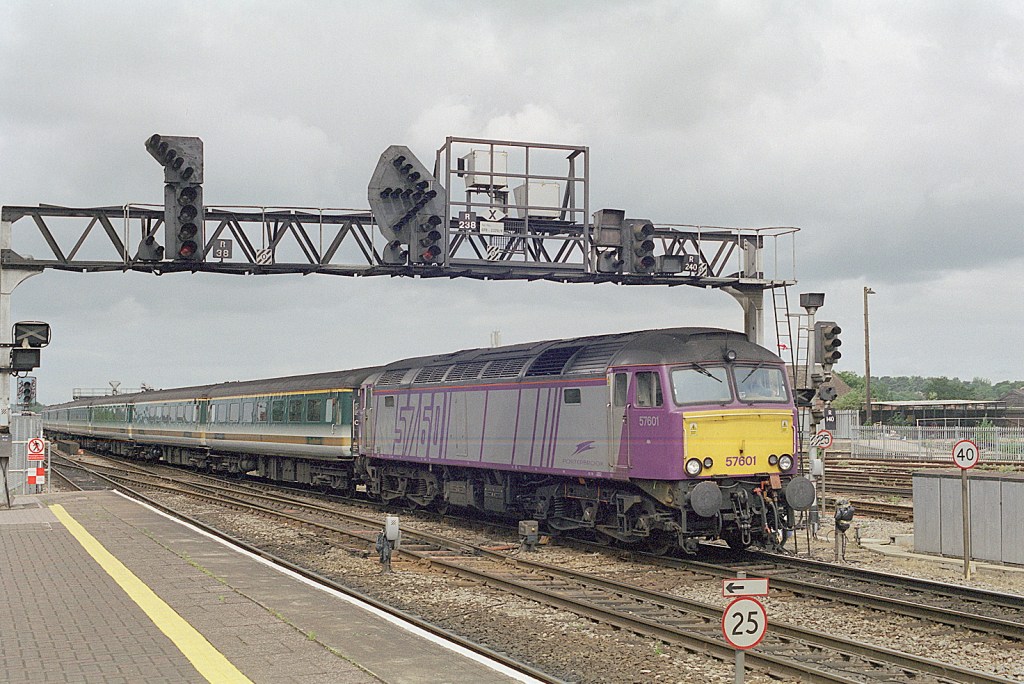
Early 21st century Reading and 57601 heads a train of First Great Western passenger stock into the station during the summer of 2001. This is either an extra working of some form, or the booked HST set has failed.
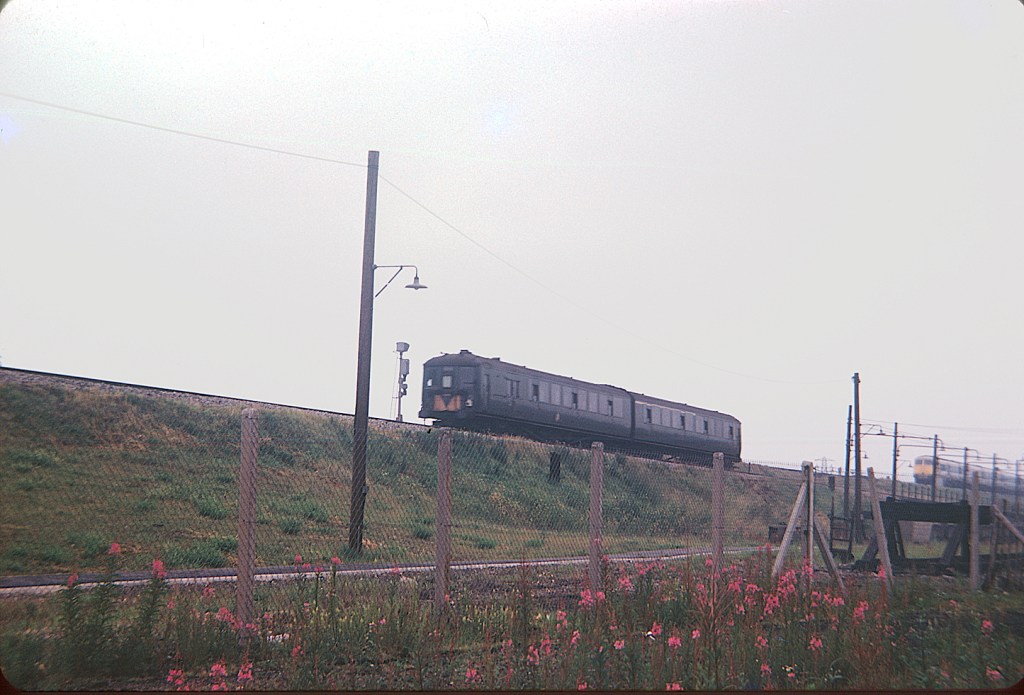
In the years immediately after the closure of the SR station, the Waterloo and Guildford services were diverted up a simple single track with a steep gradient into the WR station with a temporary concrete platform 4A. Here a 2-BIL unit descends onto Southern metals in the summer of 1970. Note the Blue Pullman in reversed livery approaching on the WR tracks.
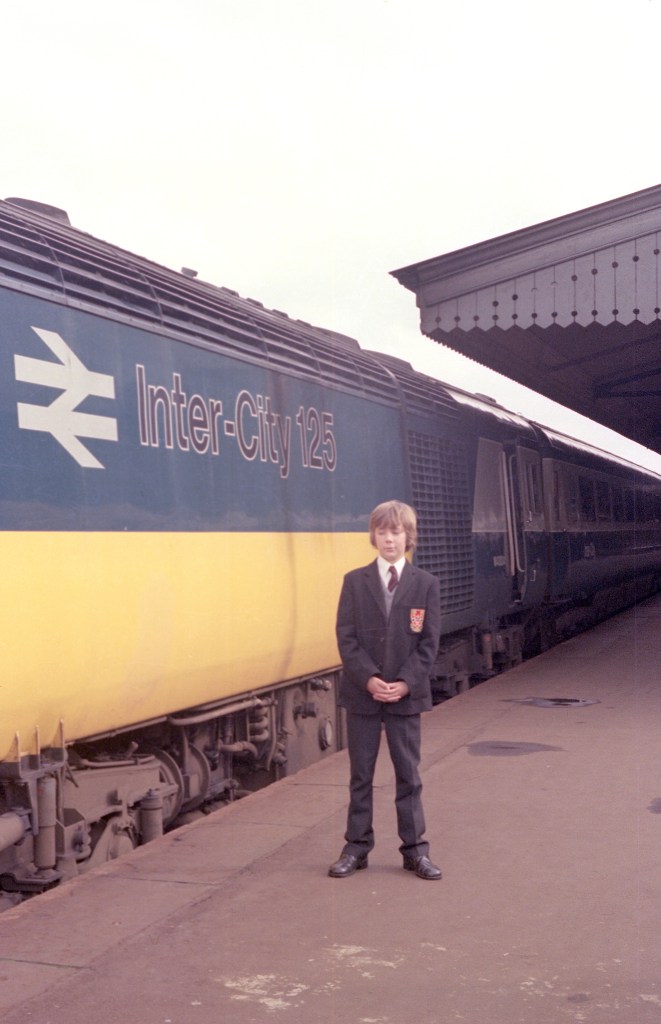
If you are going to take a photo of your son in his new school uniform, you could do much worse than have him pose beside one of the very few early build HST power cars with black infill to the lettering. I believe the first 8 units were delivered this way, but it may have included W43009 and 43010, although photographic evidence is very hard to find. This is 43004 at Reading in September 1976.
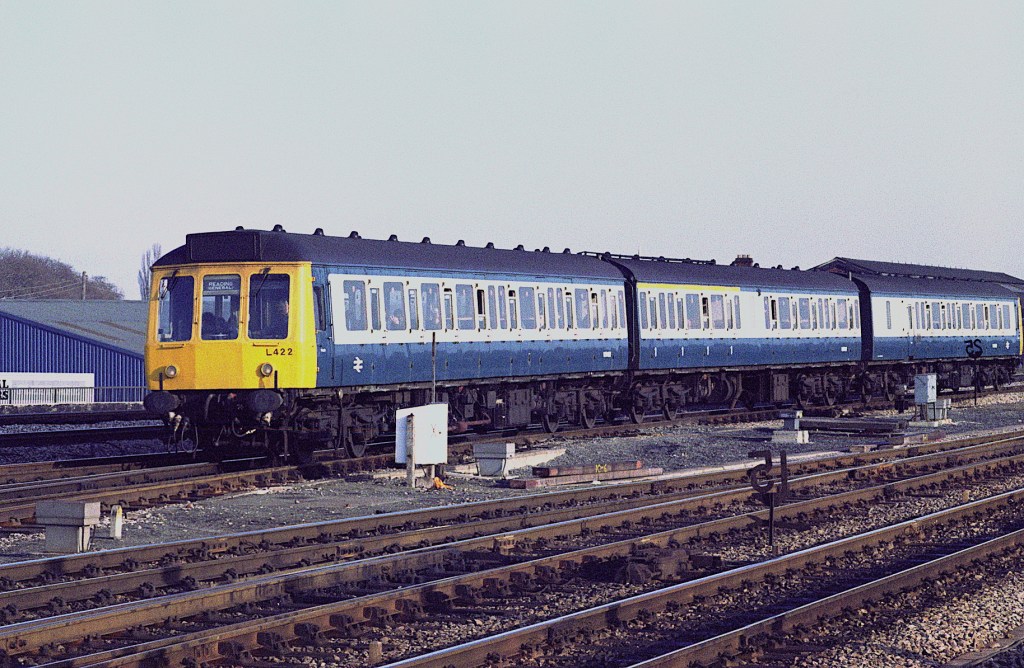
Class 117 DMUs ran most of the stopping services to/from Reading for 30 years or so, until the arrival of the 165/6 units. L422 heads towards the station in the early 1980s. According to my notes, L422 was W51360 W59512 W51402.
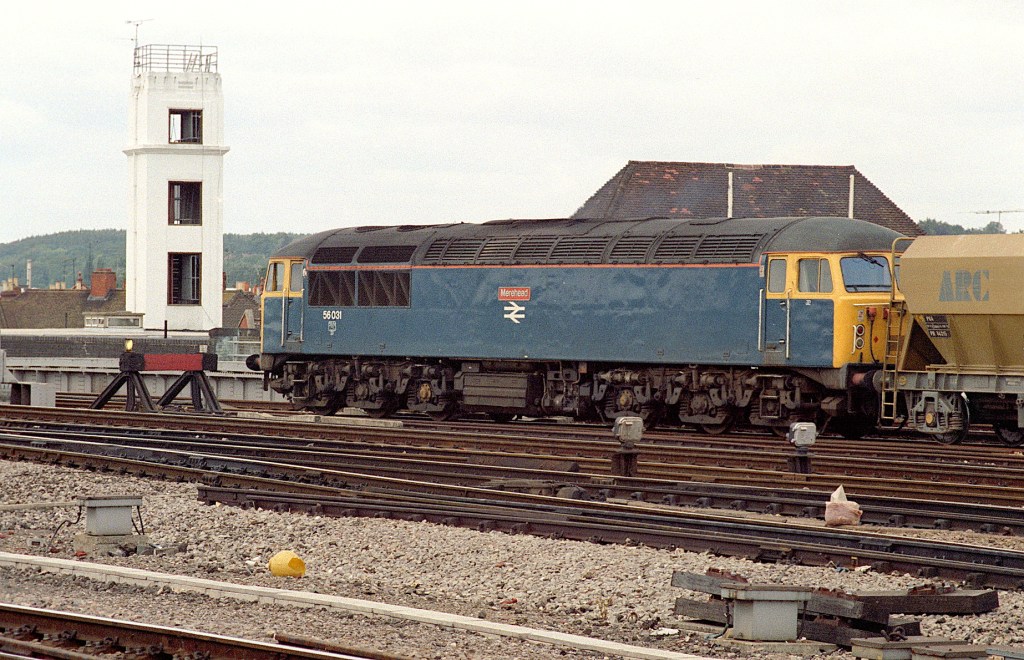
In the immediate years before the class 59s, Mendip stone traffic was handled mainly by class 56s allocated to Bath Road but outbased at Westbury. 56031 ‘Merehead’ is heading west through Reading with ARC 4-wheeled PGA hoppers in the early 1980s.
Southern Region DEMUs worked a number of passenger services to/from Reading. 1204 is most likely on a Gatwick Airport or Redhill working in this winter 1975 view. These units were nicknamed ‘Tadpoles’ because they were a cheap lash-up using surplus narrow Hastings gauge carriages, and a 2EPB driving trailer which was built to the wider standard loading gauge.
The index page for all image pages is called Portfolio and can be reached by clicking on the name in the box below.



 Trainspotting data from 1947 until 1980