Or Midland Main Line as the route tends to be known. This page replaces a number of blog posts, but chiefly one called ‘Peaks’; and relevant photos from that page have been re-posted here.
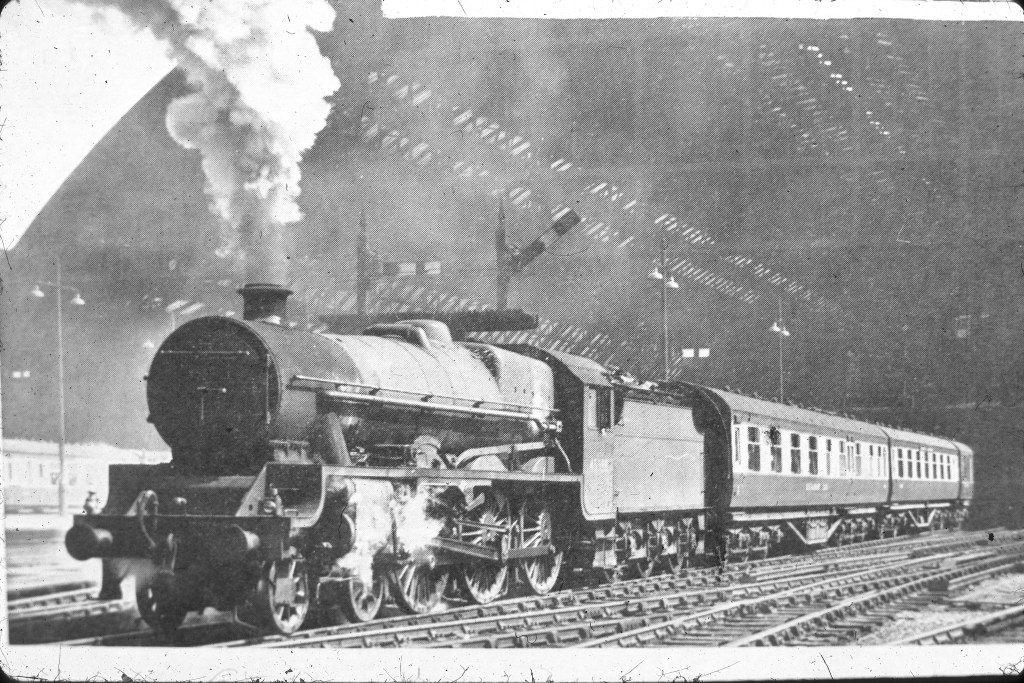
St Pancras in the early 1950s, and Stanier designed Jubilee 4-6-0 45598 ‘Basutoland’ makes a spirited departure from the terminus. The first carriage is a 12-wheeled catering car, and the next carries a headboard, and so presumably this is one of the more important daily services from the station.
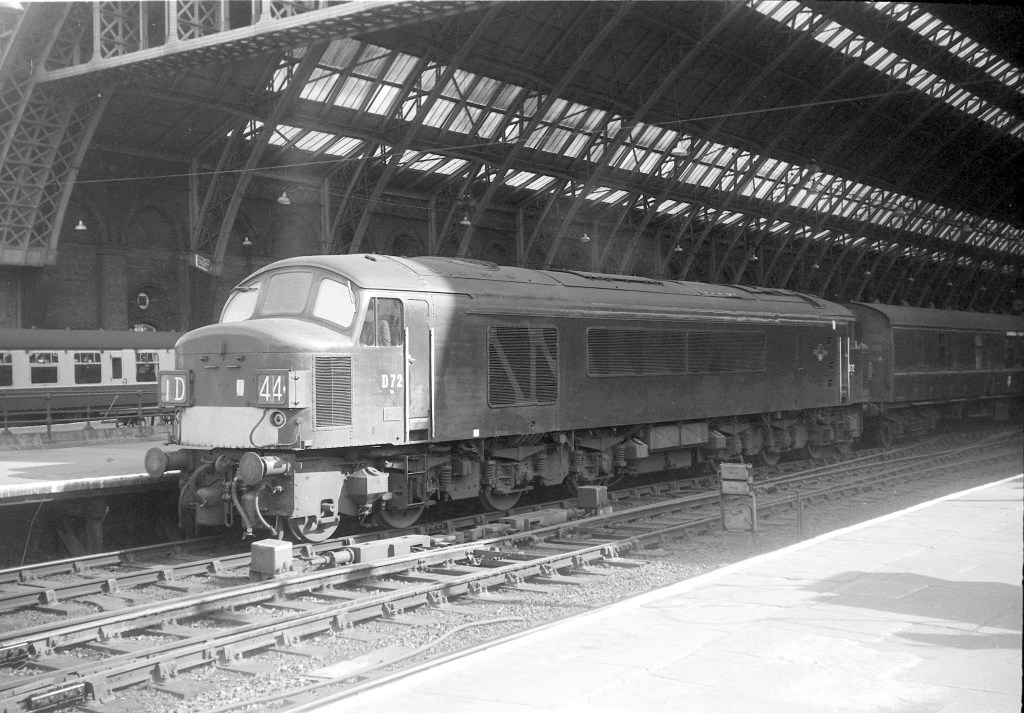
The ‘Peak’ diesels (so named because the first ten to be delivered were named after British mountains) took over the majority of the services when steam power was being phased out. Here D72 is waiting to leave with 1D44 on March 29th 1967.
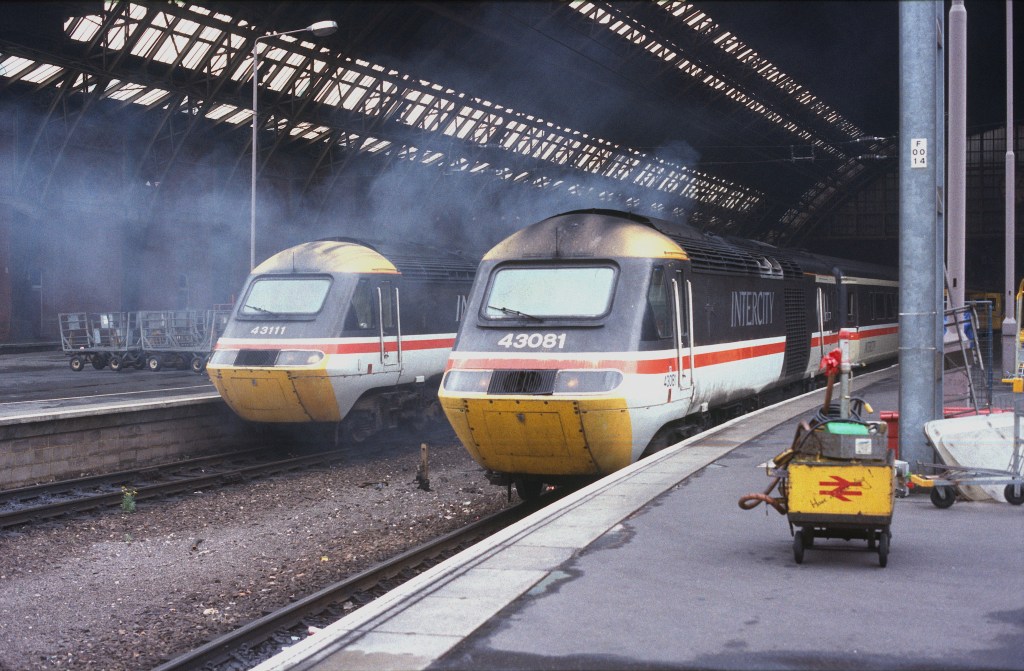
The peaks (or class 45/46 as they were known under the TOPS system) were the mainstay of services for 25 years or so, but HSTs took over towards the end of the 1980s. 43111 and 43081 are seen here on August 23rd 1991.
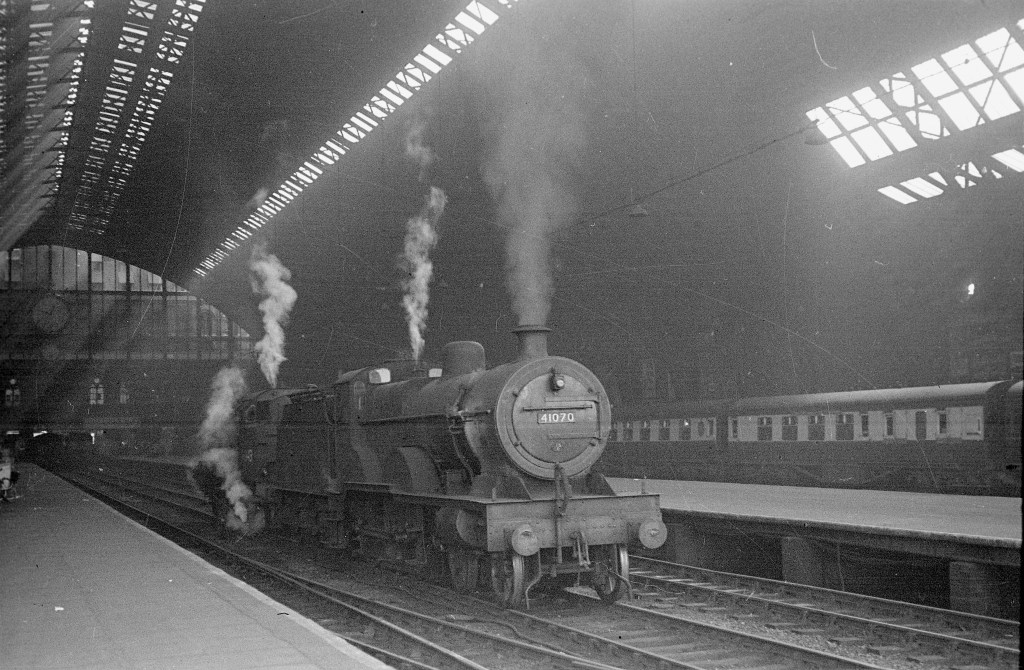
Fowler 4P 4-4-0s were used on outer suburban services, and empty stock duties. 41070 of Bedford shed waits on a centre road for the incoming working, before taking the train out again. March 25th 1950.
The large gasholders between the approach to St Pancras and Kings Cross loco shed were a notable landmark for decades. They provide a backdrop to this 1956 view of Jubilees 45622 ‘Nyasaland’ and 45639 ‘Raleigh’. As 45622 was a Trafford Park loco, while 45639 was from Holbeck shed, we may conclude that their services will be to Manchester and Leeds.
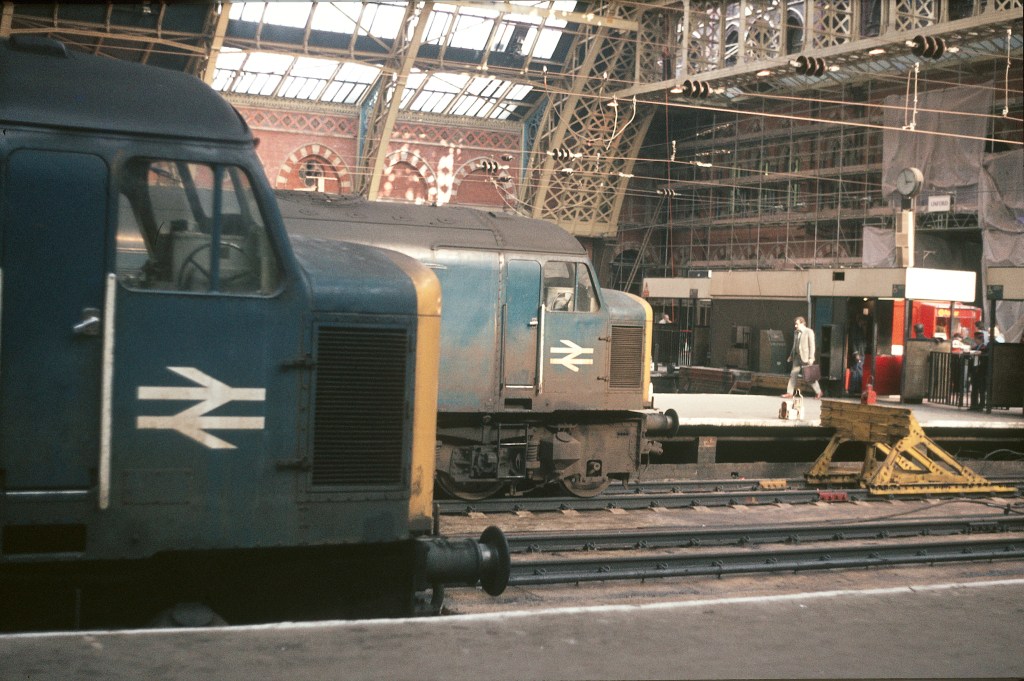
At the city end of the station on March 15th 1983 we see 45143 and 45137 near to the buffers stops after bringing in their trains from the north.
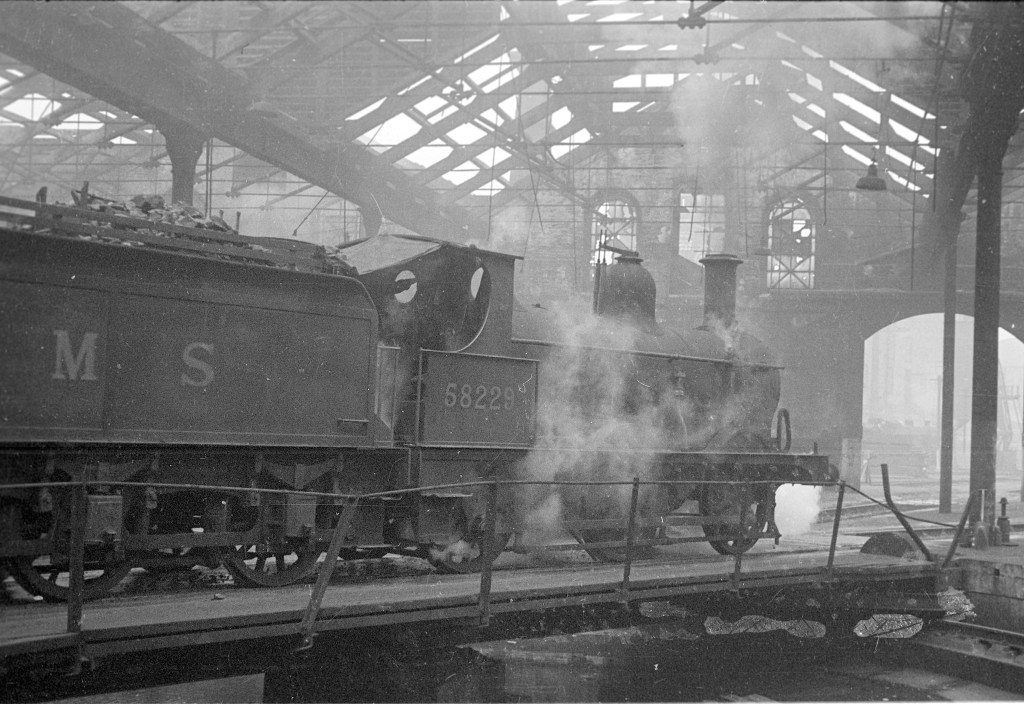
Kentish Town was the first shed on the route away from St Pancras, and here we see Johnson 2F 0-6-0 58229 inside the roundhouse on February 23rd 1950. This image was taken by Henry Casserley and I purchased it in an online auction during 2020. The locomotive was withrawn 18 months after this photo was taken.
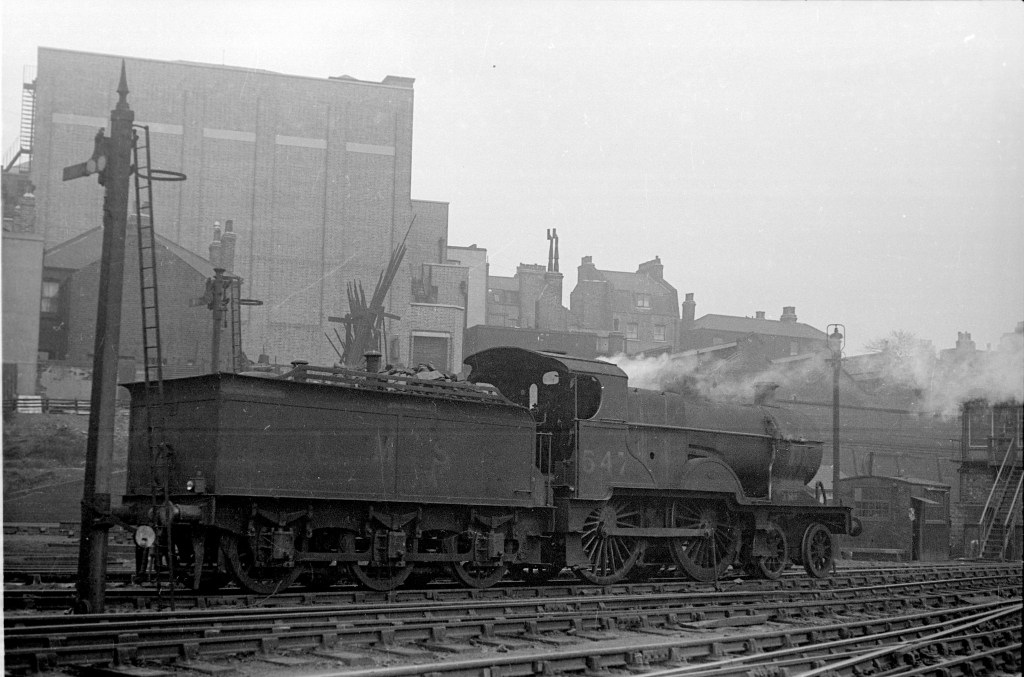
Henry Casserley took a lot of photos at Kentish Town on February 23rd 1950, and here is another from the shed approach roads. 2P 4-4-0 547 is seen still in LMS livery during a pause in railway proceedings. Withdrawal came 3 years later.
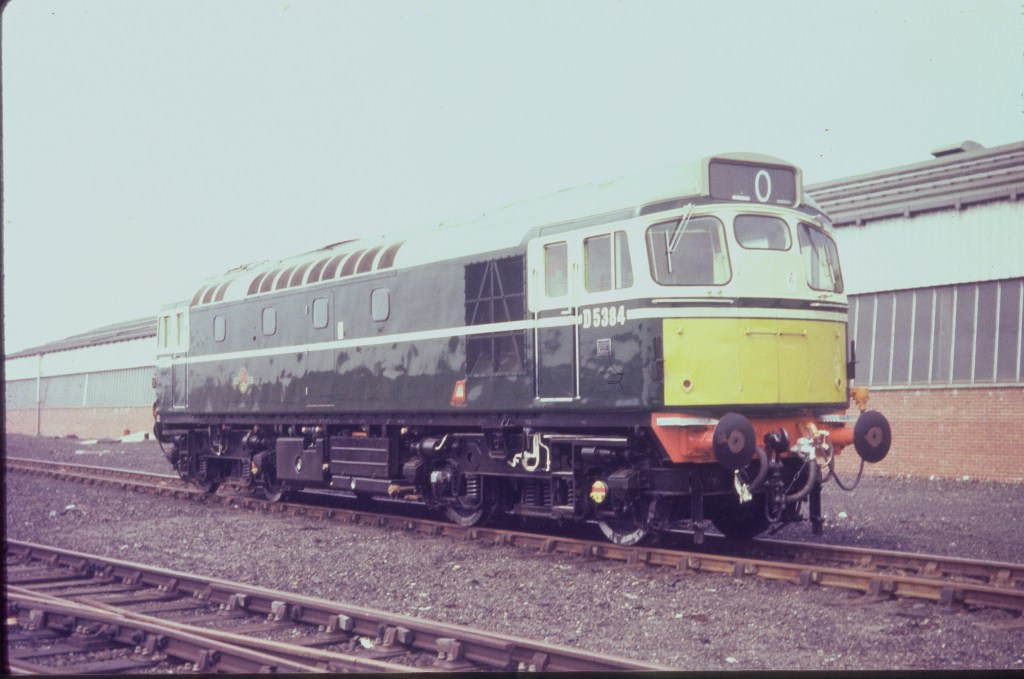
Later deliveries of the BRC&W type 2 diesels (later class 27s) were to the southern half of the MML, where they worked freight and commuter trains during the 1960s. Here we see D5384 at Cricklewood depot during that time.
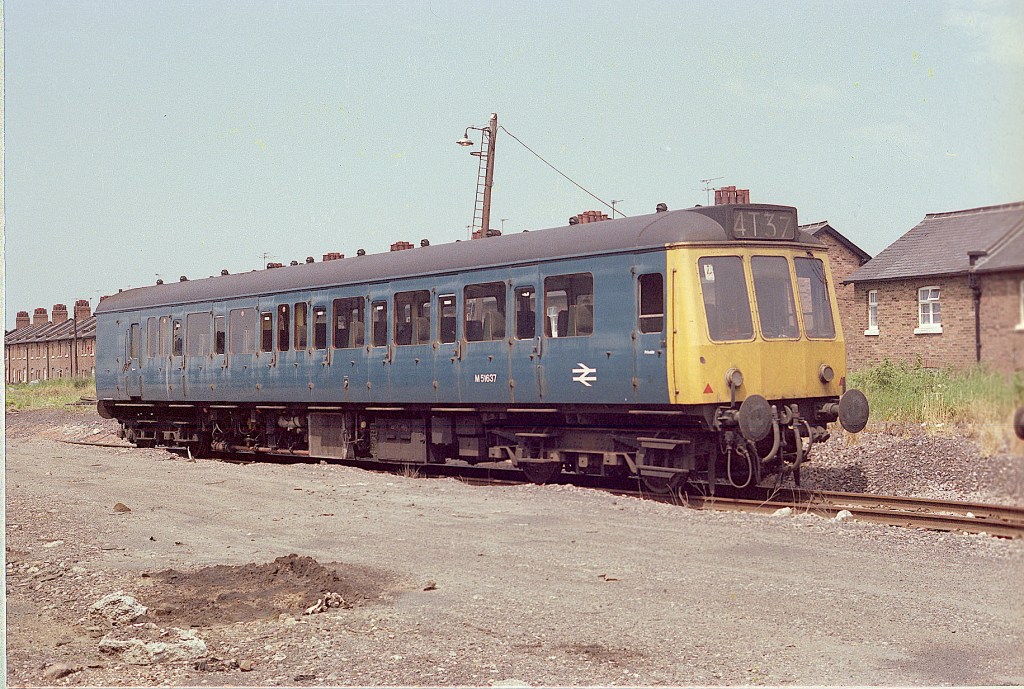
For the St Pancras suburban services, Dery works constructed a fleet of high density 4-car DMUs during 1959/60. Unusually for the time, these had Rolls Royce engines under the body floor and also hydraulic transmission, and coded class 127 under TOPS. They proved reliable and lasted into the early 1980s, when the southern portion of the line was electrified. I’m not sure why DMBS M51637 has been shunted into a siding at Cricklewood in 1984.
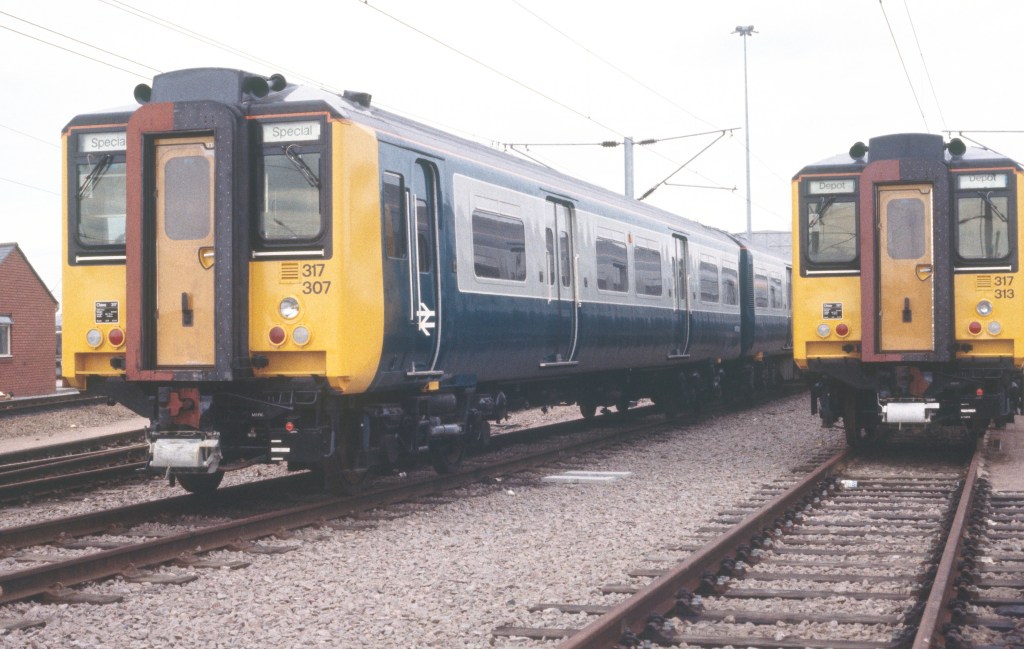
The diesel units were replaced by the class 317 EMUs, but their introduction was delayed by some kind of industrial dispute. Two of the newly constructed units 317307 and 317313 are seen stored at Cricklewood in 1982 while the dispute was sorted.
0-6-0 diesel shunter 08902 is outside Cricklewood depot in 1984. A class 25 lurks inside the shed, and on the extreme left is 317333.
On February 20th 1974, peak diesel 45112 ‘Royal Army Ordnance Corps’ heads south near Radlett with a train of cement tanks, most likely heading for Cliffe in Kent.
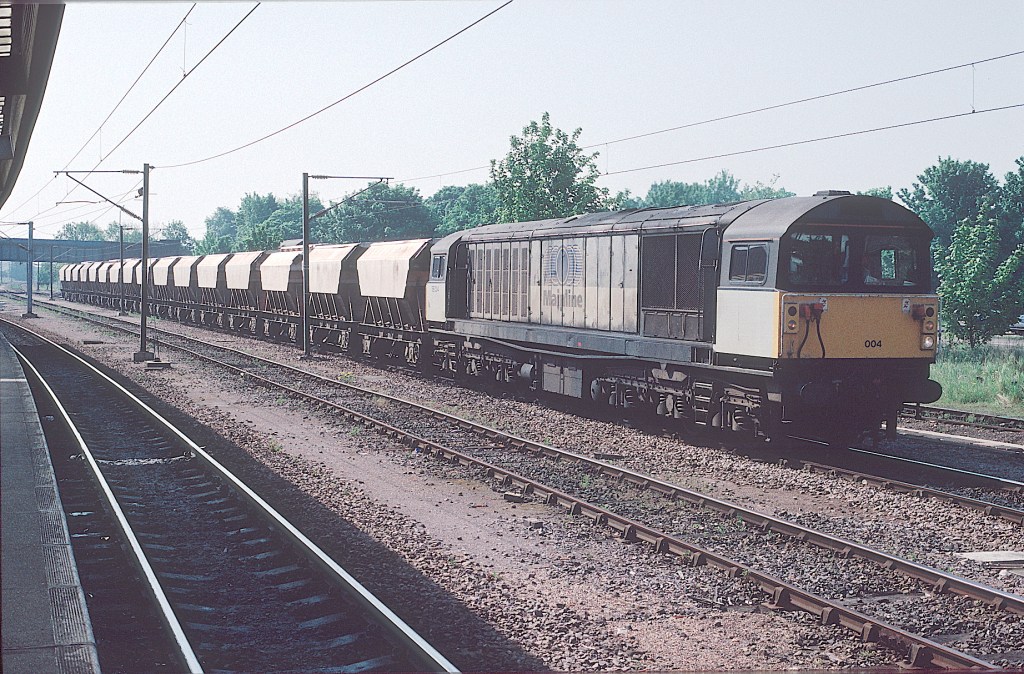
Passing Bedford in August 1997, is 58004 with a train of aggregate/limestone hoppers.
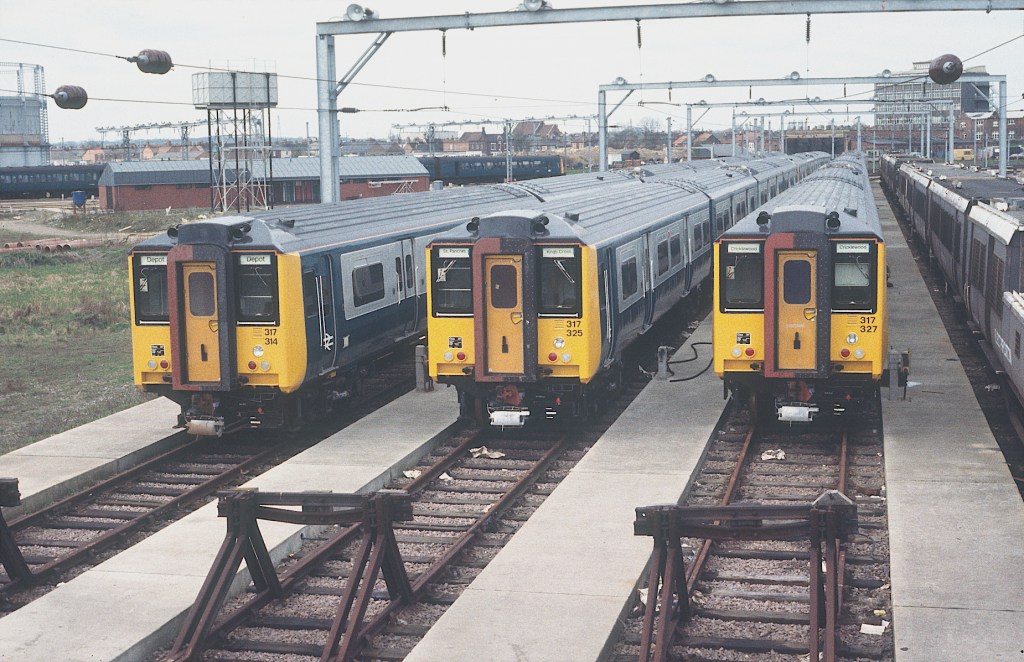
As at Cricklewood, a large number of brand new class 317s were stored at Bedford until the union dispute over Driver Only Operation (DOO) was settled in March 1983. 317314 317325 and 317327 are seen in Autumn 1982.
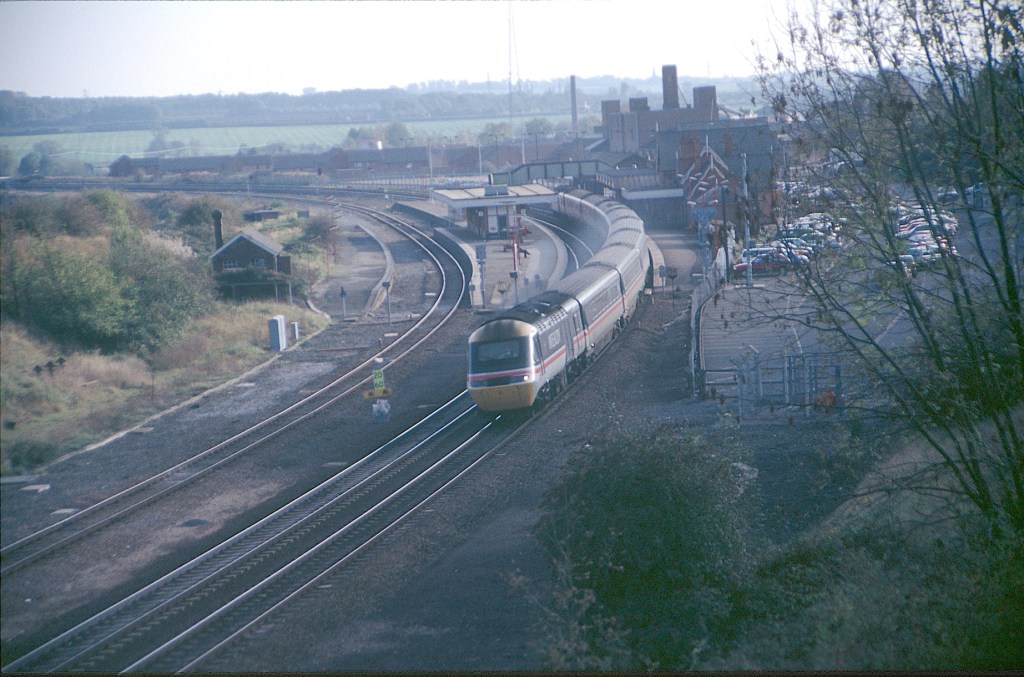
An unidentified HST leaves Wellingborough in April 1993.
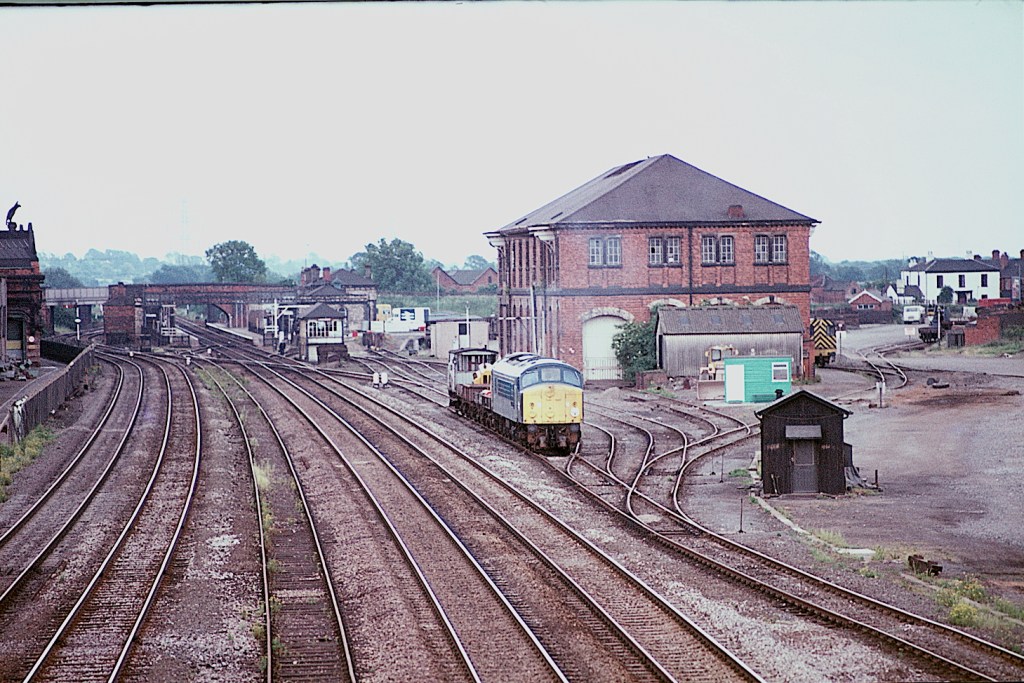
D5377 with a brake tender, and an unidentified class 45 are stabled at Kettering in April 1969.
A class 45/1 passes Market Harborough on July 14th 1978. By then the services had been upgraded to include Mk2 airconditioned (A/C) stock, although catering vehicles remained Mk1.
Another 45/1 speeds through the Leicestershire countryside, July 17th 1978.
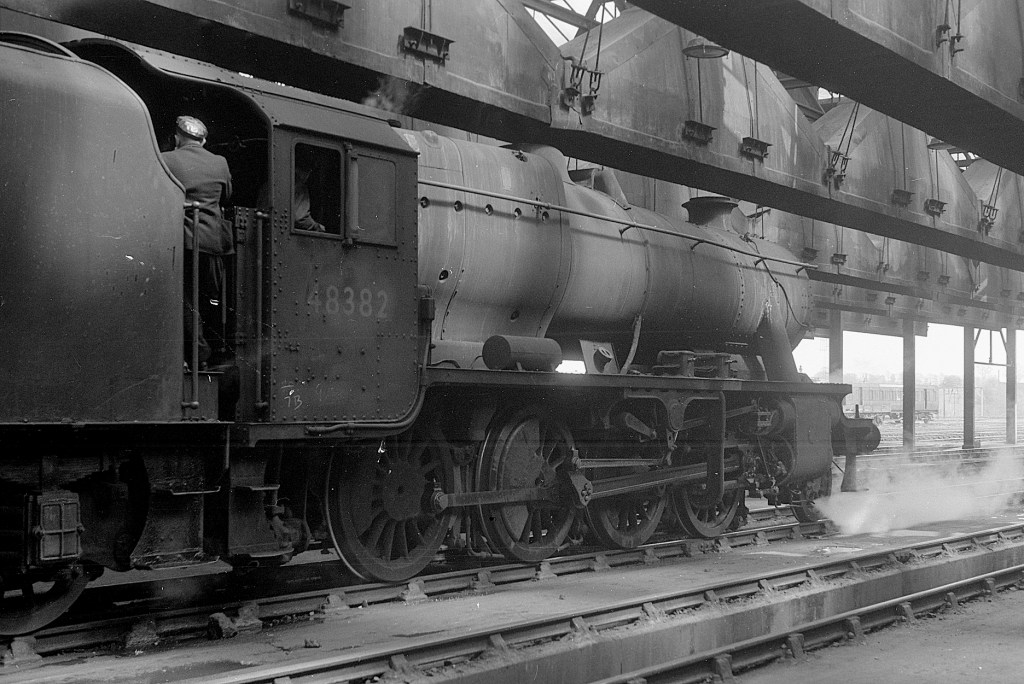
Stanier 8F 2-8-0 is seen inside the engine shed just north of Leicester Midland station in 1964.
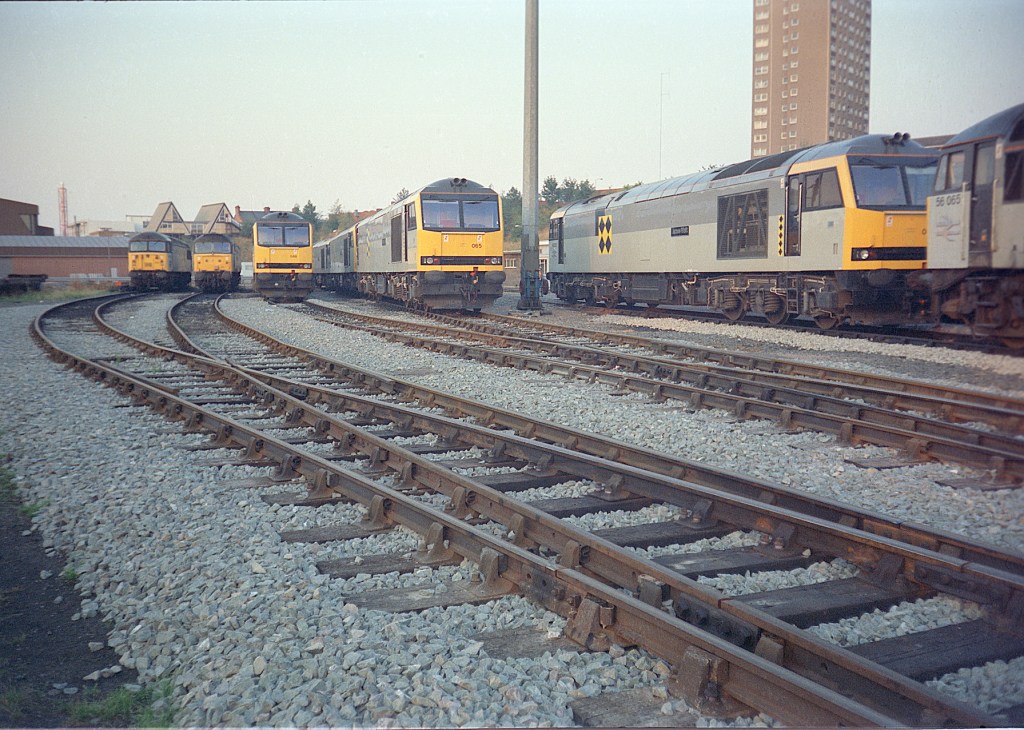
Newly constructed class 60s were often stabled at Leicester following delivery from the Brush works at Loughborough. Here 60065 and 60048 and others are seen amongst the 56s and 47s.
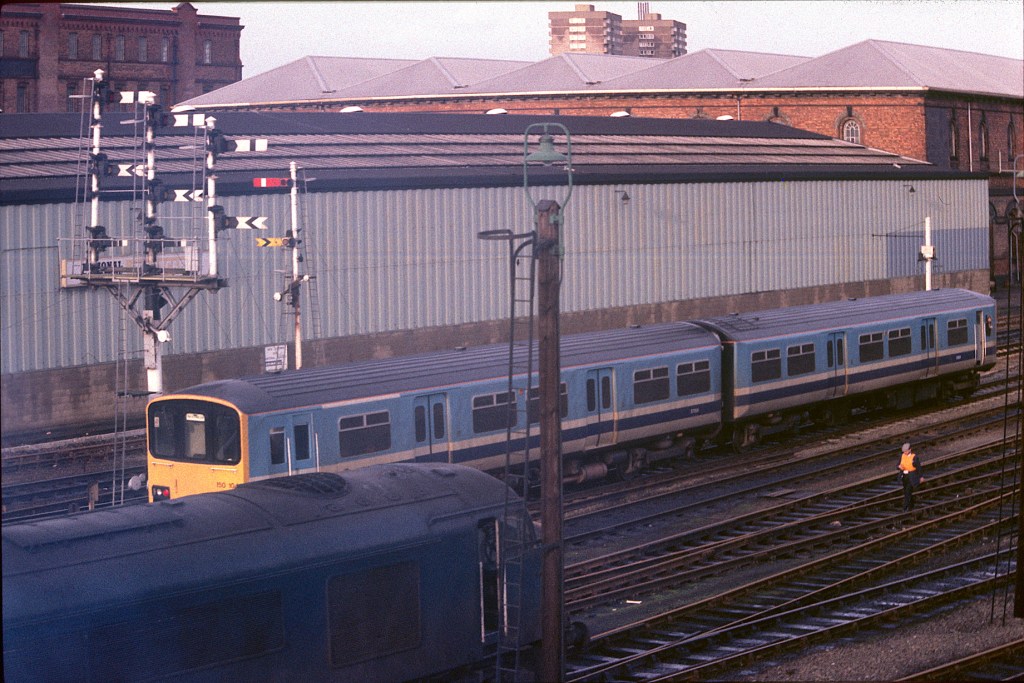
The first class 150 DMUs were introduced just as the last of the 45/0s were being withdrawn, and so I was happy to get this photo of 150104 and 45058 together at Leicester on January 10th 1986.
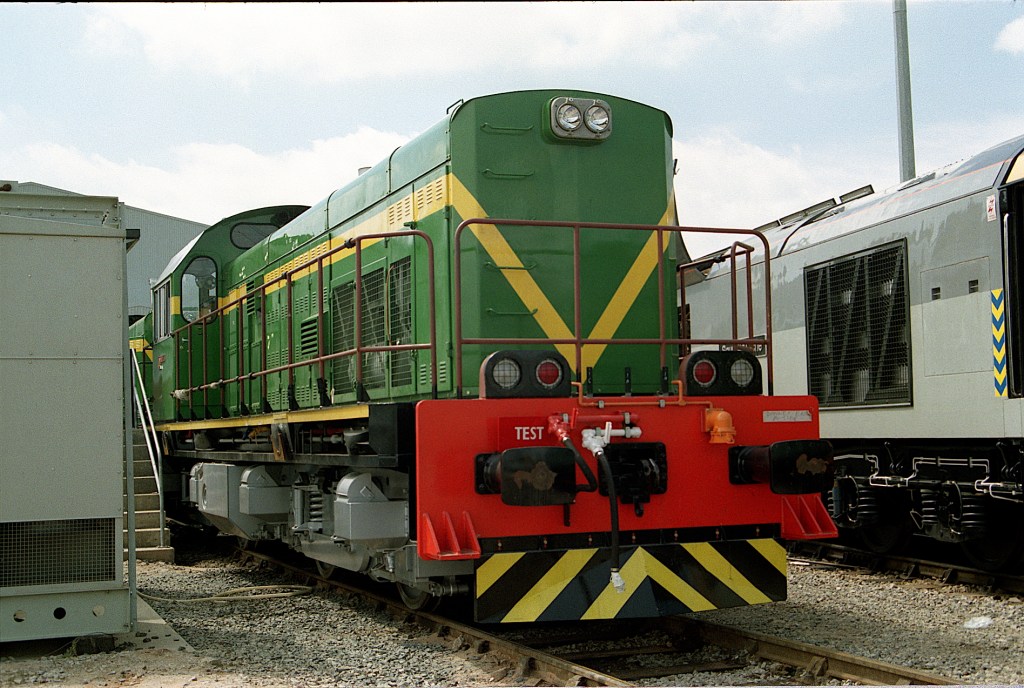
Brush don’t just build locomotives for the UK market. Here an export item is outside the works next to a new class 60 in the early 1990s.
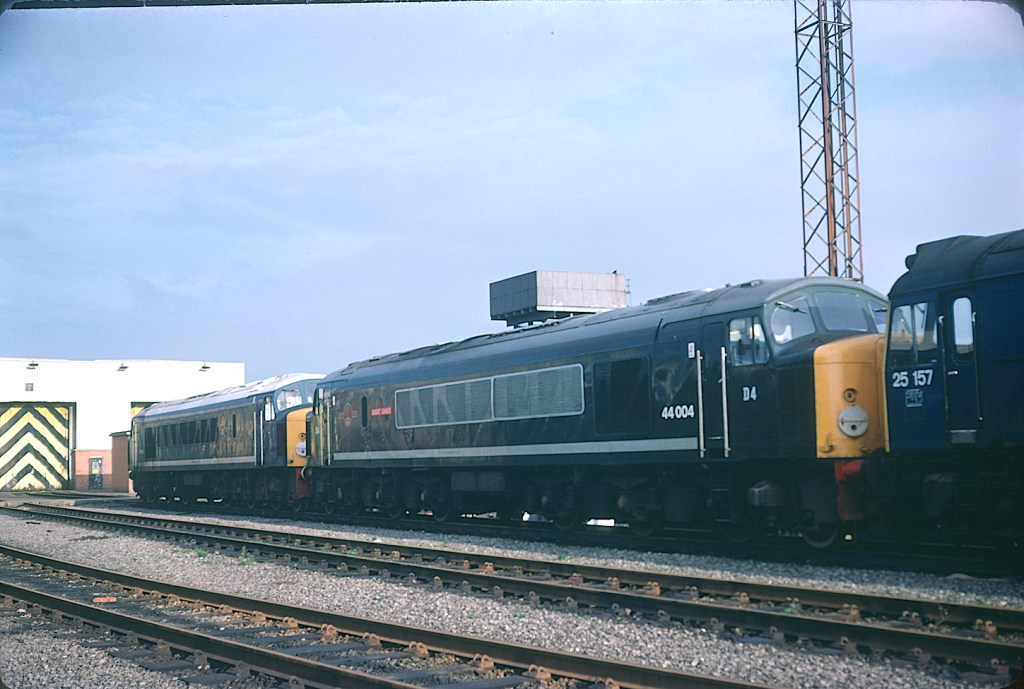
I don’t have too many photos of the original ten, later classed 44 in the TOPS era, but here are 44004 and 44008 at Toton depot in December 1980.
44010 with a short PW train is pictured at Loughborough Midland on June 5th 1975.
45040 is undergoing routine servicing inside Toton depot in October 1983.








 Trainspotting data from 1947 until 1980