Four months before the end of BR steam, and Victoria station was one of the places to go to see some of the remaining locomotives at work, although mainly on mixed freight and parcels services. Miles Platting bankers were often steam locos, and here is 8F 48026 and an unidentifiable Black 5 awaiting their next duties on April 9th 1968.
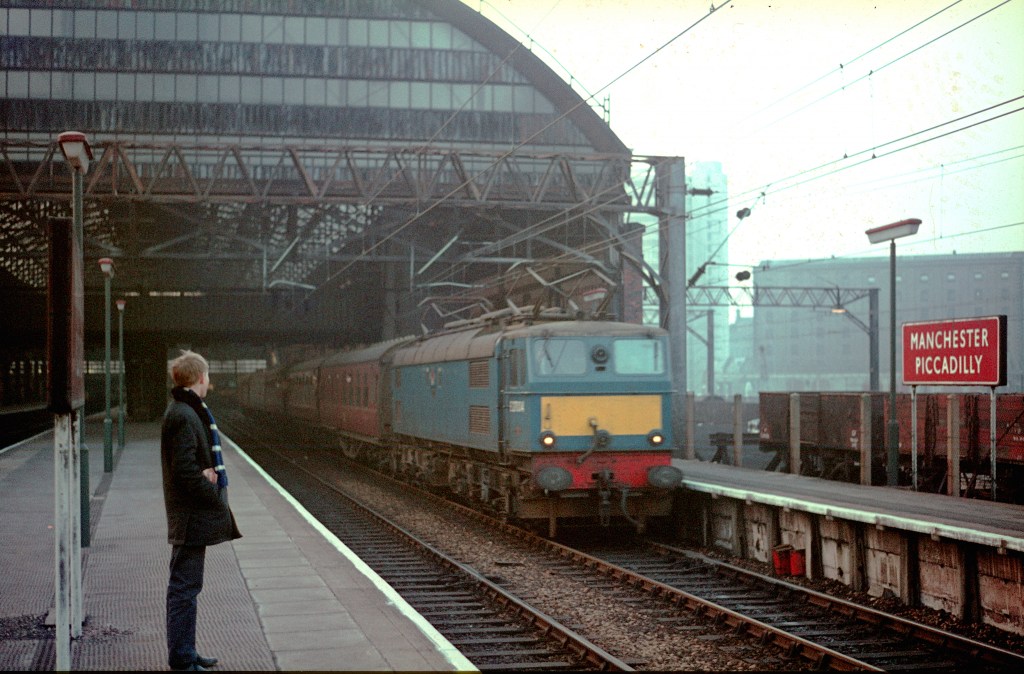
Over at Piccadilly electrics (of both the DC and AC variety) were in charge of long distance services, with DMUs for suburban work. However, the class 77s were about to be withdrawn from the services over Woodhead. E27004 ‘Juno’ seems ready to leave for Sheffield Victoria in 1968.
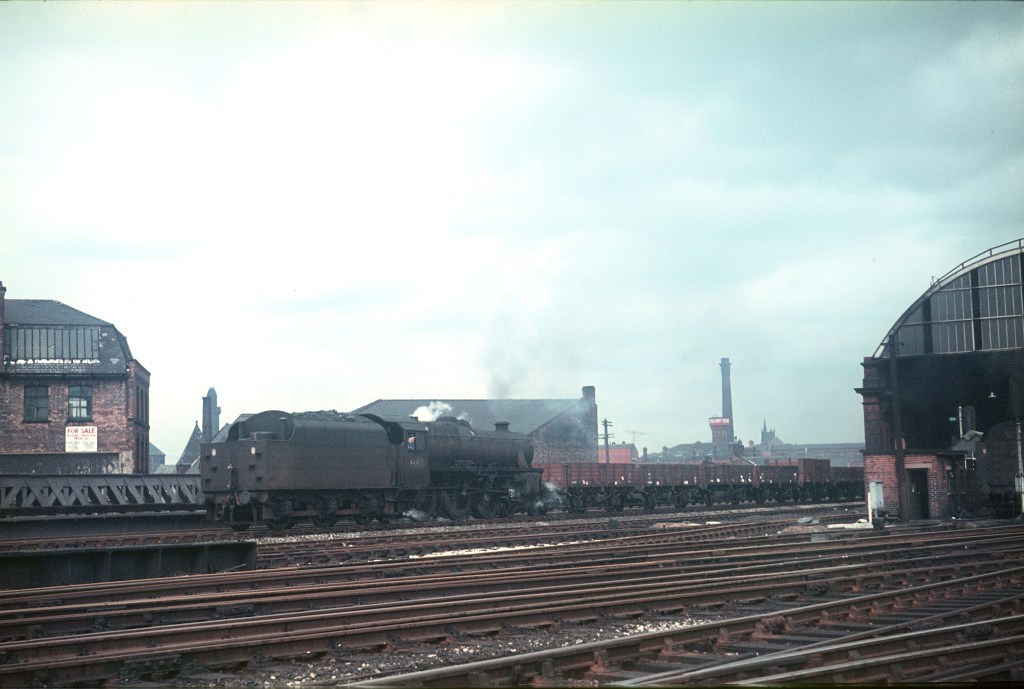
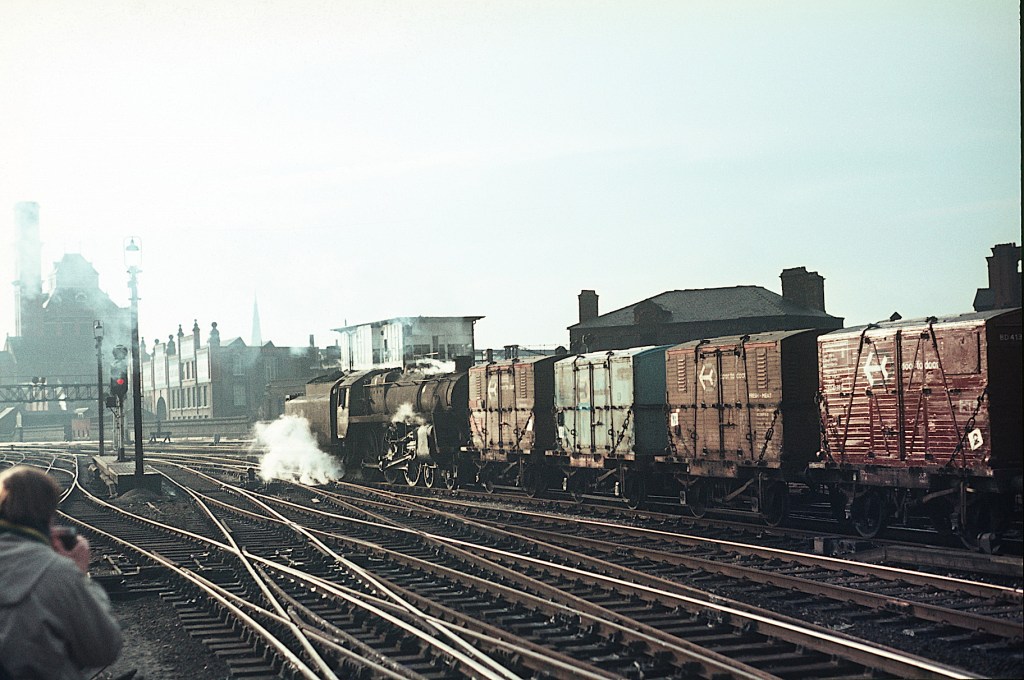
Black Five 4-6-0 44817 of Agecroft shed passes Manchester Exchange station in the Spring of 1966 with a goods train consisting of 5-plank wagons. Although Exchange closed to passengers in 1969, it remained open for newspaper traffic for many years; and later became a car park.
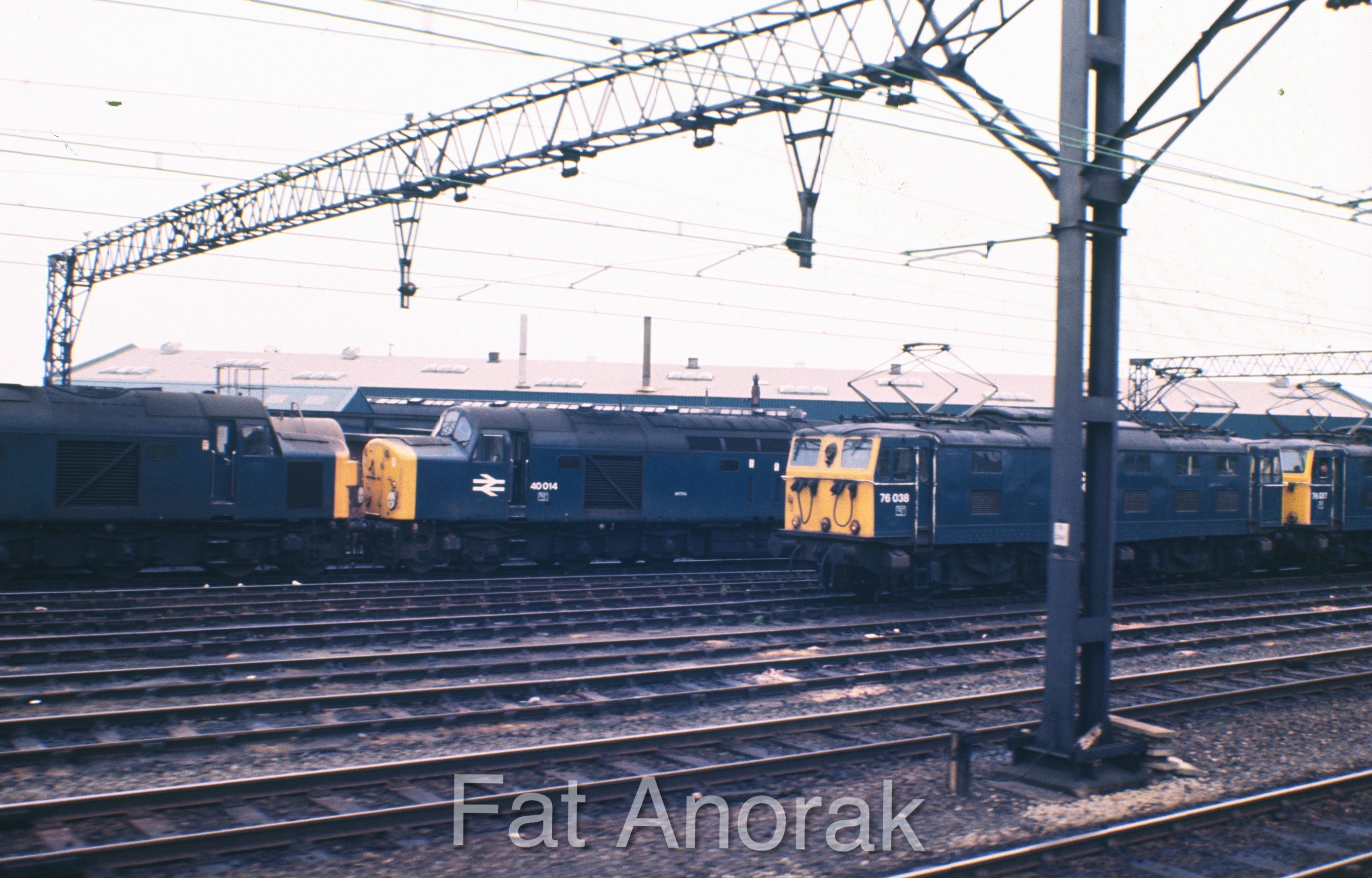
76037 and 76038 share siding space at Guide Bridge with 40014 and a split headcode member of the class on April 21st 1981. The through Woodhead route had just 3 months left by this time, but coal was still being moved in large quantities.
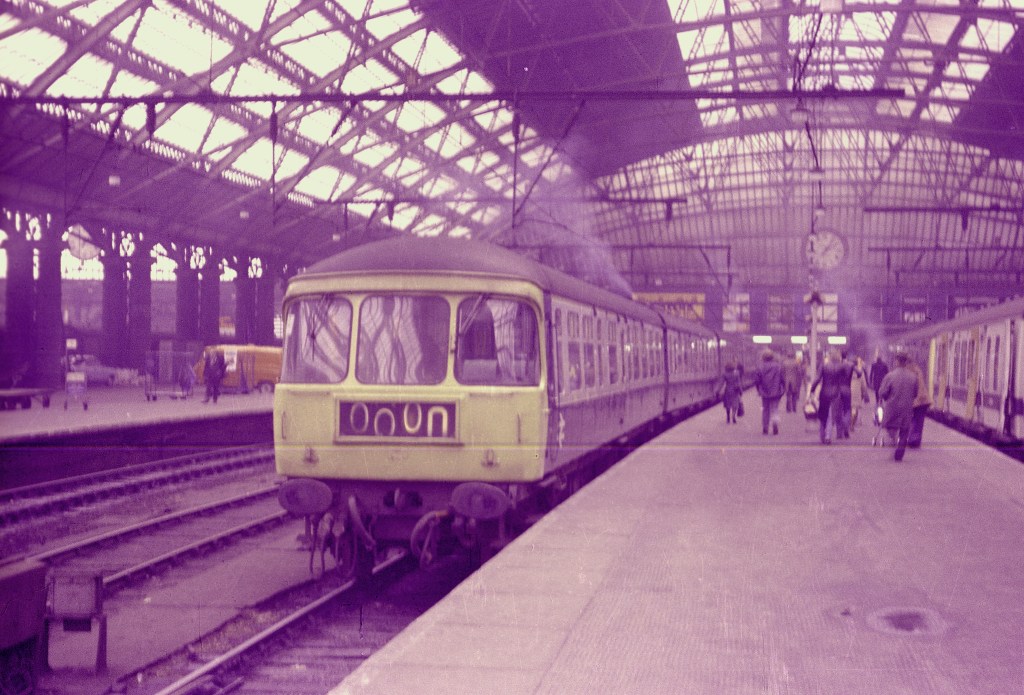
A poor quality photograph taken on budget film with poor colour rendition, but it does show a Swindon built Trans-Pennine DMU (by that time class 124) at Piccadilly station in 1978. The class 108 unit on the right is painted in the ‘refurbished’ livery of white with a blue stripe.
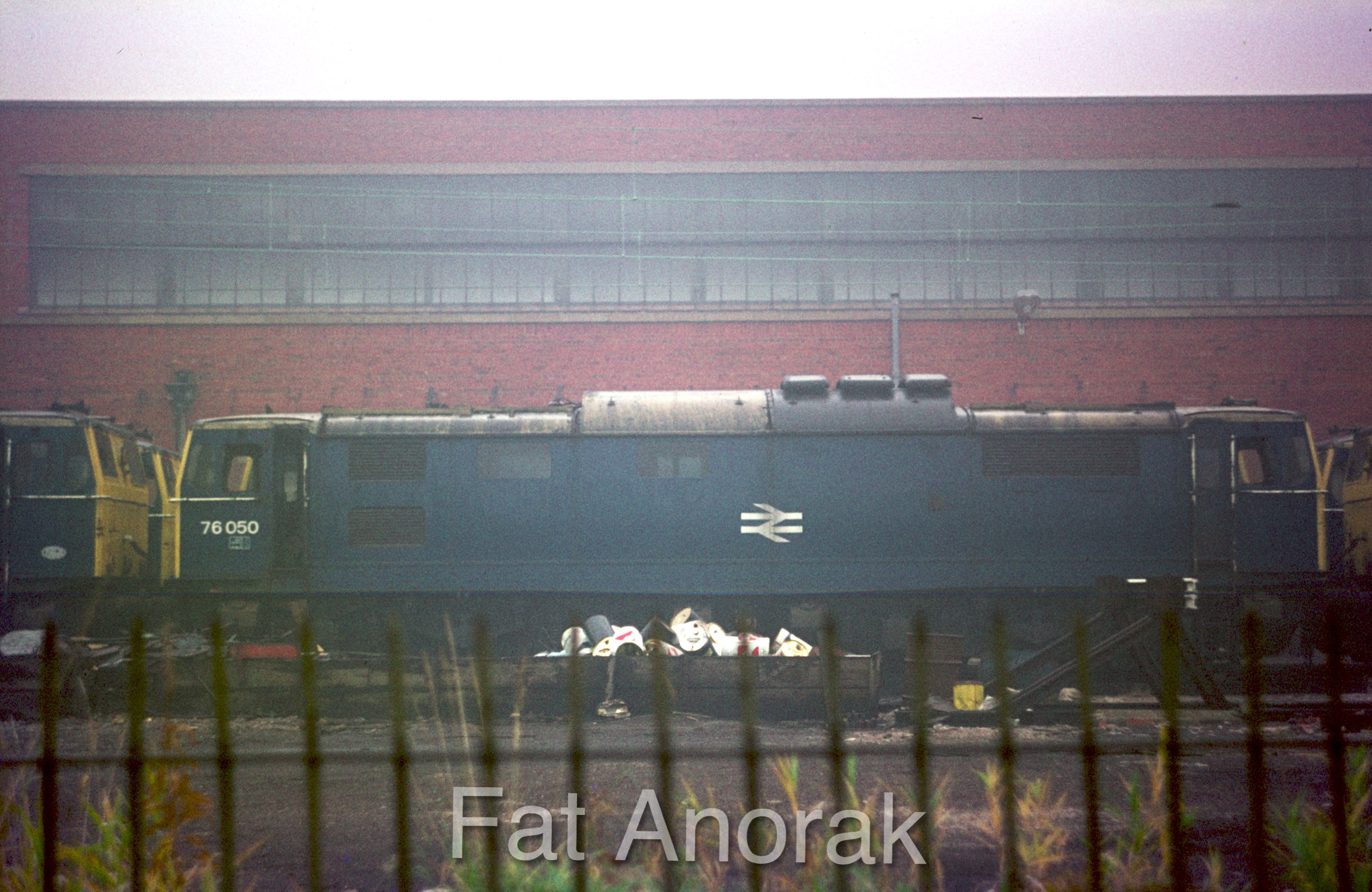
Although some websites have the later numbered 76s as officially withdrawn in July 1981 when the line over the Pennines closed, the truth was that most of the non-MU fitted examples were out of use many years before that. On a misty November 30th in 1977 76050 is one of the ‘stored’ examples alongside Reddish depot, but has obviously been out of use for a while. Most of the locos in the 50s were there at the time 76050/1/2/4/5/7 being the ones I noted.
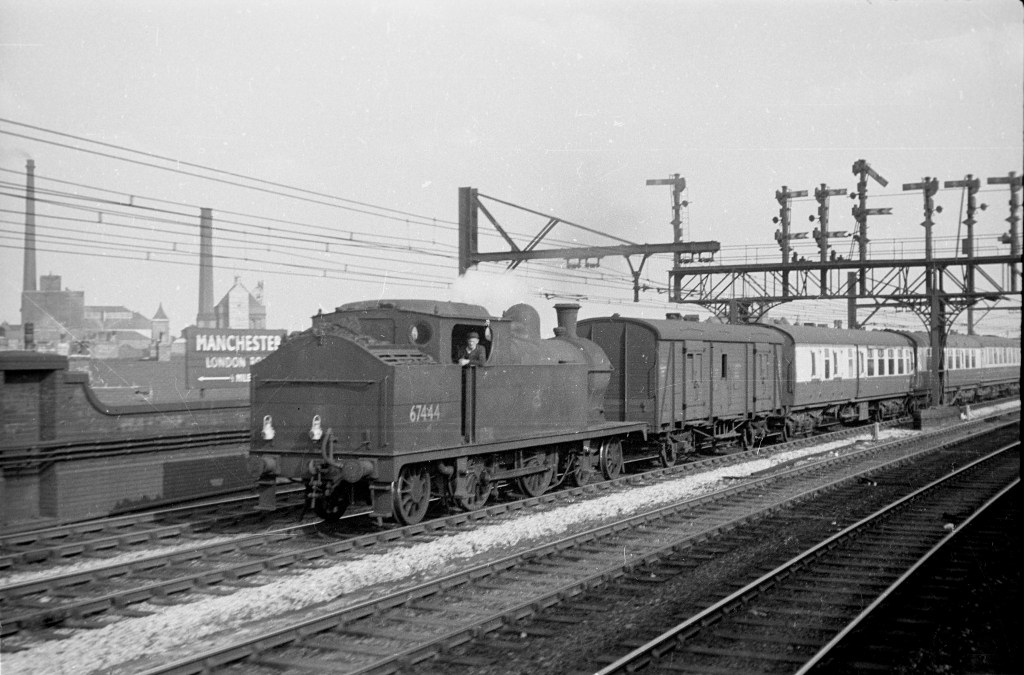
In pre-electrification days, Piccadilly was named Manchester London Road, as can be seen here in this September 3rd 1955 view. Two tracks were wired for the 1500v DC Woodhead route trains to Sheffield. Robinson 4-4-2T of Gorton shed brings in empty stock, which may be for the Harwich Boat Train as carriages do seem to have headboards. The locomotive was withdrawn two years later.
76029 was still active, and is seen at Reddish depot with another class member in 1976.
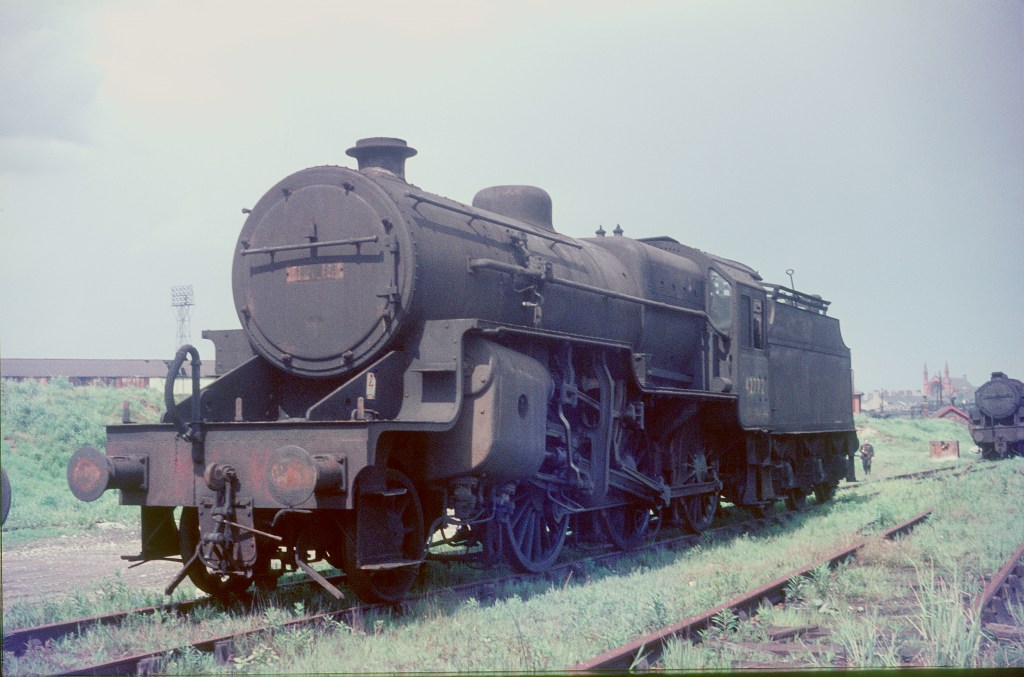
Stockport Edgeley shed was situated just to the south of Stockport station (yes I know Stockport and Manchester are two separate cities, but not for the purposes of this page) and the shed was adjacent to Stockport County’s football ground; part of which can be seen to the left of the engine. Fowler ‘Crab’ 2-6-0 42772 has been withdrawn for almost a year in this Spring 1966 photo.
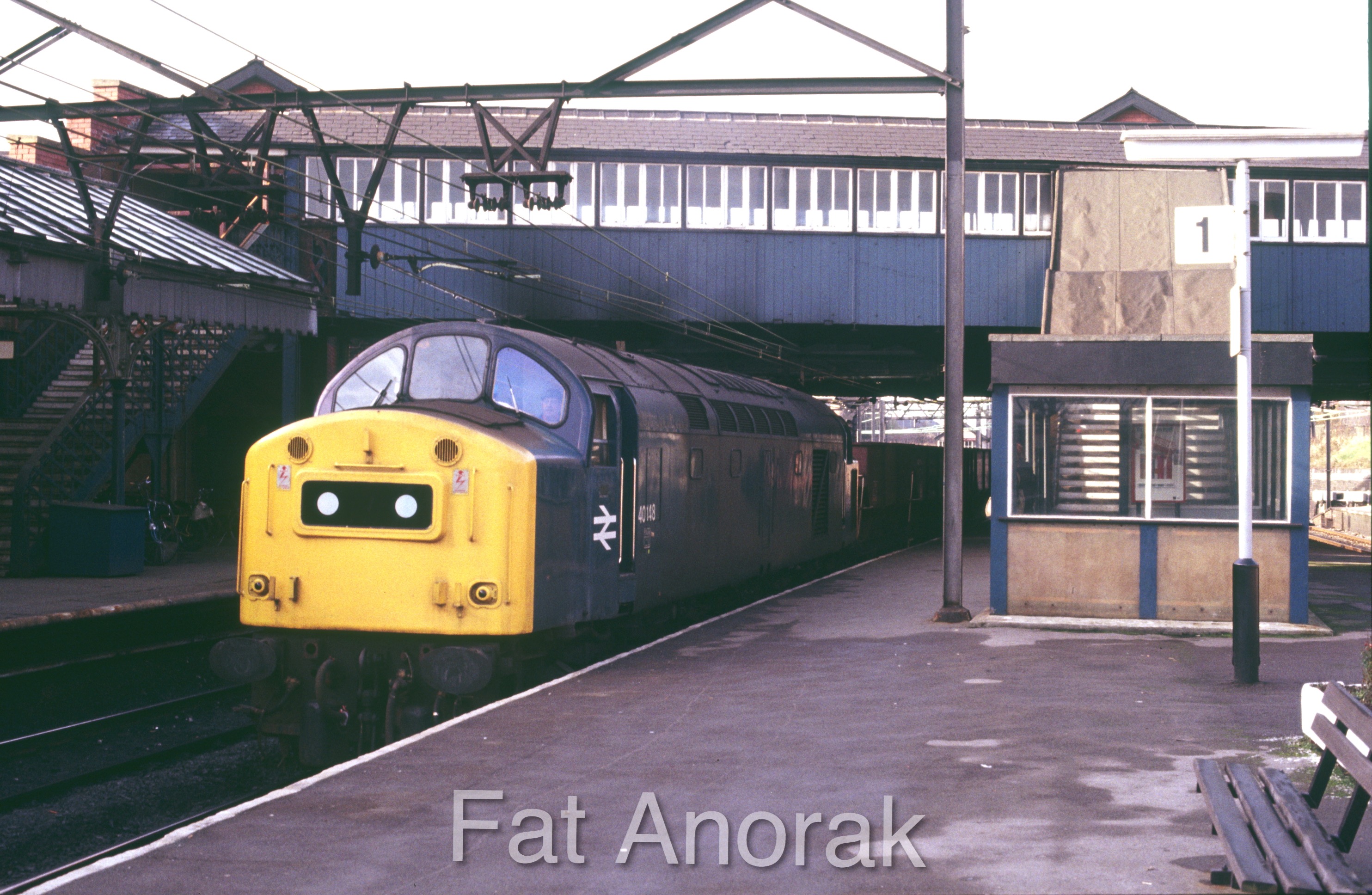
40148 passes through Guide Bridge eastbound with coal empties on 6th November 1981.
Coming from the other direction 37001 and 37077 of Thornaby head a loaded coal train at Guide Bridge on 16th September 1981.
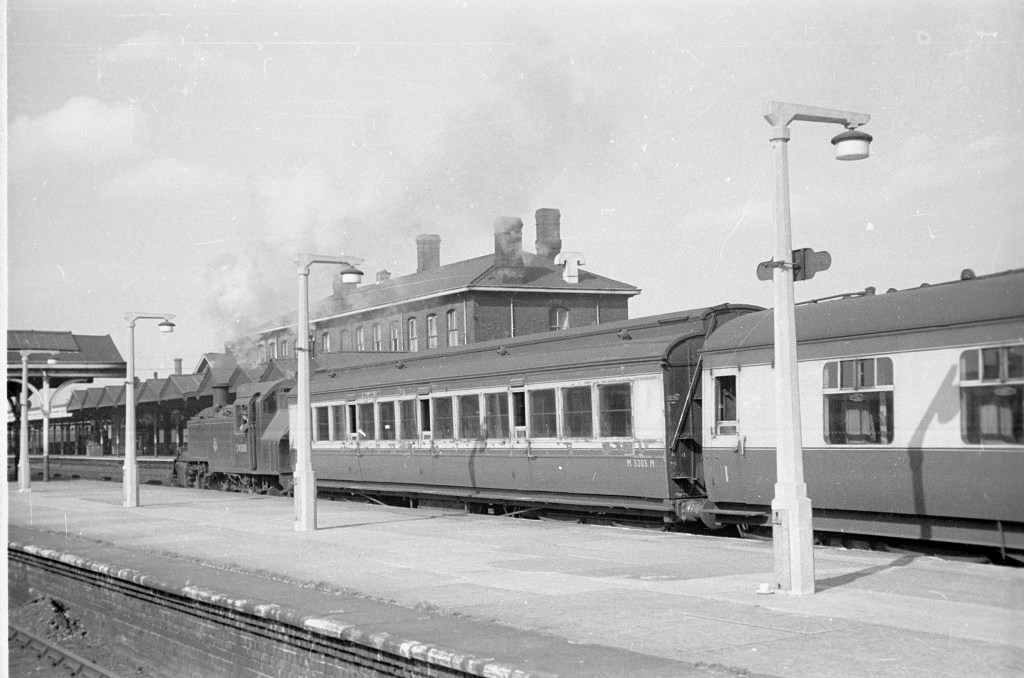
Stockport station in the summer of 1955. Standard 2MT 2-6-2T 84010 is only 2 years old in this photo, although M3203M has seen better days. 84010 was an Oldham Lees loco at this time, and so possibly the train will be heading in that direction?
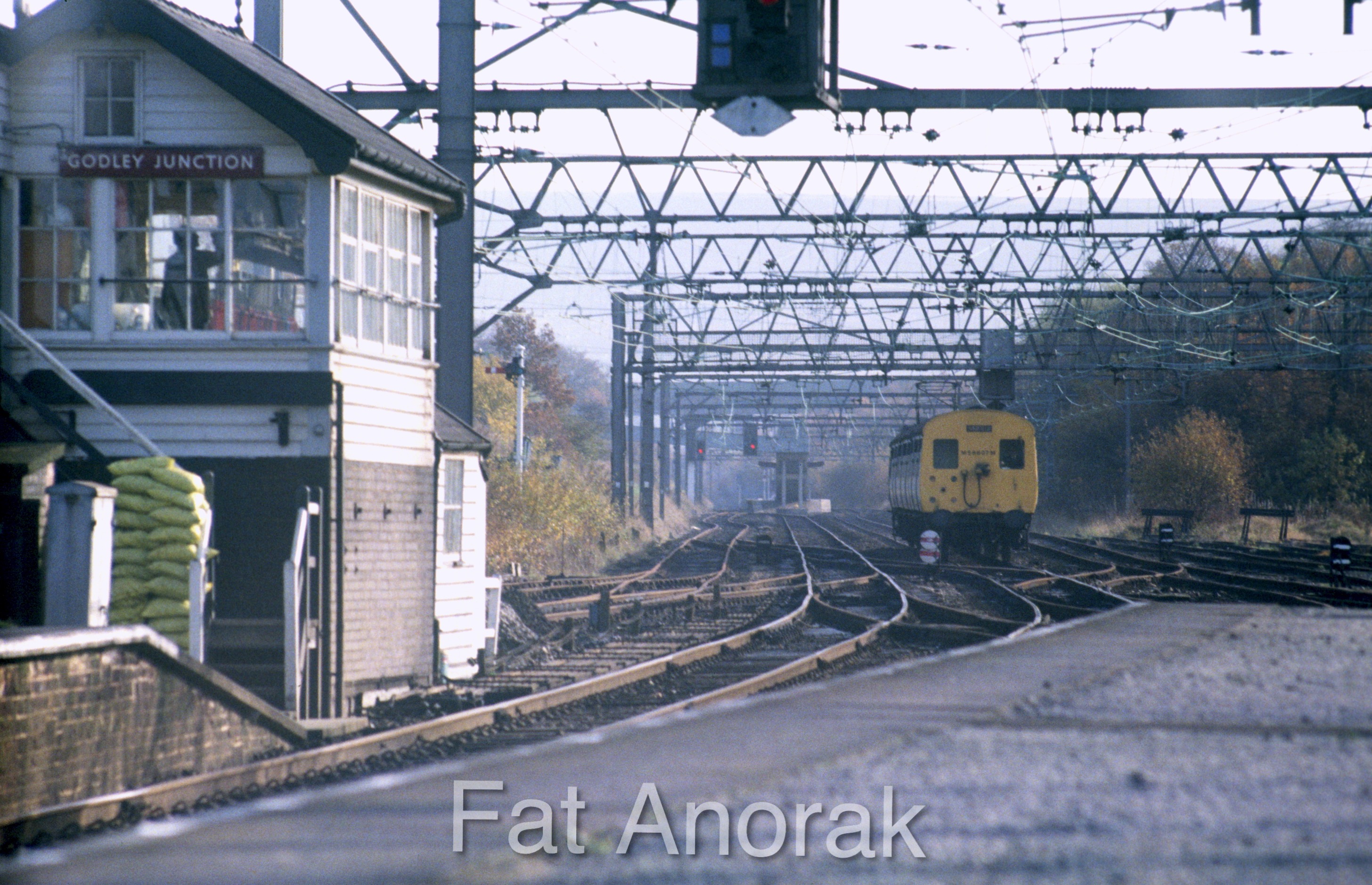
A telephoto shot from Godley Junction station on November 6th 1981. I was somewhat amazed to see Hattersley station so close, but this was a more recent addition. The original line passed through a tunnel at that point. The line towards Woodley was still in place at the time. M59607M approaches with a train for Piccadilly.
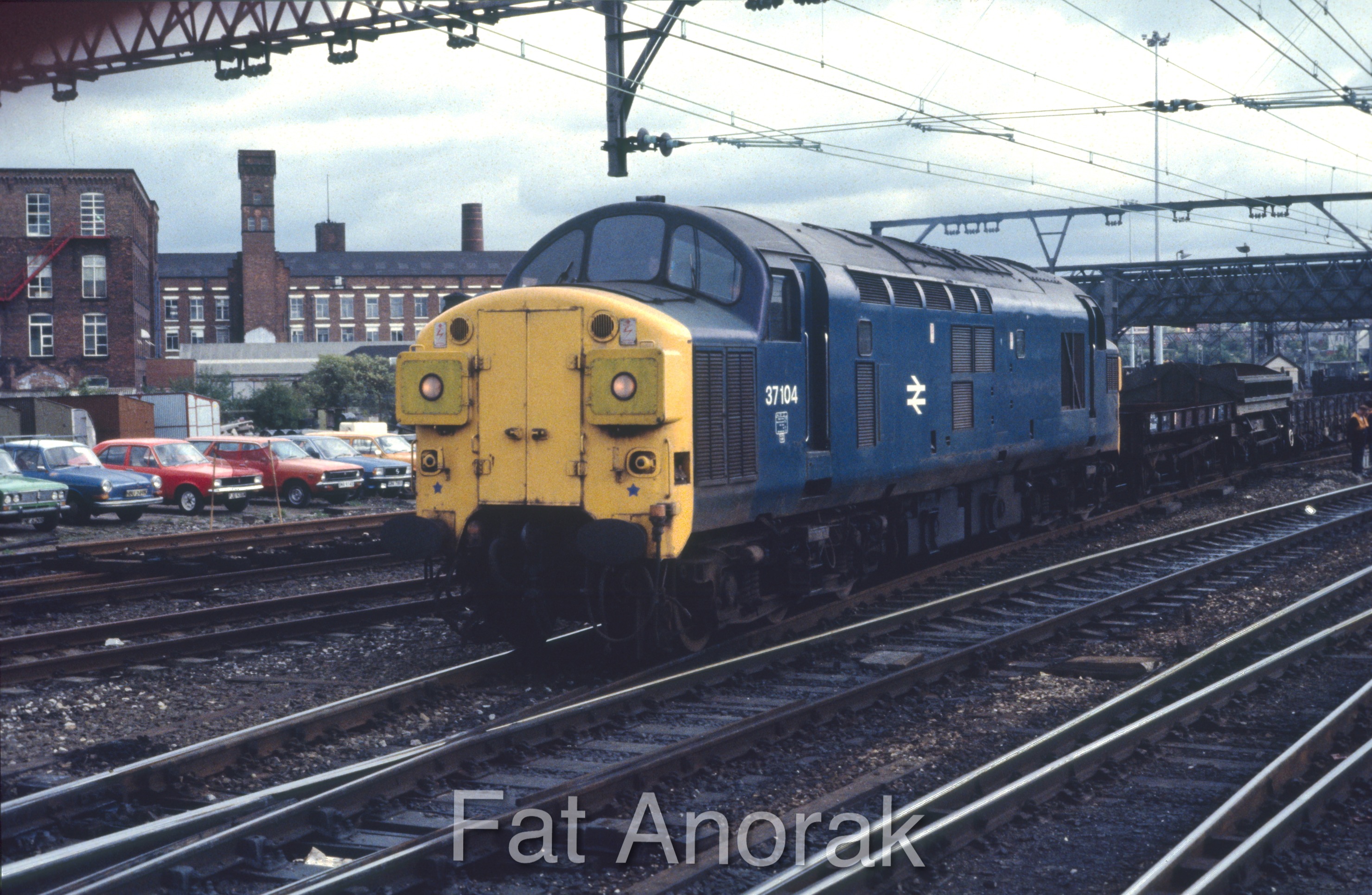
In a similar position to the above photo, 37104 is in charge of a PW train on 5th October 1983.
40017 ‘whistles’ through the station, en-route to the stabling point at the eastern end on 18th September 1980.
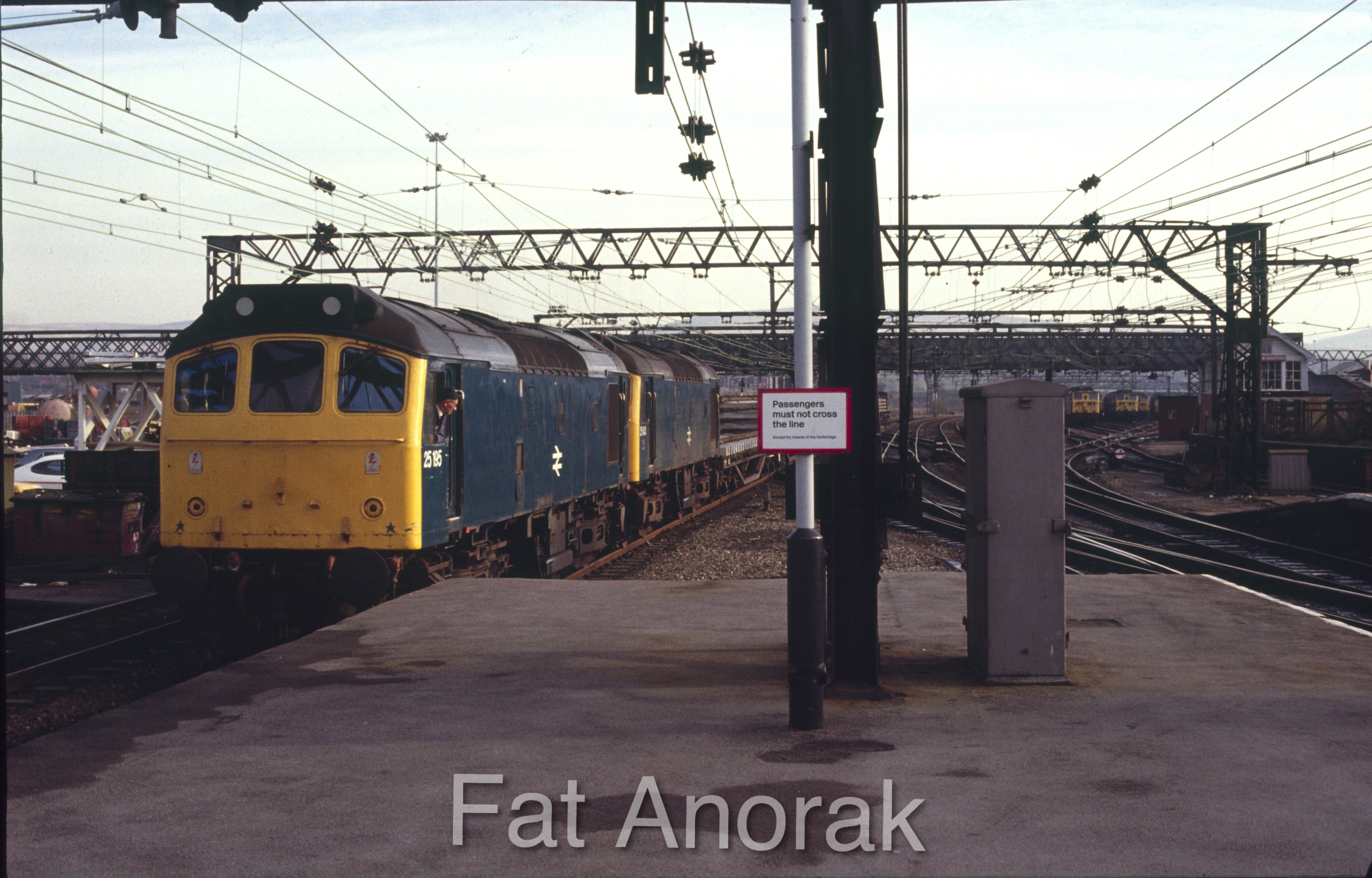
Engaged in track removal operations 25195 and 25143 head a westbound PW train on 6th November 1981, a few months after the closure of Woodhead. Redundant 76s still languish in the sidings on the right.
Eventually, the remaining section of the line (to Glossop and Hadfield) was converted from 1500v DC to 25Kv AC, and the 506s were replaced by 303s from Glasgow. Here, 303041 awaits departure from Hadfield on 4th January 1995.
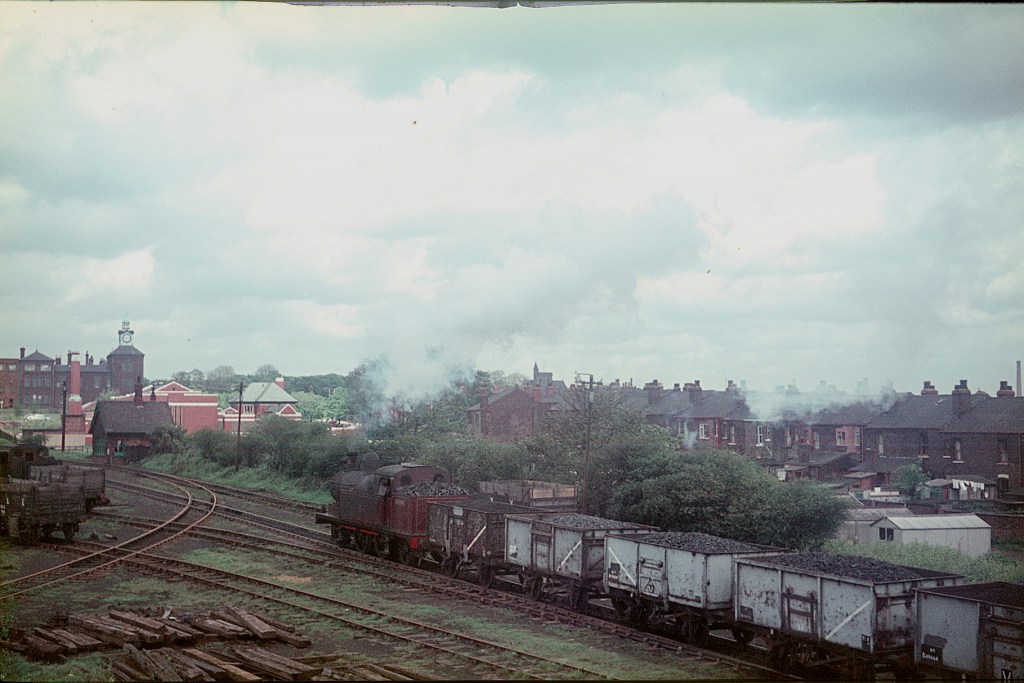
To the west of Swinton and Eccles (technically Salford and not Manchester) was an area of coal mines which had its own railway system for a while. In later years it became NCB Walkden and had ageing steam locomotives as motive power. Here is one of those with loaded 16t coal wagons in 1966.
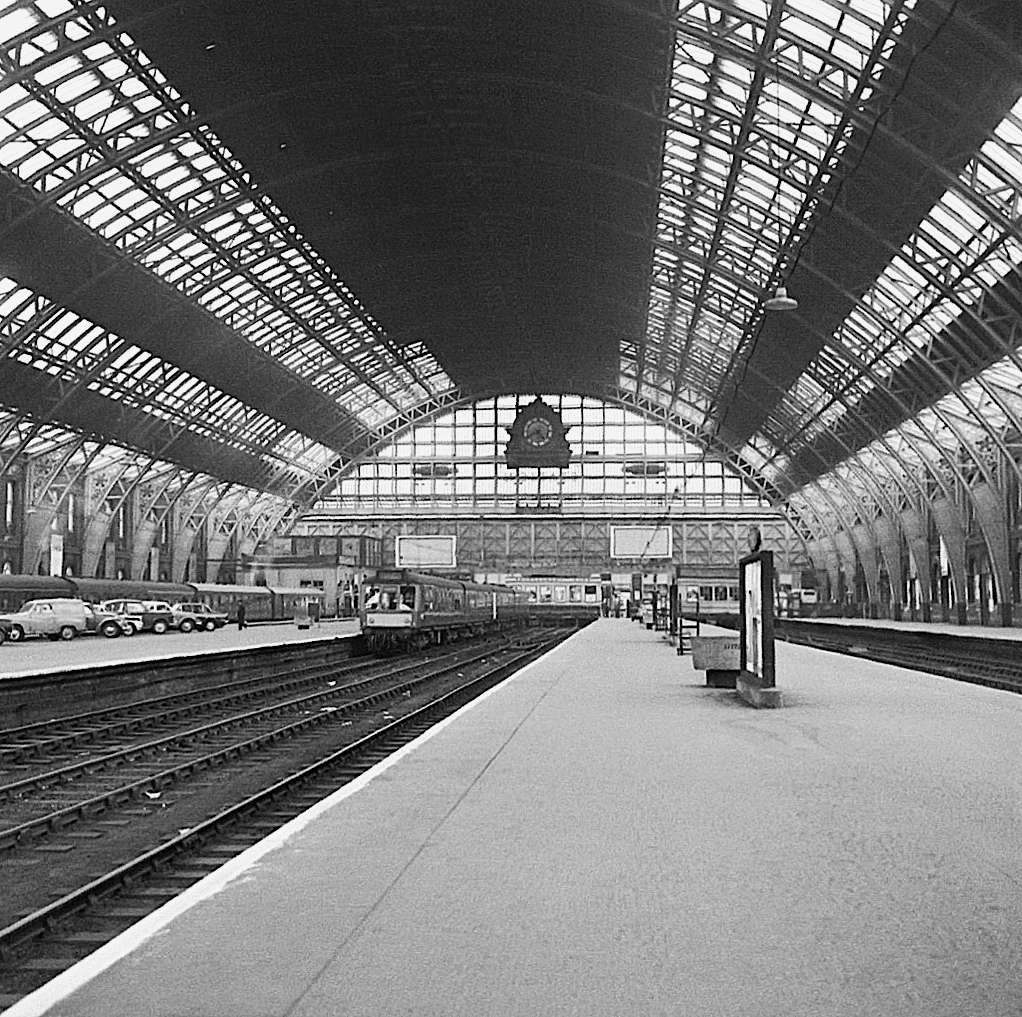
Manchester Central was built by the Cheshire Lines Committee (CLC) in the style of St Pancras, and was used by the Midland Railway for their services to London. This photo shows a class 108 DMU in a rather empty station during 1968, and may have been taken after the closure of the line through the Peak District. After complete closure in 1969, the station (a listed building) was used as a car park, and then restored as an exhibition/conference centre (GMEX), although has now reverted to its original name of Manchester Central.
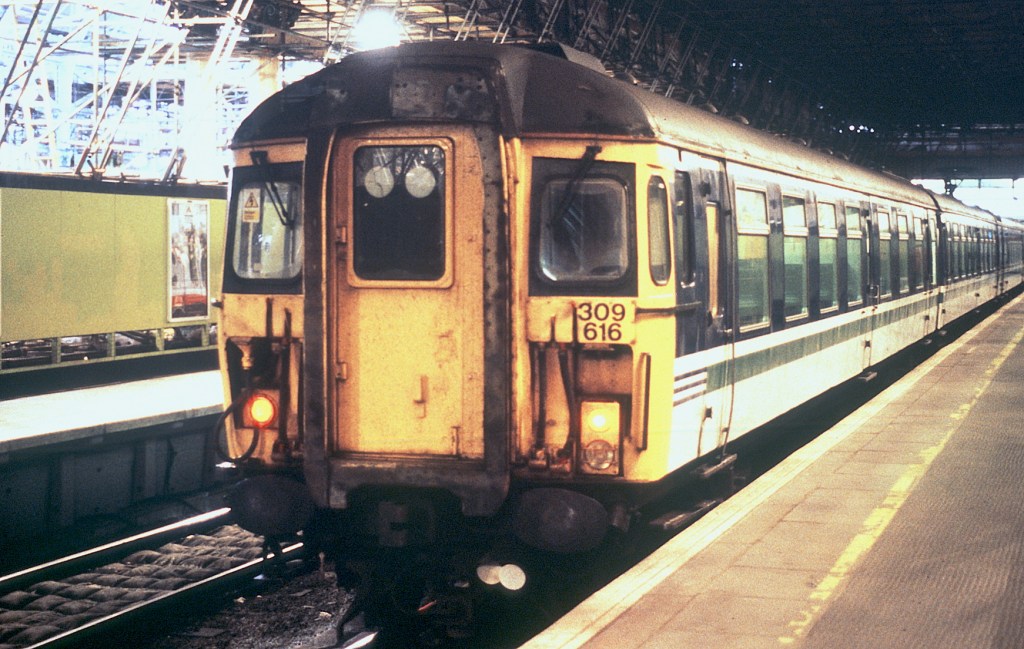
During the 1990s, class 309 EMUs displaced from the Liverpool Street to Clacton services, were used between Piccadilly, Stoke On Trent, and Crewe. Here is 309616 at Piccadilly station on February 6th 1999.
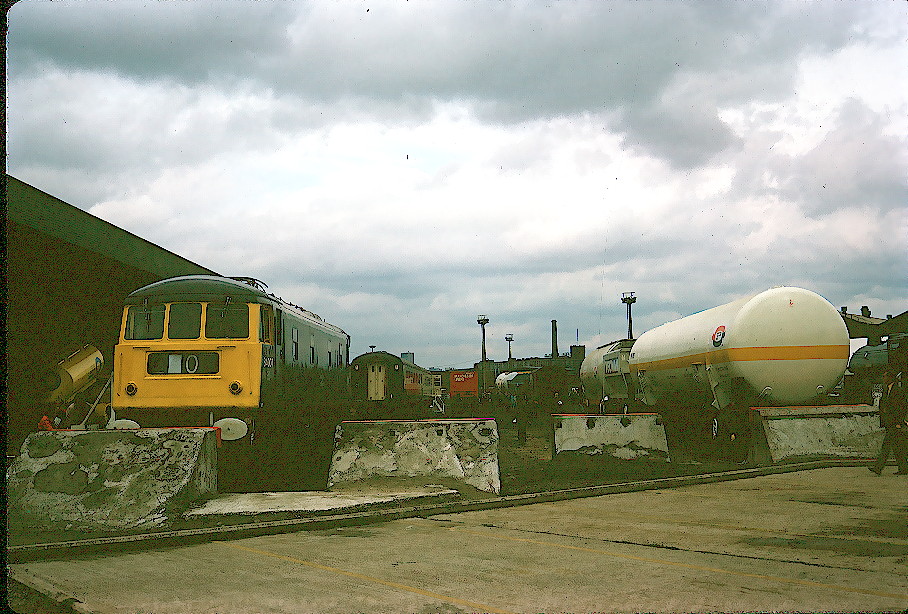
In 1973, BR held an exhibition in Manchester showing many of the latest rolling stock. I’m not sure what role 84001 was playing, as withdrawal was imminent.
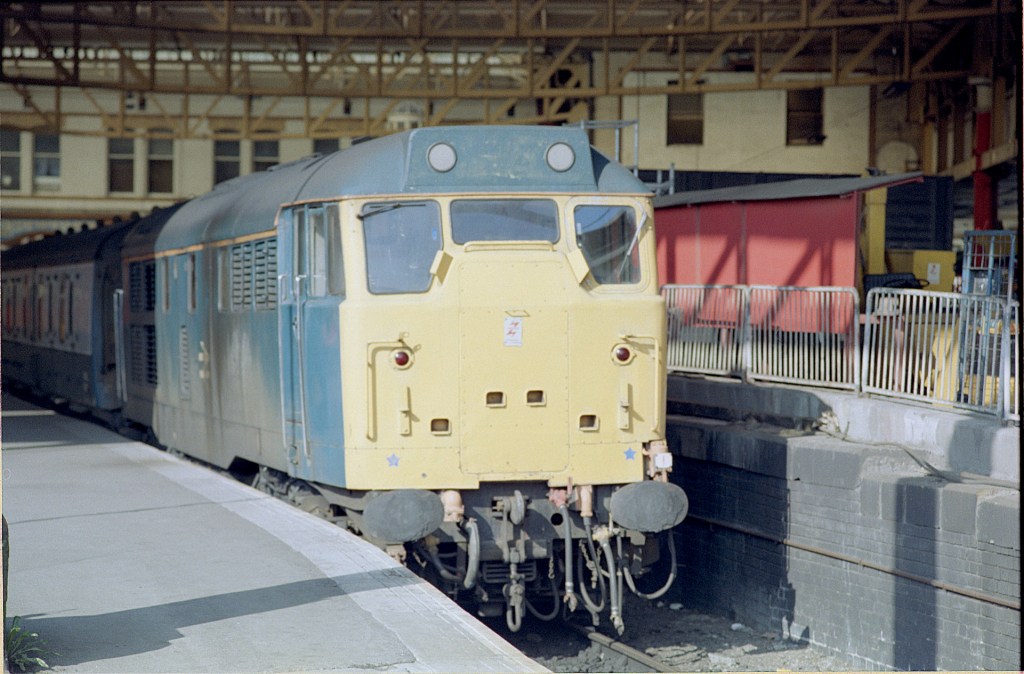
In the occasional chaos, of repair work, that was Manchester Victoria; an unidentified class 31 is seen with a parcels service in 1989.
After many years on the WR, the class 123 Swindon built DMUs were transferred north in the late 1970s, where they were merged with the very similar class 124 units for an expanded Trans-Pennine service. 52102 is seen leading at Manchester Piccadilly on August 26th 1980.
During 1966, standard class 4MT 4-6-0 75049 is near Manchester Victoria with a train including insulated containers. These could be craned off the flat wagons relatively easily and fitted on the trailer of a lorry for transport to destinations away from the railway.
Click on the name in the box below to go to a page listing all the latest image pages.






 Trainspotting data from 1947 until 1980